What is AOD 9604?
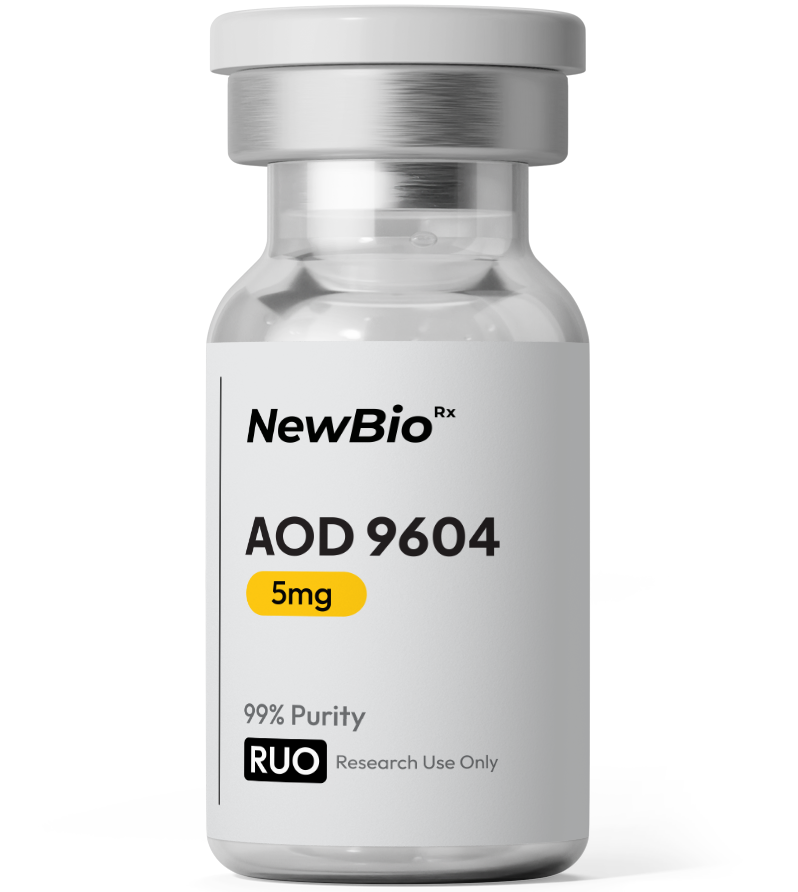
AOD 9604 (Anti-Obesity Drug 9604) is a synthetic peptide fragment specifically engineered from the C-terminal domain of human growth hormone, encompassing amino acids 177-191 with an additional tyrosine residue at the N-terminus for enhanced stability. Originally developed by Metabolic Pharmaceuticals in Australia during the 1990s, this peptide was designed to isolate and amplify growth hormone's lipolytic (fat-burning) properties while eliminating the adverse metabolic and growth-promoting effects associated with full-length growth hormone therapy.
The peptide's structure contains a disulfide bond between two cysteine residues, creating a cyclic conformation that closely mimics the homologous region in naturally occurring human growth hormone. This structural similarity allows AOD 9604 to retain the lipid-mobilizing activity of the parent hormone while avoiding interaction with the growth hormone receptor, thereby preventing IGF-1 elevation and associated side effects.
AOD 9604 functions through a highly selective mechanism targeting adipose tissue metabolism. The peptide upregulates beta-3 adrenergic receptors (β3-AR) in fat cells, which are the primary lipolytic receptors responsible for triggering fat breakdown. Research demonstrates that AOD 9604 increases beta-3 adrenergic receptor RNA expression in obese mice to levels comparable with lean mice, restoring the lipolytic sensitivity that is typically suppressed in obesity. Notably, studies using beta-3 adrenergic receptor knockout mice confirmed that these receptors are essential for AOD 9604's weight-reducing effects, as the peptide failed to produce fat loss in animals lacking these receptors.
The peptide promotes lipolysis (breakdown of stored triglycerides into free fatty acids and glycerol) while simultaneously inhibiting lipogenesis (formation of new fat from non-fatty substrates) through reduction of acetyl-CoA carboxylase activity. This dual mechanism allows AOD 9604 to mobilize existing fat stores for energy utilization while preventing new fat accumulation. Importantly, unlike full-length growth hormone, AOD 9604 does not bind to the growth hormone receptor, does not stimulate IGF-1 production, and has no impact on glucose metabolism or insulin sensitivity.
Between 2001 and 2007, AOD 9604 underwent extensive clinical development with six randomized, double-blind, placebo-controlled trials involving approximately 925 participants. While early trials demonstrated statistically significant fat loss effects, a larger Phase IIb trial incorporating intensive diet and exercise interventions did not show sufficient efficacy for regulatory approval, leading to termination of pharmaceutical development. Despite this, the comprehensive clinical safety database established AOD 9604 as remarkably well-tolerated, subsequently receiving Generally Recognized as Safe (GRAS) status in the United States.
AOD 9604 Structure
Chemical Structure
2D Structure

3D Structure

Chemical Properties
| CAS Number | 221231-10-3 |
|---|---|
| Molecular Formula | C78H123N23O23S2 |
| Molecular Weight | 1815.1 g/mol |
| IUPAC Name |
(2S)-2-[[2-[[(4R,7S,13S,16S,19S,22S,25R)-25-[[(2S)-5-amino-2-[[(2S)-2-[[(2S,3S)-2-[[(2S)-2-[[(2S)-2-[[(2S)-2-amino-3-(4-hydroxyphenyl)propanoyl]amino]-4-methylpentanoyl]amino]-5-carbamimidamidopentanoyl]amino]-3-methylpentanoyl]amino]-3-methylbutanoyl]amino]-5-oxopentanoyl]amino]-22-(3-carbamimidamidopropyl)-13-(2-carboxyethyl)-7,19-bis(hydroxymethyl)-6,9,12,15,18,21,24-heptaoxo-16-propan-2-yl-1,2-dithia-5,8,11,14,17,20,23-heptazacyclohexacosane-4-carbonyl]amino]acetyl]amino]-3-phenylpropanoic acid
|
| InChIKey | GVIYUKXRXPXMQM-BPXGDYAESA-N |
AOD 9604 Research
Research Applications
Fat Loss and Weight Management
AOD 9604 demonstrates significant effects on fat metabolism and body weight regulation through its targeted action on adipose tissue. Animal studies show that daily oral administration of AOD 9604 at 500 micrograms per kilogram body weight for 19 days reduced body weight gain by over 50% in genetically obese Zucker rats compared to controls (15.8 ± 0.6 g vs. 35.6 ± 0.8 g). The adipose tissues of AOD 9604-treated animals exhibited significantly increased lipolytic activity, with the peptide demonstrating preferential effects on obese fat cells over lean adipocytes.
Clinical trials in obese humans provide evidence of AOD 9604's fat-reducing potential. In a 12-week randomized trial, subjects receiving 1 mg daily of AOD 9604 lost an average of 2.6 kg compared to 0.8 kg in the placebo group, representing a statistically significant difference of 1.8 kg additional fat loss. The mechanism involves AOD 9604's ability to increase glycerol release from adipocytes—a direct indicator of active fat breakdown—with studies showing a threefold increase in glycerol release from human adipose tissue treated with the peptide.
The peptide's lipolytic effects are mediated through upregulation of beta-3 adrenergic receptor expression. Research published in Endocrinology demonstrated that chronic administration of AOD 9604 to obese mice for 14 days significantly increased beta-3 adrenergic receptor RNA levels in fat cells, restoring them to levels comparable with lean mice. This restoration of lipolytic receptor expression enhances the tissue's responsiveness to fat-mobilizing signals. Critically, experiments using beta-3 adrenergic receptor knockout mice confirmed the necessity of this pathway, as AOD 9604 failed to produce weight loss or increased lipolysis in animals lacking these receptors.
AOD 9604 inhibits fat formation through suppression of acetyl-CoA carboxylase activity, an enzyme crucial for converting non-fatty substrates into fatty acids. This dual action—simultaneously increasing fat breakdown while blocking new fat synthesis—makes AOD 9604 particularly effective for body composition improvement. Studies show that AOD 9604 increases fatty acid oxidation, promoting the utilization of released fat as an energy source rather than allowing reesterification back into stored triglycerides.
Sources:
- Ng FM, et al. "Metabolic studies of a synthetic lipolytic domain (AOD9604) of human growth hormone." Hormone Research. 2000;53(6):274-278. https://pubmed.ncbi.nlm.nih.gov/11146367/
- Heffernan M, et al. "The effects of human GH and its lipolytic fragment (AOD9604) on lipid metabolism following chronic treatment in obese mice and beta(3)-AR knock-out mice." Endocrinology. 2001;142(12):5182-5189. https://pubmed.ncbi.nlm.nih.gov/11713213/
- Heffernan MA, et al. "Increase of fat oxidation and weight loss in obese mice caused by chronic treatment with human growth hormone or a modified C-terminal fragment." International Journal of Obesity. 2001;25(10):1442-1449. https://pubmed.ncbi.nlm.nih.gov/11673765/
Metabolic Health and Insulin Sensitivity
AOD 9604 demonstrates remarkable metabolic safety compared to full-length growth hormone, particularly regarding glucose metabolism and insulin sensitivity. In studies using euglycemic clamp techniques—the gold standard for measuring insulin sensitivity—chronic treatment with AOD 9604 showed no adverse effects on insulin sensitivity in obese Zucker rats, a striking contrast to the insulin resistance typically induced by intact growth hormone treatment. This preservation of insulin sensitivity allows for fat loss without compromising glucose control, making AOD 9604 particularly valuable for individuals with metabolic concerns.
Comprehensive oral glucose tolerance testing conducted across multiple clinical trials involving 925 participants demonstrated that AOD 9604 has no negative effect on carbohydrate metabolism. Analysis of pre-load glucose levels after 12 weeks of treatment showed an overall change of -0.02 units with no significant differences between AOD 9604 treatment groups (0.25 mg, 0.5 mg, and 1 mg daily) and placebo. Similar results were observed after 24 weeks of treatment, with an overall change of 0.04 units and no statistically significant differences among treatment groups. Fasting plasma glucose and serum insulin levels remained unchanged throughout all treatment periods.
Notably, treatment with AOD 9604 appeared to have positive effects in subjects with impaired glucose tolerance. In the 12-week treatment study, patients with impaired glucose tolerance supplemented with AOD 9604 were less likely to develop diabetes during the study compared to subjects taking placebo, suggesting potential protective metabolic effects. This stands in stark contrast to full-length growth hormone, which caused decreased glucose tolerance in a subset of participants in a recent clinical trial.
The peptide's safety profile extends to growth factor regulation. AOD 9604 had no effect on serum IGF-1 levels across all clinical trials, confirming that the peptide does not activate the growth hormone/IGF-1 axis despite its structural relationship to growth hormone. IGF-1 levels remained relatively constant over dosing periods ranging from 7 days to 24 weeks, with no apparent differences between AOD 9604 treatment groups and placebo at doses ranging from 0.25 mg to 30 mg daily. This absence of IGF-1 elevation eliminates concerns about unwanted growth-promoting effects and potential cancer risk associated with chronically elevated IGF-1 levels.
The peptide's mechanism of action on fat metabolism occurs through pathways distinct from growth hormone receptor activation. AOD 9604 directly stimulates lipolysis and inhibits lipogenesis through its interaction with the beta-adrenergic pathway, allowing targeted fat reduction without systemic hormonal disruption. This selective action explains why AOD 9604 retains beneficial metabolic effects on adipose tissue while avoiding the diabetogenic consequences of full-length growth hormone therapy.
Sources:
- Ng FM, et al. "Metabolic studies of a synthetic lipolytic domain (AOD9604) of human growth hormone." Hormone Research. 2000;53(6):274-278. https://pubmed.ncbi.nlm.nih.gov/11146367/
- Stier H, et al. "Safety and Tolerability of the Hexadecapeptide AOD9604 in Humans." Journal of Endocrinology and Metabolism. 2013;3(1-2):7-15. https://www.jofem.org/index.php/jofem/article/view/157/194
Cartilage Regeneration and Joint Health
Beyond its metabolic effects, AOD 9604 demonstrates significant regenerative properties for cartilage and joint tissue. Research in a collagenase-induced osteoarthritis rabbit model provides compelling evidence of the peptide's cartilage-protective and regenerative capabilities. In this study, 32 mature New Zealand white rabbits received weekly intra-articular injections of either saline (control), hyaluronic acid alone, AOD 9604 alone (0.25 mg), or combined AOD 9604 and hyaluronic acid for 4-7 weeks following collagenase-induced cartilage damage.
Morphological and histopathological assessment revealed that AOD 9604 treatment significantly reduced cartilage degeneration compared to saline controls. Groups receiving AOD 9604 showed substantially lower gross morphological and histopathological scores than the control group. Most notably, the combination of AOD 9604 with hyaluronic acid produced superior results compared to either treatment alone, suggesting synergistic effects. This combined treatment group demonstrated the least cartilage degeneration, with significantly lower damage scores than both the hyaluronic acid-only and AOD 9604-only groups.
Functional outcomes paralleled the tissue-level improvements. The lameness period—a critical indicator of joint pain and functional impairment—was significantly shorter in animals receiving the combined AOD 9604 and hyaluronic acid treatment compared to all other groups, including those receiving either treatment alone. Animals in the saline control group exhibited significantly longer periods of lameness compared to those receiving AOD 9604 or hyaluronic acid, demonstrating the therapeutic benefit of AOD 9604 for joint function.
The mechanism underlying AOD 9604's cartilage-protective effects likely involves its relationship to growth hormone's regenerative properties. While AOD 9604 does not activate the growth hormone receptor or stimulate IGF-1 production, the peptide may influence cellular differentiation and protein synthesis pathways crucial for tissue repair. In vitro investigations suggest AOD 9604 may promote the differentiation of adipose-derived mesenchymal stem cells, potentially facilitating cartilage and bone regeneration through modulation of cellular differentiation processes.
The apparent synergistic effect when AOD 9604 is combined with hyaluronic acid suggests complementary mechanisms of action. Hyaluronic acid provides chondrocyte-protective effects through its role as a lubricant, space filler, and regulator of cellular activities in the joint. AOD 9604 appears to recapitulate developmental cascades that promote regrowth of articular cartilage segments. Together, these mechanisms create an optimal environment for cartilage repair and regeneration.
These findings position AOD 9604 as a potential therapeutic option for osteoarthritis treatment and joint repair, with applications extending beyond its original anti-obesity development. The peptide's ability to enhance cartilage regeneration while maintaining an excellent safety profile makes it particularly attractive for individuals seeking joint health support, whether for age-related degeneration, injury recovery, or prevention of cartilage breakdown.
Sources:
- Kwon DR, Park GY. "Effect of Intra-articular Injection of AOD9604 with or without Hyaluronic Acid in Rabbit Osteoarthritis Model." Annals of Clinical & Laboratory Science. 2015;45(4):426-432. https://pubmed.ncbi.nlm.nih.gov/26275694/
Safety and Tolerability
AOD 9604 has been evaluated in one of the most comprehensive peptide safety programs conducted, encompassing six randomized, double-blind, placebo-controlled trials involving approximately 925 participants between 2001 and 2007. This extensive clinical database establishes AOD 9604 as remarkably safe and well-tolerated across a wide dose range and extended treatment durations.
Across all clinical trials, no drug-related withdrawals or serious adverse events attributable to AOD 9604 occurred. The adverse event profile was consistently indistinguishable from placebo, with similar incidence rates between treatment groups and controls. In the largest trials, approximately 78-89% of subjects experienced at least one adverse event, but the distribution was comparable across all groups including placebo. The most common adverse events were headache, gastrointestinal disturbances (primarily diarrhea), and upper respiratory infections—all typical of clinical trials in general populations and showing no dose-related patterns.
Treatment with AOD 9604 produced no clinically significant changes in vital signs, physical examination findings, safety laboratory parameters (hematology, biochemistry, urinalysis), or electrocardiograms throughout studies ranging from single-dose administration to 24 weeks of continuous treatment. Doses evaluated ranged from 25 micrograms per kilogram body weight up to 54 mg daily oral administration, demonstrating safety across more than a 100-fold dose range.
Immunogenicity testing conducted at baseline and multiple timepoints throughout treatment (4, 8, 12, and 24 weeks) detected no anti-AOD9604 antibodies in any subjects in any treatment group. This absence of antibody formation confirms that chronic oral administration of AOD 9604 does not trigger allergenic reactions or immune responses, even with extended use over six months.
Critical safety parameters specific to growth hormone-related concerns were thoroughly evaluated. Serum IGF-1 levels remained stable throughout all treatment periods, with no statistically significant differences between AOD 9604 groups and placebo at any dose or duration. Mean changes in IGF-1 were 1.76 nmol/L after 12 weeks and 1.24 nmol/L after 24 weeks, with no dose-related trends. This confirms that AOD 9604 does not activate the growth hormone/IGF-1 axis, eliminating concerns about growth-promoting effects, sodium retention, tissue edema, hypertension, or cancer risk associated with elevated IGF-1.
Comprehensive oral glucose tolerance testing demonstrated that AOD 9604 does not deteriorate glucose control or induce insulin resistance. Pre-load glucose measurements showed no significant changes across treatment groups at 12 weeks (overall change -0.02 units, P = 0.73488) or 24 weeks (overall change 0.04 units, P = 0.62787). Post-load glucose and insulin measurements similarly showed no concerning trends, confirming AOD 9604's metabolic safety profile.
Five cases of cancer (basal cell carcinoma, squamous cell carcinoma, malignant melanoma, moderate lipoma, and breast cancer) occurred in one trial, but none were considered related to study medication by investigators. The absence of cancer events in the highest dose group (30 mg daily) excludes dose-effect relationships. The skin cancer cases occurred in Australia, which has the world's highest skin cancer incidence, and the study population consisted of clinically obese individuals with BMI ≥ 35 kg/m², a demographic known to have increased cancer incidence. These factors, combined with patients' neglect of routine medical care, explained the observed cancer rates as consistent with natural population incidence.
The safety profile was so favorable that AOD 9604 subsequently received Generally Recognized as Safe (GRAS) status for use in foods, drinks, and dietary supplements. This designation, based on the comprehensive human safety database, confirms AOD 9604's excellent tolerability and low risk profile for extended use in appropriate populations.
Sources:
- Stier H, et al. "Safety and Tolerability of the Hexadecapeptide AOD9604 in Humans." Journal of Endocrinology and Metabolism. 2013;3(1-2):7-15. https://www.jofem.org/index.php/jofem/article/view/157/194
- Moré MI, Kenley D. "Safety and Metabolism of AOD9604, a Novel Nutraceutical Ingredient for Improved Metabolic Health." Journal of Endocrinology and Metabolism. 2014;4(3):64-77. https://www.jofem.org/index.php/jofem/article/view/213/278