
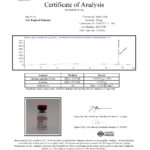
 COA
COA
What is Retatrutide?
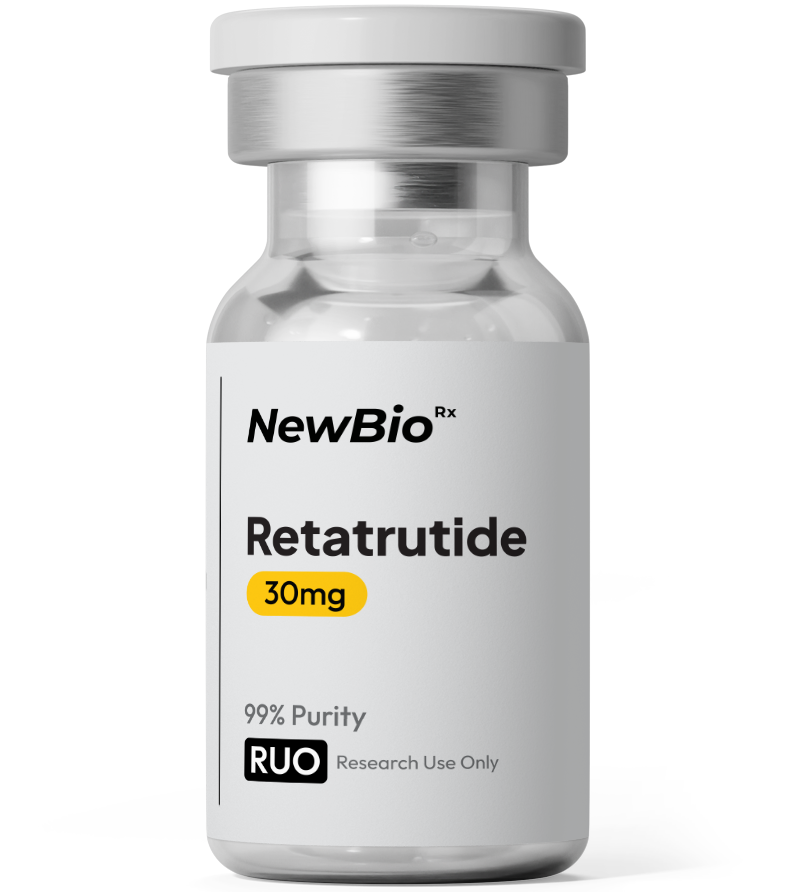
Retatrutide (30mg) from NewBioRx is a high-purity synthetic peptide designed as a triple agonist of the GLP-1, GIP, and glucagon (GCGR) receptors, allowing researchers to investigate coordinated incretin signaling and related pathways involved in glucose regulation, lipid metabolism, energy balance, and endocrine communication between tissues. The compound is commonly used in metabolic research exploring mechanisms of appetite signaling, insulin pathway modulation, and cellular energy regulation. Produced using advanced solid-phase peptide synthesis (SPPS) and verified by HPLC analysis to achieve >99.9% purity, the peptide is supplied in a 30mg format to support larger laboratory research workflows.
Retatrutide (LY3437943) is a synthetic peptide engineered to function as a multi-receptor signaling agonist within incretin-related metabolic pathways. The molecule is classified as a triple receptor agonist because it interacts with three endocrine receptors involved in metabolic regulation: the glucagon-like peptide-1 receptor (GLP-1R), the glucose-dependent insulinotropic polypeptide receptor (GIPR), and the glucagon receptor (GCGR). By engaging these receptors simultaneously, Retatrutide enables researchers to investigate coordinated incretin and glucagon signaling mechanisms that influence cellular energy sensing, metabolic pathway activity, and endocrine communication between tissues [1].
Structurally, Retatrutide is derived from the glucagon peptide backbone and consists of a 39-amino-acid sequence modified with targeted substitutions that enhance resistance to enzymatic degradation while preserving receptor affinity. The peptide is conjugated to a C20 fatty diacid moiety, a modification that supports extended biological activity in experimental systems and sustained receptor engagement across signaling pathways.
Studies examining receptor binding have shown that Retatrutide demonstrates strong activity at the human GIP receptor while maintaining measurable activity at both GLP-1 and glucagon receptors, creating a balanced activation profile that allows researchers to explore receptor crosstalk and multi-pathway metabolic signaling [2].
Activation of these receptor systems allows investigation of several interconnected physiological processes. GLP-1 receptor signaling is frequently studied for its role in appetite signaling pathways, gastric motility regulation, and glucose-dependent insulin secretion. GIP receptor engagement is associated with insulin signaling amplification and lipid metabolism processes within adipose tissue. Meanwhile, glucagon receptor activation provides a pathway for studying mechanisms linked to hepatic fatty-acid oxidation, lipolysis, and cellular energy-expenditure pathways. Studying these signaling systems together allows researchers to examine how multi-receptor agonism influences broader metabolic regulatory networks within controlled laboratory models.
Pharmacologically, Retatrutide exhibits dose-dependent kinetics and is primarily processed through hepatic metabolic pathways without significant interaction with cytochrome P450 enzyme systems. Experimental observations also show delayed gastric emptying consistent with GLP-1 receptor signaling, although this effect may diminish over extended observation periods in some research models. Because the compound activates three interconnected receptor systems simultaneously, it is frequently used as a research tool to investigate integrated endocrine signaling mechanisms and complex metabolic pathway interactions.
For experimental workflows, Retatrutide is available in multiple formats designed to support different research scales. The 30mg formulation supports higher-throughput protocols, extended study timelines, and experimental programs requiring larger material quantities across multiple assay runs, while the Retatrutide 16mg format provides a smaller-scale option for targeted receptor binding studies or early-stage pathway investigations.
Because Retatrutide simultaneously engages several tightly regulated receptor systems, experimental reliability depends heavily on peptide purity and molecular stability. Even small amounts of degradation products or synthesis impurities can introduce unintended receptor interactions or background signaling activity that complicates interpretation in receptor binding assays, metabolic pathway studies, and cell-based experiments.
Retatrutide supplied by NewBioRx is produced using controlled solid-phase peptide synthesis (SPPS) procedures followed by analytical purification and verification. High-performance liquid chromatography (HPLC) is used to confirm molecular identity and verify purity levels exceeding 99.9%, helping ensure consistent physicochemical properties across production batches. The peptide is supplied in lyophilized form to preserve stability during storage and transport, supporting reliable performance in receptor signaling assays, biochemical investigations, and other controlled laboratory research applications.
Retatrutide Chemical Identity
Retatrutide is a synthetic peptide analog belonging to the glucagon peptide family and engineered to interact with multiple incretin-associated receptor systems. The molecule contains a modified amino acid sequence derived from the glucagon backbone and includes substitutions designed to improve resistance to enzymatic degradation while preserving receptor binding functionality.
Structural modifications within the peptide sequence influence receptor selectivity and signaling behavior across GLP-1, GIP, and glucagon receptor pathways. These features enable stable receptor engagement in biochemical assays and make Retatrutide useful for studying coordinated incretin signaling mechanisms within controlled experimental environments.
Chemical Properties and Registry Information for Retatrutide
The following identifiers describe the molecular composition and registry information associated with Retatrutide for laboratory research.| Property | Value |
| Name & Synonyms | Retatrutide, LY3437943 |
| PubChem CID | 171390338 |
| CAS Number | 2381089-83-2 |
| Molecular Formula | C221H342N46O68 |
| Molecular Weight | 4731 g/mol |
| Peptide Length | 39 amino acids |
| Compound Class | Synthetic incretin peptide analog (triple hormone receptor agonist) |
| Primary Targets | GLP-1 receptor (GLP-1R), glucose-dependent insulinotropic polypeptide receptor (GIPR), glucagon receptor (GCGR) |
| InChIKey | MLOLQJNKXBNWFW-SAGGEDDASA-N |
| IUPAC Name |
20-[[(1S)-4-[2-[2-[2-[[(5S)-5-[[(2S)-6-amino-2-[[(2S)-2-[[(2S)-2-[[(2R)-2-[[(3S)-2-[[(2S)-2-[[(2S)-2-[[(2S)-2-[[(2S)-2-[[(2S,3R)-2-[[(2S)-2-[[(2S,3R)-2-[[2-[[(2S)-5-amino-2-[[2-[[(2S)-2-amino-3-(4-hydroxyphenyl)propanoyl]amino]-2-methylpropanoyl]amino]-5-oxopentanoyl]amino]acetyl]amino]-3-hydroxybutanoyl]amino]-3-phenylpropanoyl]amino]-3-hydroxybutanoyl]amino]-3-hydroxypropanoyl]amino]-3-carboxypropanoyl]amino]-3-(4-hydroxyphenyl)propanoyl]amino]-3-hydroxypropanoyl]amino]-3-methylpentanoyl]amino]-2,4-dimethylpentanoyl]amino]-4-methylpentanoyl]amino]-3-carboxypropanoyl]amino]hexanoyl]amino]-6-[[(2S)-1-[[(2S)-5-amino-1-[[1-[[(2S)-1-[[(2S)-1-[[(3S)-1-[[(2S)-1-[[(2S)-1-[[(2S)-1-[[(2S)-1-[[(2S)-1-[[2-[[2-[(2S)-2-[[(2S)-1-[[(2S)-1-[[2-[[(2S)-1-[(2S)-2-[(2S)-2-[(2S)-2-[[(2S)-1-amino-3-hydroxy-1-oxopropan-2-yl]carbamoyl]pyrrolidine-1-carbonyl]pyrrolidine-1-carbonyl]pyrrolidin-1-yl]-1-oxopropan-2-yl]amino]-2-oxoethyl]amino]-3-hydroxy-1-oxopropan-2-yl]amino]-3-hydroxy-1-oxopropan-2-yl]carbamoyl]pyrrolidin-1-yl]-2-oxoethyl]amino]-2-oxoethyl]amino]-4-carboxy-1-oxobutan-2-yl]amino]-4-methyl-1-oxopentan-2-yl]amino]-4-methyl-1-oxopentan-2-yl]amino]-3-(4-hydroxyphenyl)-1-oxopropan-2-yl]amino]-4-carboxy-1-oxobutan-2-yl]amino]-3-methyl-1-oxopentan-2-yl]amino]-1-oxo-3-phenylpropan-2-yl]amino]-1-oxopropan-2-yl]amino]-2-methyl-1-oxopropan-2-yl]amino]-1,5-dioxopentan-2-yl]amino]-1-oxopropan-2-yl]amino]-6-oxohexyl]amino]-2-oxoethoxy]ethoxy]ethylamino]-1-carboxy-4-oxobutyl]amino]-20-oxoicosanoic acid
|
|---|
Chemical Structure
2D Structure

3D Structure

Retatrutide Research Applications
Retatrutide is widely used in laboratory research as a multi-receptor signaling probe for studying incretin and glucagon pathway integration. Because the peptide activates GIPR, GLP-1R, and GCGR within a single molecular framework, it allows researchers to examine how endocrine signaling pathways coordinate metabolic responses across multiple tissues.
Rather than functioning as a single-target receptor agonist, Retatrutide provides a model system for investigating tri-agonist biology and receptor crosstalk. Laboratory studies commonly explore receptor pharmacology, cyclic AMP signaling pathways, metabolic regulation, lipid metabolism, and cross-tissue endocrine communication.
Weight Regulation and Adipose Tissue Research
Retatrutide is frequently studied in metabolic research examining body weight regulation and adipose tissue dynamics. Because the peptide simultaneously activates GLP-1R, GIPR, and GCGR, it provides a model for investigating how coordinated receptor signaling influences energy intake pathways and fat metabolism in experimental systems. Clinical and translational studies have reported substantial changes in body weight and adipose tissue mass when the compound is evaluated in controlled trials and metabolic models, suggesting that multi-receptor agonism can alter energy balance through integrated endocrine signaling mechanisms [2][3][5].
Research also indicates that tri-agonist signaling can influence adipose tissue distribution and body composition parameters measured in clinical and experimental settings. Investigators commonly analyze total fat mass, visceral adiposity, and related biomarkers to understand how GLP-1R, GIPR, and GCGR signaling interact to regulate lipid storage and mobilization. These findings have positioned Retatrutide as a useful experimental probe for studying how incretin and glucagon pathways contribute to systemic energy regulation and adipose tissue metabolism [1][2].
Metabolic Signaling and Insulin Pathway Research
Another major area of investigation involves glucose signaling and insulin pathway regulation. Because GLP-1R and GIPR are central components of incretin physiology, Retatrutide allows researchers to explore how simultaneous receptor activation influences cyclic AMP signaling, hormone secretion pathways, and metabolic regulatory networks. Clinical research and randomized trials have reported measurable changes in glucose biomarkers, insulin signaling dynamics, and metabolic markers when the compound is evaluated under controlled study conditions [2][3].
Mechanistic studies suggest that combined receptor activation may influence multiple components of glucose homeostasis, including insulin secretion pathways, peripheral insulin signaling, and hepatic glucose metabolism. Experimental research therefore uses Retatrutide as a model compound for studying incretin-mediated endocrine signaling and how multiple hormonal inputs interact within metabolic regulatory systems [3][5].
Body Composition and Lean Tissue Research
Body composition represents another important area of investigation in Retatrutide research. Experimental studies have evaluated how multi-receptor signaling influences the relative distribution of fat mass and lean tissue within metabolic models. Body composition assessments, including imaging techniques such as dual-energy X-ray absorptiometry (DXA), have been used in clinical studies to analyze changes in adipose tissue, lean mass, and regional fat distribution following exposure to tri-agonist signaling compounds [2][3].
These investigations help researchers examine how metabolic signaling pathways influence energy substrate utilization, lipid mobilization, and tissue-specific metabolic responses. Because GCGR activation is associated with changes in hepatic energy metabolism and lipid oxidation pathways, Retatrutide provides a framework for studying how multiple endocrine signaling inputs influence whole-body energy partitioning in controlled experimental environments [5].
Liver Metabolism and Hepatic Signaling Research
Retatrutide is also widely used in research investigating hepatic lipid metabolism and liver-associated metabolic signaling. Preclinical and clinical studies examining multi-receptor agonists have reported changes in liver fat measurements, hepatic triglyceride content, and biochemical markers associated with liver metabolism. These findings suggest that coordinated incretin and glucagon receptor activation may influence pathways involved in hepatic lipid handling and metabolic signaling [5][8].
Experimental studies in metabolic disease models have further examined how Retatrutide affects inflammatory signaling, lipid accumulation, and metabolic enzyme activity within liver tissue. In diet-induced steatohepatitis models, researchers have observed alterations in hepatic triglycerides, cholesterol levels, inflammatory markers, and alanine aminotransferase activity following exposure to the compound, providing insight into how multi-receptor signaling influences hepatic metabolic regulation [7].
Cardiometabolic Biomarker Research
Researchers also use Retatrutide to investigate cardiometabolic biomarker responses associated with integrated metabolic signaling. Clinical studies have reported changes in metabolic markers such as lipid concentrations, glucose biomarkers, and blood pressure measurements when the compound is examined in controlled research settings. These observations have encouraged further investigation into how tri-agonist receptor activation influences broader cardiometabolic signaling networks [1][2][3].
Because metabolic regulation is distributed across multiple physiological systems—including endocrine tissues, liver, adipose tissue, and cardiovascular signaling pathways—Retatrutide provides a useful experimental tool for studying how coordinated receptor activation affects systemic metabolic biomarkers and physiological signaling responses.
Appetite Signaling and Feeding Behavior Research
Another area of investigation involves appetite signaling and feeding behavior pathways. GLP-1 receptors located in hypothalamic and brainstem centers are known to influence hunger signaling and satiety pathways, while GIP and glucagon receptor signaling contribute to nutrient sensing and metabolic feedback mechanisms. By activating all three receptor systems simultaneously, Retatrutide allows researchers to study how endocrine signals regulating appetite interact with broader metabolic regulatory pathways [5][6].
Experimental studies evaluating appetite and eating behavior commonly measure hunger ratings, satiety signals, food intake patterns, and behavioral responses in both clinical and preclinical models. These measurements help researchers examine how coordinated hormonal signaling may influence feeding regulation and nutrient-driven endocrine responses.
Energy Expenditure and Metabolic Rate Research
Retatrutide's tri-agonist receptor activity also makes it relevant for research examining metabolic rate and energy expenditure pathways. Glucagon receptor signaling has been associated with increased hepatic metabolic activity and shifts in substrate utilization, while GLP-1R and GIPR signaling influence metabolic regulation through endocrine feedback mechanisms. Investigating these pathways together allows researchers to explore how multi-receptor agonism affects systemic energy metabolism [5].
In experimental models, researchers often measure oxygen consumption, substrate oxidation patterns, metabolic biomarkers, and energy balance parameters to evaluate how receptor activation influences energy utilization across tissues. These investigations help clarify how integrated incretin and glucagon signaling contributes to the regulation of metabolic energy flux in complex biological systems.
Overall, Retatrutide provides a versatile experimental platform for studying integrated endocrine signaling across metabolic tissues. Its tri-agonist receptor profile enables researchers to examine receptor pharmacology, metabolic regulation, lipid metabolism, and cross-tissue signaling networks within controlled laboratory and clinical research environments [1][5].
How Retatrutide Works (Mechanism of Action)
In biochemical and preclinical research systems, Retatrutide interacts with three class B G protein-coupled receptors that regulate metabolic signaling networks: GLP-1R, GIPR, and GCGR. By activating these receptors simultaneously, the peptide enables investigation of integrated endocrine signaling pathways that influence cellular energy sensing and metabolic enzyme activity [5].
Target Engagement
Retatrutide binds to GLP-1R, GIPR, and GCGR in a manner similar to endogenous incretin and glucagon peptides. These receptors are activated when peptide ligands interact with extracellular receptor domains, producing conformational changes that initiate intracellular signaling.
Experimental receptor assays demonstrate that Retatrutide functions as an agonist at all three receptors, although the peptide exhibits differing potency levels across the receptor set. Studies report comparatively strong activity at GIPR alongside measurable activation of GLP-1R and GCGR.
This receptor engagement profile allows researchers to study signaling integration across multiple endocrine receptor systems.
Downstream Signaling Pathways
Activation of these receptors triggers intracellular signaling through Gs-coupled pathways that stimulate adenylate cyclase and increase intracellular cyclic AMP concentrations.
Cyclic AMP functions as a second messenger that activates protein kinase A and related signaling proteins involved in metabolic regulation. These signaling cascades influence transcription factors, metabolic enzymes, and cellular energy pathways.
Laboratory assays often measure these effects using:
-
cyclic AMP reporter systems
-
kinase phosphorylation analysis
-
transcriptional profiling
These approaches help researchers examine how multi-receptor signaling alters intracellular signaling dynamics.
Cellular Effects in Experimental Models
Experimental studies using Retatrutide have explored how tri-receptor activation influences metabolic signaling across tissues in preclinical systems. Observations in rodent models include changes in metabolic biomarkers, hepatic lipid levels, and gene expression patterns related to energy metabolism [5].
Cell-based experiments also demonstrate receptor-dependent signaling changes when Retatrutide interacts with GLP-1R, GIPR, or GCGR expressing cells.
These findings illustrate how multi-receptor peptide agonists can influence metabolic signaling networks in experimental models.
Retatrutide Comparison: Related Research Compounds
Retatrutide belongs to a growing class of incretin-based research peptides that target multiple endocrine receptors involved in metabolic signaling. To better understand its unique properties, researchers often compare Retatrutide with other incretin pathway ligands such as tirzepatide and semaglutide.| Property | Retatrutide | Tirzepatide | Semaglutide |
| Type | Synthetic peptide tri agonist | Synthetic peptide dual agonist | Synthetic peptide analog |
| Primary Target | GLP-1R, GIPR, GCGR | GLP-1R and GIPR | GLP-1R |
| Mechanism Summary | Activates three metabolic hormone receptors simultaneously | Activates GLP-1 and GIP receptors | Selective GLP-1 receptor agonist |
| Typical Research Systems | receptor signaling assays, metabolic animal models | incretin signaling studies | GLP-1 pathway experiments |
| Mechanistic Focus | multi-receptor metabolic signaling | dual incretin signaling | GLP-1 receptor signaling |
| Research Stage | receptor pharmacology and metabolic research | metabolic signaling research | incretin signaling research |
These compounds collectively provide researchers with tools for investigating incretin receptor biology, metabolic signaling integration, and endocrine pathway regulation.
Retatrutide Lab Safety & Handling Guidelines
In biochemical and preclinical research systems, Retatrutide interacts with three class B G protein-coupled receptors that regulate metabolic signaling networks: GLP-1R, GIPR, and GCGR. By activating these receptors simultaneously, the peptide enables investigation of integrated endocrine signaling pathways that influence cellular energy sensing and metabolic enzyme activity [5].
Target Engagement
Retatrutide binds to GLP-1R, GIPR, and GCGR in a manner similar to endogenous incretin and glucagon peptides. These receptors are activated when peptide ligands interact with extracellular receptor domains, producing conformational changes that initiate intracellular signaling.
Experimental receptor assays demonstrate that Retatrutide functions as an agonist at all three receptors, although the peptide exhibits differing potency levels across the receptor set. Studies report comparatively strong activity at GIPR alongside measurable activation of GLP-1R and GCGR.
This receptor engagement profile allows researchers to study signaling integration across multiple endocrine receptor systems.
Downstream Signaling Pathways
Activation of these receptors triggers intracellular signaling through Gs-coupled pathways that stimulate adenylate cyclase and increase intracellular cyclic AMP concentrations.
Cyclic AMP functions as a second messenger that activates protein kinase A and related signaling proteins involved in metabolic regulation. These signaling cascades influence transcription factors, metabolic enzymes, and cellular energy pathways.
Laboratory assays often measure these effects using:
- cyclic AMP reporter systems
- kinase phosphorylation analysis
- transcriptional profiling
These approaches help researchers examine how multi-receptor signaling alters intracellular signaling dynamics.
Cellular Effects in Experimental Models
Experimental studies using Retatrutide have explored how tri-receptor activation influences metabolic signaling across tissues in preclinical systems. Observations in rodent models include changes in metabolic biomarkers, hepatic lipid levels, and gene expression patterns related to energy metabolism [5].
Cell-based experiments also demonstrate receptor-dependent signaling changes when Retatrutide interacts with GLP-1R, GIPR, or GCGR expressing cells.
These findings illustrate how multi-receptor peptide agonists can influence metabolic signaling networks in experimental models.
Frequently Asked Questions
What is Retatrutide used for in research?
Retatrutide is commonly used in laboratory research to investigate signaling between three metabolic hormone receptors: the glucagon-like peptide-1 receptor (GLP-1R), the glucose-dependent insulinotropic polypeptide receptor (GIPR), and the glucagon receptor (GCGR). Because the peptide activates all three pathways simultaneously, researchers use it to study incretin signaling, receptor crosstalk, and coordinated metabolic pathway regulation in controlled experimental models.
Why choose Retatrutide 30mg instead of smaller quantities?
Retatrutide 30mg provides a larger quantity of peptide suitable for extended experimental programs. Laboratories conducting multi-assay studies, replicate experiments, or long-term metabolic models may prefer the 30mg format because it supports consistent experimental workflows using the same production batch.
How should Retatrutide be stored?
Lyophilized Retatrutide is typically stored at approximately −4 °F (−20 °C), protected from light and moisture. After reconstitution, peptide solutions are generally maintained between 36–46 °F (2–8 °C). Use reconstituted solutions quickly, usually within a few days for the best stability.
How does NewBioRx ensure the purity of research peptides?
NewBioRx manufactures research peptides using controlled solid phase peptide synthesis processes followed by analytical purification. Techniques such as high performance liquid chromatography are used to verify peptide identity and confirm high purity levels. Each production batch undergoes analytical verification to ensure consistent molecular composition, helping support reproducible performance in receptor assays, biochemical studies, and other laboratory research applications.
Does NewBioRx provide Certificates of Analysis for research compounds?
Yes. NewBioRx provides a Certificate of Analysis for each production lot of research peptides. These documents typically include information related to peptide identity confirmation, purity testing results, analytical methods used during verification, and batch identification details. Certificates of Analysis allow researchers to review analytical documentation and confirm that the material meets laboratory quality standards before experimental use.
How are lyophilized research peptides packaged and shipped?
Lyophilized peptides are packaged in sealed laboratory vials designed to protect the material from environmental exposure during storage and transport. Packaging methods help limit contact with moisture, light, and temperature fluctuations that could affect peptide stability. Shipping procedures are organized to maintain compound integrity so that research materials arrive in suitable condition for laboratory reconstitution and experimental preparation.
What factors influence the cost of research peptides such as Retatrutide?
Several technical factors contribute to the cost of complex research peptides. These include peptide length, sequence complexity, the number of synthesis steps required, purification procedures, and analytical testing used to confirm purity and identity. Larger peptides such as Retatrutide require multi step solid phase peptide synthesis followed by purification and analytical verification, which increases manufacturing complexity and influences overall production cost for laboratory grade materials.
What makes Retatrutide different from GLP-1 or dual agonist peptides?
Retatrutide differs from earlier incretin peptides because it activates three metabolic hormone receptors: GLP-1R, GIPR, and GCGR, all within a single molecular structure. This tri-agonist design allows researchers to study how multiple endocrine signaling pathways interact simultaneously, making the peptide useful for investigating integrated metabolic signaling rather than single-receptor activity alone.
Regulatory & Legal (U.S.)
Retatrutide peptide supplied by NewBioRx is intended strictly for research and development use only. This material is provided solely for laboratory investigation and scientific experimentation conducted by qualified professionals in controlled research environments.
This product is not for human or veterinary use. It is not a drug, food, dietary supplement, medical device, or cosmetic, and it has not been approved by the U.S. Food and Drug Administration (FDA) for medical, diagnostic, or therapeutic purposes.
Any information presented regarding Retatrutide reflects findings from published scientific literature and preclinical or clinical research sources. These statements have not been evaluated by the FDA and the compound is not intended to diagnose, treat, cure, or prevent any disease.
The introduction of this product into humans or animals is strictly prohibited and may violate applicable laws and regulations. Retatrutide supplied by NewBioRx must only be handled by trained laboratory personnel familiar with safe chemical handling practices and research material protocols.
Researchers, laboratories, and purchasing institutions are responsible for ensuring that the acquisition, storage, handling, use, and disposal of Retatrutide comply with all applicable federal, state, and local regulations, as well as institutional policies governing laboratory research materials.
Sources & References
- Retatrutide-A Game Changer in Obesity Pharmacotherapy, Katsi V; Koutsopoulos G; Fragoulis C; Dimitriadis K; Tsioufis K, Biomolecules (Vol. 15, Issue 6, June 2025, Article 796). https://doi.org/10.3390/biom15060796
- Efficacy and Safety of Retatrutide, a Novel GLP-1, GIP, and Glucagon Receptor Agonist for Obesity Treatment: A Systematic Review and Meta-Analysis of Randomized Controlled Trials, Abdrabou Abouelmagd A; Abdelrehim AM; Bashir MN; Abdelsalam F; Marey A; Tanas Y; Abuklish DM; Belal MM, Proceedings (Baylor University Medical Center) (Vol. 38, Issue 3, 2025, pp. 291–303). https://doi.org/10.1080/08998280.2025.2456441
- Retatrutide, a GIP, GLP-1 and Glucagon Receptor Agonist, for People with Type 2 Diabetes: A Randomised, Double-Blind, Placebo and Active-Controlled, Parallel-Group, Phase 2 Trial Conducted in the USA, Rosenstock J; Frias J; Jastreboff AM; Du Y; Lou J; Gurbuz S; Thomas MK; Hartman ML; Haupt A; Milicevic Z; Coskun T, The Lancet (Vol. 402, Issue 10401, Aug 12, 2023, pp. 529–544). https://doi.org/10.1016/S0140-6736(23)01053-X
- Unleashing the Power of Retatrutide: A Possible Triumph Over Obesity and Overweight: A Correspondence, Naeem M; Imran L; Banatwala UESS, Health Science Reports (Vol. 7, Issue 2, Feb 2024, e1864). https://doi.org/10.1002/hsr2.1864
- LY3437943, a Novel Triple Glucagon, GIP, and GLP-1 Receptor Agonist for Glycemic Control and Weight Loss: From Discovery to Clinical Proof of Concept, Coskun T; Urva S; Roell WC; Qu H; Loghin C; Moyers JS; O'Farrell LS; Briere DA; Sloop KW; Thomas MK; Pirro V; Wainscott DB; Willard FS; Abernathy M; Morford L; Du Y; Benson C; Gimeno RE; Haupt A; Milicevic Z, Cell Metabolism (Vol. 34, Issue 9, Sept 6, 2022, pp. 1234–1247.e9). https://doi.org/10.1016/j.cmet.2022.07.013
- Glucagon-like Peptide-1 Receptor (GLP-1R) Signaling: Making the Case for a Functionally Gs Protein-Selective GPCR, Lymperopoulos A; Altsman VL; Stoicovy RA, International Journal of Molecular Sciences (Vol. 26, Issue 15, 2025, Article 7239). https://doi.org/10.3390/ijms26157239
- Retatrutide Improves Steatohepatitis in an Accelerated Mouse Model of Diet-Induced Steatohepatitis with a Fructose Binge, Viebahn GK; Khurana A; Freund L; Chilin-Fuentes D; Jepsen K; Rosenthal SB; Chatterjee S; Ellenrieder V; Hsu CL; Schnabl B; Hartmann P, American Journal of Physiology Gastrointestinal and Liver Physiology (Vol. 329, Issue 6, Dec 1, 2025, pp. G680–G695). https://doi.org/10.1152/ajpgi.00164.2025
- Triple Hormone Receptor Agonist Retatrutide for Metabolic Dysfunction-Associated Steatotic Liver Disease: A Randomized Phase 2a Trial, Sanyal AJ; Kaplan LM; Frias JP; et al., Nature Medicine (Vol. 30, 2024, pp. 2037–2048). https://doi.org/10.1038/s41591-024-03018-2