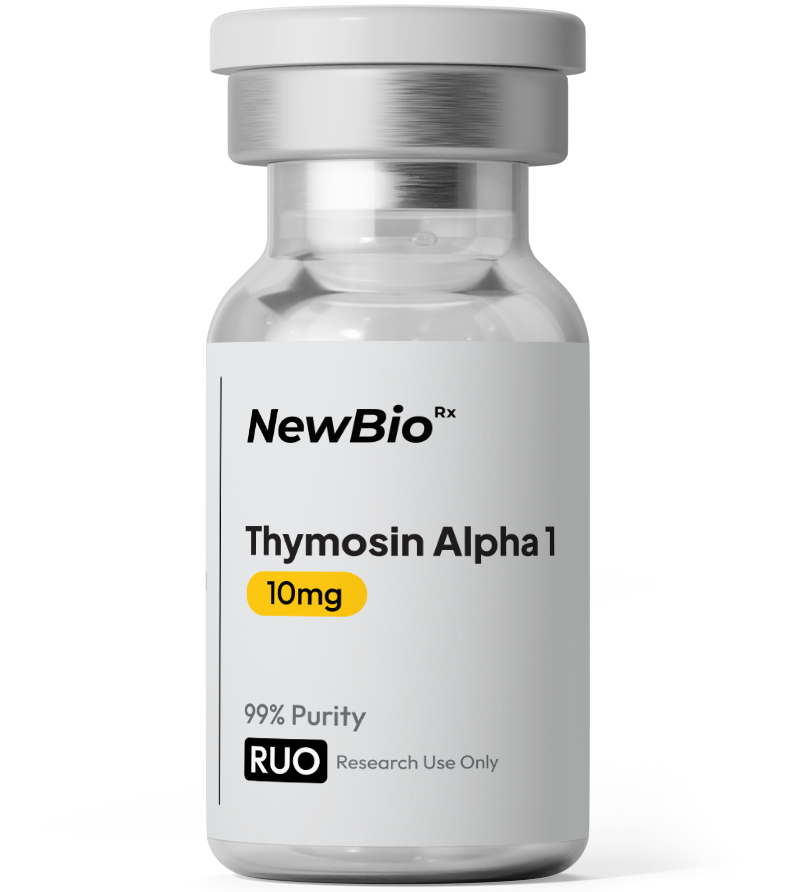
What is Thymosin Alpha 1?
Thymosin Alpha 1 (Tα1) is a naturally occurring bioactive peptide consisting of 28 amino acids that was first isolated from bovine thymus tissue in 1977. This peptide represents a critical component of the immune system, derived from the amino-terminus of prothymosin alpha through proteolytic cleavage by the lysosomal enzyme legumain. As an endogenous immunomodulatory agent, Thymosin Alpha 1 is produced by the thymus gland and is widely distributed throughout various tissues including the spleen, lung, kidney, brain, and blood, with the highest concentrations found in thymic tissue.
The peptide functions as a biological response modifier with pleiotropic immunomodulatory properties, meaning it can both enhance and regulate immune responses depending on the physiological context. Thymosin Alpha 1 plays a fundamental role in T-cell development, maturation, and differentiation, particularly influencing CD4+ helper T-cells and CD8+ cytotoxic T-cells. The peptide is highly conserved across mammalian species, including bovine, porcine, ovine, and human, indicating its critical biological importance in immune system function.
Endogenous serum levels of Thymosin Alpha 1 in healthy adults typically range from 0.1-1.0 ng/mL, though these concentrations are notably higher in newborns and decrease gradually throughout childhood, suggesting an essential role in early immune development. Circulating levels tend to be lower in diseased individuals and higher during pregnancy, reflecting the peptide's responsiveness to immune system demands.
Thymosin Alpha 1 exerts its immunomodulatory effects through multiple mechanisms. The peptide acts through Toll-like receptor (TLR) signaling pathways, particularly TLR2, TLR3, TLR4, and TLR9, activating downstream signaling cascades including interferon regulatory factor 3 (IRF3), nuclear factor kappa B (NF-κB), and p38 mitogen-activated protein kinase (MAPK) pathways. These signaling mechanisms coordinate both innate and adaptive immune responses, enabling the peptide to restore immune homeostasis during infections, inflammatory conditions, and immunocompromised states.
The synthetic form of Thymosin Alpha 1, known as thymalfasin or Zadaxin, is approved in over 35 countries for treating hepatitis B and C and as an immune enhancer in various disease conditions. Production methods include solid-phase peptide synthesis and recombinant genetic engineering, allowing for pharmaceutical-grade peptide availability for research and clinical applications.
Chemical Identity
The compound is characterized by its unique molecular structure and specific chemical properties that make it valuable for research applications.Purity & Quality
Our Thymosin Alpha 1 is provided at research-grade purity, suitable for laboratory applications and experimental protocols. Each batch undergoes quality control testing to ensure consistency and reliability for your research needs. Important: This product is intended for research purposes only and is not for human or veterinary use. It is sold for laboratory and scientific investigation only.Thymosin Alpha 1 Structure
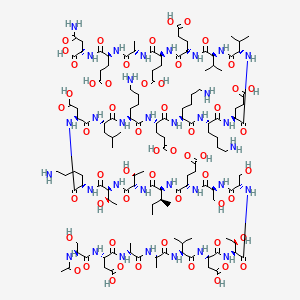
Chemical Structure
2D Structure
3D Structure

Chemical Properties
| CAS Number | 62304-98-7 |
|---|---|
| Molecular Formula | C129H215N33O55 |
| Molecular Weight | 3108.3 g/mol |
| IUPAC Name |
(4S)-4-[[(2S)-2-[[(2S)-2-[[(2S)-2-[[(2S)-2-[[(2S)-2-[[(2S)-2-[[(2S)-2-[[(2S)-2-[[(2S)-2-[[(2S)-2-[[(2S)-2-[[(2S)-2-[[(2S)-2-[[(2S,3R)-2-[[(2S,3R)-2-[[(2S,3S)-2-[[(2S)-2-[[(2S)-2-[[(2S)-2-[[(2S,3R)-2-[[(2S)-2-[[(2S)-2-[[(2S)-2-[[(2S)-2-[[(2S)-2-[[(2S)-2-acetamido-3-hydroxypropanoyl]amino]-3-carboxypropanoyl]amino]propanoyl]amino]propanoyl]amino]-3-methylbutanoyl]amino]-3-carboxypropanoyl]amino]-3-hydroxybutanoyl]amino]-3-hydroxypropanoyl]amino]-3-hydroxypropanoyl]amino]-4-carboxybutanoyl]amino]-3-methylpentanoyl]amino]-3-hydroxybutanoyl]amino]-3-hydroxybutanoyl]amino]-6-aminohexanoyl]amino]-3-carboxypropanoyl]amino]-4-methylpentanoyl]amino]-6-aminohexanoyl]amino]-4-carboxybutanoyl]amino]-6-aminohexanoyl]amino]-6-aminohexanoyl]amino]-4-carboxybutanoyl]amino]-3-methylbutanoyl]amino]-3-methylbutanoyl]amino]-4-carboxybutanoyl]amino]-4-carboxybutanoyl]amino]propanoyl]amino]-5-[[(1S)-3-amino-1-carboxy-3-oxopropyl]amino]-5-oxopentanoic acid
|
| InChIKey | NZVYCXVTEHPMHE-ZSUJOUNUSA-N |
Thymosin Alpha 1 Research
Research Applications
Immune Function and Cellular Protection
Thymosin Alpha 1 demonstrates profound effects on immune system function through multiple mechanisms of action. Research published in Blood demonstrates that the peptide induces functional maturation of dendritic cells and promotes interleukin-12 production through the p38 MAPK/NF-κB-dependent pathway, occurring via signaling through the myeloid differentiation factor 88-dependent pathway involving distinct Toll-like receptors. This activation results in enhanced antigen presentation and coordination of innate and adaptive immune responses.
Studies published in Immunology and Cell Biology show that Thymosin Alpha 1 significantly enhances dendritic cell differentiation and functional maturation from human peripheral blood CD14+ monocytes. The peptide increases expression of key dendritic cell surface markers including CD40, CD80, and MHC class I and II molecules by approximately 30-40%, enhancing the cells' capacity to present antigens and activate T-cells. Treatment with Thymosin Alpha 1 activates p38 MAPK and NF-κB pathways independently of externally introduced cytokines, demonstrating direct cellular effects.
The peptide promotes T-cell development from precursor stem cells into mature CD4+ and CD8+ T-cells, increasing T-cell proliferation, differentiation, and functional capacity. Research indicates Thymosin Alpha 1 treatment significantly increases levels of signal joint T-cell receptor excision circles in patients with advanced immune deficiency, serving as a biomarker of enhanced thymic output and improved immune reconstitution. The peptide enhances natural killer cell activity by upregulating NKG2D receptor expression, improving recognition and elimination of infected or malignant cells.
Thymosin Alpha 1 modulates cytokine production in a context-dependent manner, increasing beneficial Th1-type cytokines such as interferon-gamma, interleukin-2, and interleukin-3 while regulating Th2-type cytokines. This cytokine modulation supports balanced immune responses rather than uncontrolled activation. Studies demonstrate the peptide promotes regulatory T-cell (Treg) expansion, which is essential for maintaining immune tolerance and preventing autoimmune reactions. In autoimmune disease models, Thymosin Alpha 1 significantly increases Treg proportions while downregulating inflammatory cytokine production, demonstrating immunoregulatory rather than merely immunostimulatory effects.
Sources:
- Romani L, et al. "Thymosin alpha 1 activates dendritic cells for antifungal Th1 resistance through toll-like receptor signaling." Blood. 2004;103(11):4232-4239. https://ashpublications.org/blood/article/103/11/4232/17900/Thymosin-1-activates-dendritic-cells-for
- Liu X, et al. "Thymosin-alpha1 modulates dendritic cell differentiation and functional maturation from human peripheral blood CD14+ monocytes." Immunology and Cell Biology. 2007;85(7):557-565. https://pmc.ncbi.nlm.nih.gov/articles/PMC1986709/
- Romani L, et al. "Thymosin alpha1: an endogenous regulator of inflammation, immunity, and tolerance." Annals of the New York Academy of Sciences. 2007;1112:326-338. https://pubmed.ncbi.nlm.nih.gov/17495242/
Wound Healing and Tissue Repair
Research demonstrates that Thymosin Alpha 1 possesses significant regenerative properties that accelerate wound healing and promote tissue repair through multiple mechanisms. Studies published in The Journal of Immunology show that Thymosin Alpha 1 stimulates endothelial cell migration and angiogenesis, acting as a potent chemoattractant for endothelial cells and monocytes in vitro. The peptide enhances morphologic differentiation of endothelial cells into capillary-like structures, a critical process for new blood vessel formation.
In vivo studies demonstrate that Thymosin Alpha 1 stimulates angiogenesis in subcutaneous models and, when administered either topically or systemically, significantly accelerates wound healing in experimental wound models. The peptide's wound healing effects are mediated through enhanced endothelial cell proliferation, basement membrane degradation, and increased synthesis of extracellular matrix components. These processes are fundamental to effective tissue repair and regeneration.
Research indicates that Thymosin Alpha 1 promotes keratinocyte migration and stimulates collagen production, both crucial components of the wound healing cascade. The peptide's ability to enhance angiogenesis provides improved blood flow to healing tissues, delivering essential nutrients and oxygen while removing metabolic waste products. This enhanced vascular supply accelerates the overall healing process and reduces the risk of infection in chronic or slow-healing wounds.
Studies show that Thymosin Alpha 1 treatment reduces scar tissue formation by optimizing collagen deposition patterns during the healing process. Unlike excessive scarring that can occur with unregulated healing, the peptide promotes organized tissue remodeling that maintains both structural integrity and functional capacity. The peptide's immunomodulatory effects also contribute to wound healing by regulating inflammatory responses at injury sites, preventing excessive inflammation that could delay healing while maintaining sufficient immune activity to prevent infection.
Sources:
- Malinda KM, et al. "Thymosin alpha 1 stimulates endothelial cell migration, angiogenesis, and wound healing." Journal of Immunology. 1998;160(2):1001-1006. https://pubmed.ncbi.nlm.nih.gov/9551940/
- Malinda KM, et al. "Thymosin α1 Stimulates Endothelial Cell Migration, Angiogenesis, and Wound Healing." The Journal of Immunology. 1998;160(2):1001-1006. https://journals.aai.org/jimmunol/article/160/2/1001/69226/
Anti-Inflammatory Effects and Oxidative Stress Protection
Thymosin Alpha 1 demonstrates potent anti-inflammatory and antioxidant properties that protect tissues from oxidative damage and regulate inflammatory responses. Research published in World Journal of Virology shows that the peptide significantly amplifies the activity of key antioxidant enzymes including catalase, superoxide dismutase, and glutathione peroxidase, thereby reducing the production of reactive oxygen species and preventing oxidative damage to tissues, particularly in hepatic tissue.
Studies demonstrate that Thymosin Alpha 1 exhibits protective effects against oxidative stress by positively influencing liver superoxide dismutase and glutathione peroxidase activity, limiting free radical damage. In diabetic models, the peptide reduces malondialdehyde production while enhancing antioxidant enzyme function, indicating its capacity to greatly enhance overall antioxidative capability of tissues. Research published in Environmental Toxicology shows that Thymosin Alpha 1 treatment significantly enhances the activity of catalase, superoxide dismutase, and glutathione peroxidase at therapeutic concentrations while reducing cellular reactive oxygen species production.
Thymosin Alpha 1 exerts anti-inflammatory effects by modulating cytokine production and suppressing pro-inflammatory mediators. Research published in Frontiers in Neuroscience demonstrates that the peptide significantly reduces pro-inflammatory cytokines including tumor necrosis factor-alpha (TNF-α), interleukin-1 beta (IL-1β), and interleukin-6 (IL-6) in inflamed tissues and the central nervous system. Studies show these reductions occur at both local inflammation sites and systemically, indicating comprehensive anti-inflammatory effects.
In COVID-19 research published in The Open Forum Infectious Diseases, Thymosin Alpha 1 treatment significantly decreased expression of IL-6, IL-1β, TNF-α, and inflammatory chemokines in blood cells from infected patients. Conversely, the peptide upregulated anti-inflammatory interleukin-10 expression, demonstrating its ability to shift immune responses from pro-inflammatory to anti-inflammatory states. This bidirectional cytokine modulation reflects the peptide's role as an immune normalizer rather than simply an immune activator.
Studies published in Molecular Biology demonstrate that Thymosin Alpha 1 normalizes NF-κB and SAPK/JNK signaling cascades in inflammatory conditions, reducing the expression of genes associated with inflammation and cellular apoptosis. The peptide's capacity to reduce oxidative stress and inflammation makes it particularly valuable in treating conditions characterized by chronic inflammatory states, including metabolic disorders, autoimmune diseases, and age-related inflammatory processes.
Sources:
- Dominari A, et al. "Thymosin alpha 1: A comprehensive review of the literature." World Journal of Virology. 2020;9(5):67-78. https://pmc.ncbi.nlm.nih.gov/articles/PMC7747025/
- Armutcu F, et al. "Thymosin alpha 1 attenuates lipid peroxidation and improves fructose-induced steatohepatitis in rats." Clinical Biochemistry. 2005;38(6):540-547. https://pubmed.ncbi.nlm.nih.gov/15885234/
- Kharazmi-Khorassani J, Asoodeh A. "Thymosin alpha-1; a natural peptide inhibits cellular proliferation, cell migration, the level of reactive oxygen species and promotes the activity of antioxidant enzymes." Environmental Toxicology. 2019;34(8):941-949. https://pubmed.ncbi.nlm.nih.gov/31067016/
- Lu Y, et al. "Thymosin Alpha-1 Inhibits Complete Freund's Adjuvant-Induced Pain and Production of Microglia-Mediated Pro-inflammatory Cytokines in Spinal Cord." Frontiers in Neuroscience. 2019;13:314. https://pmc.ncbi.nlm.nih.gov/articles/PMC6616621/
- Romani G, et al. "Thymosin Alpha 1 Mitigates Cytokine Storm in Blood Cells From Coronavirus Disease 2019 Patients." Open Forum Infectious Diseases. 2021;8(1):ofaa588. https://pmc.ncbi.nlm.nih.gov/articles/PMC7798699/
- Sobolev VV, et al. "The Thymic Hormone Thymosin-1α Reduces the Pro-Inflammatory Response." Molecular Biology. 2023;57(6):1115-1124. https://link.springer.com/article/10.1134/S0026893323060110
Infectious Disease Management
Thymosin Alpha 1 has been extensively studied for its efficacy in treating various infectious diseases, particularly chronic viral infections. The peptide enhances antiviral immunity by improving T-cell responses and promoting production of antiviral cytokines. Research demonstrates that Thymosin Alpha 1 significantly improves outcomes in hepatitis B and C infections when used as adjunctive therapy with antiviral agents, showing enhanced immune responses and reduced viral loads.
Studies published in Molecules demonstrate that Thymosin Alpha 1 interacts with various Toll-like receptors (TLR3/4/9) to activate downstream IRF3 and NF-κB signaling pathways, promoting proliferation and activation of immune cells critical for antiviral defense. The peptide increases major histocompatibility complex (MHC) class I expression on infected cells, making virally infected cells more visible to the immune system and reducing their ability to evade immune surveillance. This enhanced viral antigen presentation facilitates more effective immune clearance of infected cells.
In hepatitis B treatment, clinical trials show that combination therapy with Thymosin Alpha 1 and interferon-alpha-2b resulted in normal serum ALT levels in 71% of patients at six months compared to only 35% receiving interferon alone. Hepatitis C virus RNA clearance occurred in 65% of patients treated with combination therapy versus 29% receiving interferon alone, demonstrating significant therapeutic synergy.
Research indicates Thymosin Alpha 1 increases intracellular glutathione levels, which is important for antiviral effects, and directly inhibits the growth of virally infected cells. The peptide has shown efficacy in treating HIV infection by enhancing CD4+ and CD8+ T-cell counts and improving immune reconstitution when combined with highly-active antiretroviral therapy. Studies demonstrate the peptide is well-tolerated and can dramatically increase immune system markers in patients with advanced disease.
During the COVID-19 pandemic, research published in Open Forum Infectious Diseases and Frontiers in Immunology demonstrated that Thymosin Alpha 1 treatment in severely ill patients helped restore immune homeostasis, reduce cytokine storm, and improve clinical outcomes. The peptide's ability to modulate excessive inflammatory responses while maintaining effective antiviral immunity proved particularly valuable in managing severe respiratory infections. Studies showed Thymosin Alpha 1 reduced hospitalization rates and mortality, especially in patients with greater disease severity, by restoring depleted T-cell populations and regulating inflammatory responses.
Sources:
- Tao N, et al. "Thymosin α1 and Its Role in Viral Infectious Diseases: The Mechanism and Clinical Application." Molecules. 2023;28(8):3539. https://pmc.ncbi.nlm.nih.gov/articles/PMC10144173/
- Dominari A, et al. "Thymosin alpha 1: A comprehensive review of the literature." World Journal of Virology. 2020;9(5):67-78. https://pmc.ncbi.nlm.nih.gov/articles/PMC7747025/
- Romani G, et al. "Thymosin Alpha 1 Mitigates Cytokine Storm in Blood Cells From Coronavirus Disease 2019 Patients." Open Forum Infectious Diseases. 2021;8(1):ofaa588. https://pmc.ncbi.nlm.nih.gov/articles/PMC7798699/
- Pica F, et al. "Thymosin alpha 1 restores the immune homeostasis in lymphocytes during Post-Acute sequelae of SARS-CoV-2 infection." Frontiers in Immunology. 2023;14:1107198. https://pmc.ncbi.nlm.nih.gov/articles/PMC10030336/
Cancer Therapy Support
Thymosin Alpha 1 demonstrates significant therapeutic potential as an adjuvant in cancer treatment through its ability to enhance immune surveillance and modify the tumor microenvironment. Research published in Frontiers in Oncology shows that the peptide exhibits anti-proliferative properties in various human malignancies, including lung cancer, liver cancer, melanoma, breast cancer, and hepatocellular carcinoma. Studies indicate the anti-tumor activity works through two primary mechanisms: stimulating the immune system to recognize and eliminate cancer cells, and directly inhibiting tumor cell proliferation through effects on cell signaling pathways.
Multiple studies demonstrate that Thymosin Alpha 1's capacity to decrease oxidative stress contributes to its antiproliferative effects on tumor cells. The peptide suppresses proliferation and induces apoptosis in cancer cells through PTEN-mediated inhibition of the PI3K/Akt/mTOR signaling pathway, a critical pathway frequently dysregulated in cancer. Research shows that Thymosin Alpha 1 treatment inhibits cellular proliferation, reduces cell migration, and decreases reactive oxygen species levels in cancer cell lines while promoting antioxidant enzyme activity.
Studies indicate that Thymosin Alpha 1 enhances the efficacy of existing cancer treatments including chemotherapy and radiation therapy by mitigating their immunosuppressive effects and promoting more potent anti-tumor immune responses. The peptide reduces chemotherapy-induced toxicity and immune depression, allowing patients to better tolerate treatment regimens. Clinical research shows combination treatment with Thymosin Alpha 1 and chemotherapeutic agents results in improved survival outcomes and prolonged time to tumor recurrence.
The peptide's ability to restore CD4+ T-cells, CD8+ T-cells, and natural killer cell counts when administered concomitantly with immunosuppressive cancer therapies helps maintain immune surveillance during treatment. Research demonstrates that Thymosin Alpha 1 promotes dendritic cell maturation and antigen presentation, enhancing the immune system's ability to recognize tumor-associated antigens and mount effective anti-tumor responses. Studies show the peptide increases expression of MHC class I molecules and tumor antigens on cancer cell surfaces, making malignant cells more visible to immune system surveillance and less able to evade immune detection.
In hepatocellular carcinoma, studies demonstrate that combination therapy with Thymosin Alpha 1 significantly improved survival and prolonged time to tumor recurrence in patients who received transcatheter arterial chemoembolization after tumor resection. The peptide's immunomodulatory effects proved particularly valuable in preventing tumor recurrence and supporting long-term remission. Research indicates anti-tumor effects are most pronounced with small tumor sizes, suggesting potential value in early-stage disease or maintenance therapy after primary treatment.
Sources:
- Garaci E, et al. "A Reappraisal of Thymosin Alpha1 in Cancer Therapy." Frontiers in Oncology. 2019;9:873. https://www.frontiersin.org/journals/oncology/articles/10.3389/fonc.2019.00873/full
- Dominari A, et al. "Thymosin alpha 1: A comprehensive review of the literature." World Journal of Virology. 2020;9(5):67-78. https://pmc.ncbi.nlm.nih.gov/articles/PMC7747025/
- Guo Y, et al. "Thymosin alpha 1 suppresses proliferation and induces apoptosis in breast cancer cells through PTEN-mediated inhibition of PI3K/Akt/mTOR signaling pathway." Experimental and Therapeutic Medicine. 2013;5(1):225-229.
- Costantini C, et al. "The immunomodulatory activity of Thymosin alpha 1 on tumor cell lines." OncoTargets and Therapy. 2025;18:1-15. https://www.dovepress.com/the-immunomodulatory-activity-of-thymosin-alpha-1-on-tumor-cell-lines--peer-reviewed-fulltext-article-OTT
Autoimmune Disease Modulation
Thymosin Alpha 1 demonstrates unique therapeutic potential in autoimmune conditions through its ability to restore immune homeostasis rather than simply suppressing immune function. Research published in Clinical and Experimental Immunology shows that serum Thymosin Alpha 1 levels are significantly lower in patients with chronic inflammatory autoimmune diseases compared to healthy individuals, suggesting a role for the peptide in maintaining immune tolerance and preventing autoimmune reactions.
Studies demonstrate that Thymosin Alpha 1 promotes regulatory T-cell (Treg) expansion and activity, which is essential for suppressing excessive immune responses and preventing the immune system from attacking healthy tissue. In autoimmune disease models, the peptide shifts immune responses from pro-inflammatory to anti-inflammatory states, reducing the frequency and intensity of disease flare-ups. Research shows Thymosin Alpha 1 decreases production of inflammatory cytokines including IFN-γ and IL-17A while increasing the proportion of regulatory T-cells.
The peptide's immunomodulatory effects occur through context-dependent mechanisms, enhancing immune function when deficient while downregulating excessive inflammatory responses in hyperactive immune states. This bidirectional modulation makes Thymosin Alpha 1 particularly valuable in autoimmune conditions where immune balance rather than broad immunosuppression is desired. Studies indicate the peptide reduces pro-inflammatory cytokine production including TNF-α, IL-6, and IL-1β in autoimmune and inflammatory conditions while promoting anti-inflammatory IL-10 expression.
Research demonstrates therapeutic benefit in multiple autoimmune conditions including rheumatoid arthritis, systemic lupus erythematosus, multiple sclerosis, and psoriatic arthritis. The peptide's ability to modulate inflammatory signaling pathways including NF-κB, p38 MAPK, and MyD88 contributes to reduced tissue inflammation and symptom improvement. Studies show Thymosin Alpha 1 may decrease reliance on conventional immunosuppressive medications by providing targeted immune regulation rather than broad immune suppression.
Sources:
- Pica F, et al. "Serum thymosin α 1 levels in patients with chronic inflammatory autoimmune diseases." Clinical and Experimental Immunology. 2016;186(1):39-45. https://pmc.ncbi.nlm.nih.gov/articles/PMC5011367/
- Romani L, et al. "Thymosin alpha1: an endogenous regulator of inflammation, immunity, and tolerance." Annals of the New York Academy of Sciences. 2007;1112:326-338. https://pubmed.ncbi.nlm.nih.gov/17495242/
- Hathaway D, et al. "Thymosin alpha 1: A comprehensive review of the literature." World Journal of Virology. 2020;9(5):67-78. https://pmc.ncbi.nlm.nih.gov/articles/PMC7747025/