
 COA
COA
What is Selank?
Selank (Thr-Lys-Pro-Arg-Pro-Gly-Pro) is a synthetic heptapeptide developed by the Institute of Molecular Genetics of the Russian Academy of Sciences as a stable analog of tuftsin, an endogenous tetrapeptide fragment of immunoglobulin G. The peptide was specifically engineered by elongating the tuftsin sequence with three additional amino acids (Pro-Gly-Pro) at the C-terminus to enhance metabolic stability and extend duration of action, creating a compound with pronounced anxiolytic and nootropic properties.
Selank functions as a multi-target regulatory peptide that modulates neurotransmitter systems in the central nervous system while simultaneously influencing immune function. The peptide crosses the blood-brain barrier and primarily acts through allosteric modulation of GABA-A receptors, producing anxiolytic effects similar to classical benzodiazepine drugs but without their associated side effects including sedation, muscle relaxation, dependence, or withdrawal syndrome. Unlike benzodiazepines, Selank demonstrates additional cognitive-enhancing and psychostimulant properties that improve mental clarity and learning capacity.
The peptide's mechanism of action involves complex interactions with multiple neurotransmitter systems. Selank influences the expression and activity of genes encoding GABA receptors, dopamine receptors (particularly D1, D2, and D5 subtypes), and serotonin receptors in the frontal cortex and hippocampus. Research demonstrates that Selank administration causes significant changes in the expression of 45 genes involved in neurotransmission within one hour, affecting major receptor subunits, transporters, and ion channels critical for neuronal signaling.
A unique aspect of Selank's action is its potent inhibition of enkephalin-degrading enzymes in human serum. Enkephalins are endogenous opioid peptides that regulate pain perception, emotional responses, and stress adaptation. By preventing their rapid degradation, Selank maintains higher enkephalin levels, contributing to its anxiolytic and stress-protective effects. This inhibitory activity is more pronounced than that of conventional peptidase inhibitors such as bacitracin and puromycin.
Selank also demonstrates significant immunomodulatory properties through regulation of cytokine gene expression. Studies show the peptide causes alterations in the expression of 34 genes involved in inflammatory processes, including chemokines, cytokines, and their receptors. The peptide influences key immune regulatory genes such as Bcl6, which plays a central role in immune system development, along with genes encoding complement component C3, caspase-1, and various interleukin receptors.
Research indicates that Selank levels in the body are influenced by stress conditions, with the peptide demonstrating adaptogenic properties by normalizing physiological responses to chronic stress. Clinical studies have established Selank's efficacy in treating generalized anxiety disorder and neurasthenia, with therapeutic effects comparable to established anxiolytic medications but with a superior safety profile and absence of cognitive side effects.
Chemical Identity
The compound is characterized by its unique molecular structure and specific chemical properties that make it valuable for research applications.Purity & Quality
Our Selank is provided at research-grade purity, suitable for laboratory applications and experimental protocols. Each batch undergoes quality control testing to ensure consistency and reliability for your research needs. Important: This product is intended for research purposes only and is not for human or veterinary use. It is sold for laboratory and scientific investigation only.Selank Structure
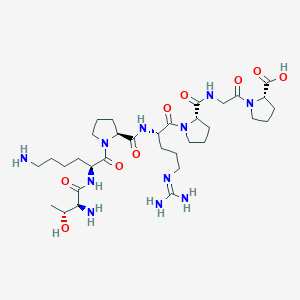
Chemical Structure
2D Structure
3D Structure

Chemical Properties
| CAS Number | 129954-34-3 |
|---|---|
| Molecular Formula | C33H57N11O9 |
| Molecular Weight | 751.9 g/mol |
| IUPAC Name |
(2S)-1-[2-[[(2S)-1-[(2S)-2-[[(2S)-1-[(2S)-6-amino-2-[[(2S,3R)-2-amino-3-hydroxybutanoyl]amino]hexanoyl]pyrrolidine-2-carbonyl]amino]-5-(diaminomethylideneamino)pentanoyl]pyrrolidine-2-carbonyl]amino]acetyl]pyrrolidine-2-carboxylic acid
|
| InChIKey | JTDTXGMXNXBGBZ-YVHUGQOKSA-N |
Selank Research
Research Applications
Anxiety and Stress Management
Selank has been extensively studied for its anxiolytic properties in both preclinical and clinical settings, demonstrating efficacy comparable to benzodiazepine medications without their characteristic drawbacks. In a controlled clinical trial of 62 patients with generalized anxiety disorder (GAD) and neurasthenia, Selank (administered to 30 patients) was compared directly to medazepam, a conventional benzodiazepine tranquilizer. Patient assessments using validated psychometric scales (Hamilton Anxiety Rating Scale, Zung Self-Rating Anxiety Scale, and Clinical Global Impression) revealed that both drugs produced similar anxiolytic effects, but Selank additionally demonstrated antiasthenic and psychostimulant properties absent with medazepam treatment.
Clinical research reveals that Selank exhibits remarkable individual response variability, with approximately 40% of patients classified as "rapid responders" experiencing abrupt reduction in anxiety symptoms within 1-3 days of treatment initiation. In this subset, Hamilton Anxiety Rating Scale scores decreased from a mean of 20.3 to 7.0 by day three, representing a highly significant clinical improvement. The remaining 60% of patients demonstrated gradual but consistent symptom reduction over 14 days, with final anxiety scores comparable to the rapid responder group.
Comparative studies examining Selank in combination with phenazepam versus phenazepam monotherapy in patients with anxiety-phobic and somatoform disorders (70 total patients) demonstrated that combination treatment significantly reduced the adverse side effects typically associated with benzodiazepines. The combined approach decreased attention and memory impairment, asthenia, excessive sedation, prolonged sleep duration, sexual disturbances, emotional indifference, and orthostatic hypotension—both during active treatment and following tranquilizer withdrawal. These findings suggest Selank may enable lower benzodiazepine dosages while maintaining therapeutic efficacy.
The molecular mechanisms underlying Selank's anxiolytic effects involve modulation of the GABAergic system through gene expression changes. Research analyzing 84 genes related to neurotransmission in rat frontal cortex tissue revealed that Selank administration (300 μg/kg) caused significant alterations in expression of 45 genes at one hour and 22 genes at three hours post-administration. These changes showed positive correlation with those induced by direct GABA administration, supporting the hypothesis that Selank acts through allosteric modulation of GABA-A receptor function rather than direct receptor binding.
Studies examining enkephalin metabolism provide additional insight into Selank's anxiolytic mechanism. Patients with generalized anxiety disorder exhibit considerably shortened enkephalin half-life and reduced total enkephalinase activity in blood, likely due to low concentrations of endogenous enzyme inhibitors. Selank dose-dependently inhibits enzymatic hydrolysis of plasma enkephalin with an IC50 of approximately 15 μM, demonstrating greater potency than conventional peptidase inhibitors. This preservation of enkephalin activity contributes significantly to anxiety reduction and stress resilience.
Animal studies demonstrate that Selank effectively attenuates behavioral manifestations of anxiety and chronic stress across different phenotypes of emotional stress reactions. In mouse models subjected to unpredictable chronic mild stress, Selank administration prevented the deterioration of anxiety indicators and enhanced the anxiolytic effects of diazepam when used in combination. The peptide's stress-protective activity extends to modulation of pro-inflammatory cytokines, with studies showing Selank effectively reduces concentrations of IL-1β, IL-6, and TGF-β1 while restoring levels of anti-inflammatory cytokine IL-4 in stressed animals.
Sources:
- Zozulya AA, et al. "Efficacy and possible mechanisms of action of a new peptide anxiolytic selank in the therapy of generalized anxiety disorders and neurasthenia." Zh Nevrol Psikhiatr Im S S Korsakova. 2008;108(4):38-48. https://pubmed.ncbi.nlm.nih.gov/18454096/
- European Psychiatry. "Rapid and slow response during treatment of generalized anxiety disorder with peptide anxiolytic Selank." 2012;27(Suppl 1):1. https://www.cambridge.org/core/journals/european-psychiatry/article/p1114-rapid-and-slow-response-during-treatment-of-generalized-anxiety-disorder-with-peptide-anxiolytic-selank/7A497218D37084BD079EFE143126F56E
- Dorofeeva OA, et al. "Optimization of the treatment of anxiety disorders with selank." Eksp Klin Farmakol. 2009;72(2):6-10. https://pubmed.ncbi.nlm.nih.gov/26356395/
- Volkova A, et al. "Selank Administration Affects the Expression of Some Genes Involved in GABAergic Neurotransmission." Front Pharmacol. 2016;7:31. https://pmc.ncbi.nlm.nih.gov/articles/PMC4757669/
- Kasian A, et al. "Peptide Selank Enhances the Effect of Diazepam in Reducing Anxiety in Unpredictable Chronic Mild Stress Conditions in Rats." Behav Neurol. 2017;2017:5091027. https://pmc.ncbi.nlm.nih.gov/articles/PMC5322660/
- Kost NV, et al. "The inhibitory effect of Selank on enkephalin-degrading enzymes as a possible mechanism of its anxiolytic activity." Zh Vyssh Nerv Deiat Im I P Pavlova. 2001;51(5):605-613. https://pubmed.ncbi.nlm.nih.gov/11550013/
Cognitive Enhancement and Memory
Selank demonstrates significant nootropic properties through enhancement of learning, memory consolidation, and cognitive performance. Preclinical studies in Wistar rats using food-reward conditioned reflex paradigms revealed that a single injection of Selank (300 μg/kg) administered during the consolidation phase significantly enhanced memory trace stability for up to 30 days post-training. This memory-enhancing effect was accompanied by activation of serotonin metabolism in the hypothalamus and caudal brainstem, with increased 5-HT turnover observed from 30 minutes to 2 hours following peptide administration.
Research examining Selank's effects on learning processes in rats with varying phenotypes of emotional and stress reactions demonstrated that the peptide significantly activated learning in animals with initially poor learning ability. In conditioned active avoidance reflex tests, Selank (300 μg/kg) significantly enhanced the learning process in rats exhibiting passive stress response phenotypes. The nootropic effects manifested after a single dose on the first day of experimentation, indicating rapid onset of cognitive enhancement.
Studies investigating Selank's protective effects against alcohol-induced cognitive impairment provide compelling evidence of its memory-preserving properties. In rats receiving 10% ethanol as their sole fluid source for 30 weeks, Selank treatment (0.3 mg/kg daily for 7 days, administered intraperitoneally) produced cognitive-stimulating effects in 9-month-old rats not exposed to ethanol and prevented the formation of ethanol-induced memory and attention disturbances that typically develop during alcohol withdrawal. The object recognition test demonstrated that Selank effectively maintained cognitive function despite chronic alcohol exposure.
The molecular basis of Selank's cognitive enhancement involves modulation of brain-derived neurotrophic factor (BDNF) expression. Research examining BDNF levels in rat brain structures revealed that intranasal Selank administration rapidly regulates BDNF expression in the hippocampus—a critical region for memory formation and consolidation. Time-dependent studies showed that Selank increased BDNF mRNA expression several hours after administration, with protein levels initially dropping briefly before rising above baseline. This biphasic pattern suggests Selank engages both rapid signaling cascades and slower genomic mechanisms to ultimately increase BDNF protein production.
Analysis of gene expression changes in rat hippocampus following Selank administration identified alterations in dopamine receptor gene expression, particularly Drd5, which plays a key role in memory formation and learning processes by ensuring long-term potentiation. The peptide's influence on dopaminergic signaling contributes to enhanced cognitive processing, improved focus, and better retention of learned information.
Selank's nootropic effects extend to protection against age-related cognitive decline. Studies demonstrate that the peptide positively influences memory disturbances associated with aging, particularly those complicated by chronic conditions such as alcohol use. The peptide's ability to regulate BDNF content in both the hippocampus and prefrontal cortex—two brain regions critical for executive function and memory—underlies its protective effects against cognitive deterioration.
Clinical observations indicate that Selank produces mild nootropic effects in patients with anxiety disorders, improving concentration, mental clarity, and information processing without the cognitive impairment or memory problems associated with benzodiazepine anxiolytics. This dual action—reducing anxiety while enhancing cognition—distinguishes Selank from conventional anxiolytic medications that typically impair cognitive function.
Sources:
- Sokolov OY, et al. "Experimental optimization of learning and memory processes by selank." Zh Vyssh Nerv Deiat Im I P Pavlova. 2010;60(5):505-512. https://pubmed.ncbi.nlm.nih.gov/20919548/
- Nadorova AV, et al. "Selank, Peptide Analogue of Tuftsin, Protects Against Ethanol-Induced Memory Impairment by Regulating of BDNF Content in the Hippocampus and Prefrontal Cortex in Rats." Bull Exp Biol Med. 2019;167(6):843-846. https://pubmed.ncbi.nlm.nih.gov/31625062/
- Inozemtseva LS, et al. "Intranasal administration of the peptide Selank regulates BDNF expression in the rat hippocampus in vivo." Dokl Biol Sci. 2008;421:241-243. https://link.springer.com/article/10.1134/S0012496608040066
- Sokolov OY, et al. "Effects of Selank on behavioral reactions and activities of plasma enkephalin-degrading enzymes in mice with different phenotypes of emotional and stress reactions." Bull Exp Biol Med. 2002;133(2):133-135. https://pubmed.ncbi.nlm.nih.gov/12432865/
Neuroprotection and Brain Health
Selank demonstrates multiple neuroprotective mechanisms that support brain health through modulation of neurotrophic factors, reduction of oxidative stress, and protection against neuroinflammation. The peptide's influence on brain-derived neurotrophic factor (BDNF) expression represents a primary neuroprotective pathway. BDNF is a critical neurotrophin that supports neuronal survival, promotes synaptic plasticity, and facilitates neurogenesis—all essential processes for maintaining cognitive function and protecting against neurodegenerative conditions.
Research examining Selank's interaction with GABAergic neurotransmission and neurotrophic factor signaling revealed that BDNF plays a central role in the peptide's neuroprotective effects. Gene set enrichment analysis of neuroblastoma cells (IMR-32) incubated with Selank showed that the peptide influences biological processes involved in neurotransmission, with the "gamma-aminobutyric acid signaling pathway" identified as highly significant and BDNF positioned as a central regulatory factor in this network.
The peptide exhibits potent antioxidant properties that protect neural tissue from oxidative damage. Animal studies demonstrate that Selank administration in doses of 100 and 300 μg/kg significantly decreased free radical levels in liver tissue, indicating systemic antioxidant activity that extends to protection of neuronal cells. Oxidative stress occurs when reactive oxygen species (ROS) production exceeds the body's neutralization capacity, leading to cellular damage particularly detrimental to neurons. Selank's antioxidant action helps maintain redox balance and protects neurons from oxidative injury.
Selank's anti-inflammatory properties contribute significantly to its neuroprotective profile. Studies examining inflammation-related gene expression in mouse spleen following Selank administration (100 μg/kg, single intraperitoneal injection) demonstrated significant alterations in 34 genes involved in inflammatory processes. Real-time PCR analysis revealed dynamic changes in expression of key inflammatory mediators including complement component C3 (showing a 3-fold decrease at 30 minutes), caspase-1, interleukin-2 receptor gamma chain (Il2rg), and chemokine receptor Xcr1. These changes indicate that Selank modulates inflammatory pathways at the molecular level, potentially reducing neuroinflammation that contributes to cognitive decline and neurodegeneration.
The peptide's inhibition of enkephalin-degrading enzymes provides an additional neuroprotective mechanism. Enkephalins are endogenous opioid peptides that not only regulate emotional responses but also exert neuroprotective effects through opioid receptor activation. Studies demonstrate that Selank inhibits these degrading enzymes with an IC50 of approximately 15-20 μM, showing greater potency than conventional peptidase inhibitors such as puromycin (IC50 10 mM) and bacitracin. This preservation of enkephalin activity supports neuronal resilience during metabolic stress and inflammatory challenges.
Research indicates that Selank's neuroprotective effects extend to protection against stress-induced neuronal damage. Chronic stress typically reduces BDNF expression in the hippocampus, particularly in the dentate gyrus, leading to impaired neuroplasticity and cognitive dysfunction. Selank administration helps maintain or restore BDNF levels under stress conditions, counteracting the negative effects of chronic stress on brain structure and function.
The peptide demonstrates hepatoprotective effects that indirectly support brain health through systemic metabolic regulation. Studies in rats show that Selank administration (300 and 1000 μg/kg) restored hepatocyte structure and reduced markers of liver damage. Since the liver plays a crucial role in detoxification and metabolic homeostasis, Selank's protective effects on hepatic function contribute to overall neuroprotection by maintaining optimal systemic metabolism and reducing circulating toxins that could affect brain function.
Sources:
- Filatova E, et al. "GABA, Selank, and Olanzapine Affect the Expression of Genes Involved in GABAergic Neurotransmission in IMR-32 Cells." Front Pharmacol. 2017;8:89. https://pmc.ncbi.nlm.nih.gov/articles/PMC5328971/
- Kolomin TA, et al. "The temporary dynamics of inflammation-related genes expression under tuftsin analog Selank action." Immunobiology. 2013;218(11):1407-1413. https://www.sciencedirect.com/science/article/abs/pii/S0161589013005440
- Kolomin TA, et al. "Expression of inflammation-related genes in mouse spleen under tuftsin analog Selank." Immunobiology. 2011;216(9):998-1003. https://www.sciencedirect.com/science/article/abs/pii/S0167011511000863
- Kost NV, et al. "Semax and Selank Inhibit the Enkephalin-Degrading Enzymes of Human Serum." Russian Journal of Bioorganic Chemistry. 2001;27(2):156-159. https://link.springer.com/article/10.1023/A:1011373002885
Immune Function and Antiviral Activity
Selank exhibits significant immunomodulatory properties through regulation of cytokine expression and modulation of immune cell activity, demonstrating effects that extend beyond its central nervous system actions. As a synthetic analog of tuftsin—an endogenous immunomodulatory tetrapeptide—Selank retains and enhances the immune-regulating functions of its parent molecule while exhibiting improved stability and bioavailability.
Research examining Selank's antiviral properties against influenza A/Aichi 2/68 virus (H3N2) in both in vitro and in vivo systems revealed pronounced antiviral effects. The peptide demonstrated highest efficacy when administered 24 hours before viral inoculation in cell culture (preventive use scheme), completely suppressing viral reproduction under these conditions. In vivo studies in laboratory animals showed that preventive administration of Selank resulted in the highest survival rates among infected subjects.
The molecular mechanisms underlying Selank's antiviral activity involve modulation of interferon and cytokine gene expression. In vivo studies demonstrated that Selank administration induced gene expression of interferon-alpha (IFN-α) without affecting interleukin-4 (IL-4), interleukin-10 (IL-10), or tumor necrosis factor-alpha (TNF-α) under baseline conditions. This selective induction of IFN-α—a key antiviral cytokine—suggests Selank's mechanism involves modulation of the Th1/Th2/Treg cytokine equilibrium both directly and indirectly through central nervous system pathways.
Studies examining the breadth of Selank's antiviral activity reveal efficacy against multiple viral pathogens including human influenza B/Ohio 01/05 virus, avian influenza virus (H5N1), herpes simplex virus types 1 and 2 (HSV-1 and HSV-2), cytomegalovirus (CMV), and murine encephalomyocarditis virus (EMCV). This broad-spectrum antiviral activity, combined with the peptide's favorable safety profile, positions Selank as a promising immunomodulatory agent for viral infection prevention and management.
Analysis of Selank's effects on inflammatory gene expression in immune tissue provides insight into its immunomodulatory mechanisms. Studies using real-time PCR to examine 84 inflammation-related genes in mouse spleen tissue following Selank administration (100 μg/kg) revealed significant changes in 34 genes at 6 and 24 hours post-injection. The Bcl6 gene, which plays a central role in immune system formation and development, exhibited particularly significant expression changes. Additional genes showing altered expression included those encoding chemokines, cytokines, and their receptors—key mediators of immune responses.
Temporal dynamics studies revealed that Selank's active dipeptide fragment Gly-Pro contributes substantially to the peptide's immunomodulatory effects. Analysis of specific inflammatory genes including complement component C3, caspase-1 (Casp1), interleukin-2 receptor gamma chain (Il2rg), and chemokine receptor Xcr1 demonstrated that both full-length Selank and its Gly-Pro fragment induced similar expression changes, with a 3-fold decrease in C3 mRNA levels observed just 30 minutes after administration.
Clinical studies examining Selank's immunomodulatory effects in patients with anxiety-asthenic disorders and depression revealed that 14 days of Selank administration completely suppressed interleukin-6 (IL-6) gene expression in peripheral blood of depressed patients but did not affect IL-6 levels in healthy volunteers. This selective immunomodulatory effect—normalizing elevated inflammatory markers in disease states without disrupting normal immune function—demonstrates Selank's adaptogenic properties and suggests potential therapeutic applications in conditions characterized by immune dysregulation.
The combined immunomodulatory and antiviral properties of Selank, along with its ability to reduce pro-inflammatory cytokines while supporting appropriate immune responses, distinguish it from conventional immunosuppressive or immunostimulatory drugs. The peptide's balanced approach to immune system regulation—enhancing antiviral defenses through IFN-α induction while modulating inflammatory responses—provides a unique therapeutic profile for managing conditions involving both immune dysfunction and inflammation.
Sources:
- Ershov FI, et al. "Antiviral activity of immunomodulator Selank in experimental influenza infection." Vopr Virusol. 2009;54(5):19-24. https://pubmed.ncbi.nlm.nih.gov/19882898/
- Kolomin TA, et al. "Expression of inflammation-related genes in mouse spleen under tuftsin analog Selank." Immunobiology. 2011;216(9):998-1003. https://www.sciencedirect.com/science/article/abs/pii/S0167011511000863
- Kolomin TA, et al. "The temporary dynamics of inflammation-related genes expression under tuftsin analog Selank action." Immunobiology. 2013;218(11):1407-1413. https://www.sciencedirect.com/science/article/abs/pii/S0161589013005440
- Andreeva LA, et al. "Antiviral properties of structural fragments of the peptide Selank." Bioorg Khim. 2010;36(2):272-276. https://pubmed.ncbi.nlm.nih.gov/20506839/