What is ARA-290?
ARA-290 (also known as Cibinetide or pyroglutamate helix B-surface peptide) is a synthetic 11-amino acid peptide engineered from the three-dimensional structure of helix B within the erythropoietin molecule. Unlike native erythropoietin, which primarily stimulates red blood cell production, ARA-290 was specifically designed to isolate and retain only the tissue-protective, anti-inflammatory, and regenerative properties of EPO while eliminating erythropoietic effects that can cause dangerous cardiovascular complications.
The peptide functions through selective activation of the innate repair receptor (IRR), a heteromeric complex composed of the erythropoietin receptor (EPOR) and the β common receptor (CD131/βcR). This receptor complex is rapidly upregulated in tissues following injury and serves as a critical mediator of endogenous repair mechanisms. By binding exclusively to the IRR rather than the classical EPO receptor homodimer responsible for hematopoiesis, ARA-290 triggers tissue-protective signaling cascades without increasing red blood cell mass or thrombotic risk.
ARA-290's mechanism of action involves multiple cytoprotective pathways. Upon IRR activation, the peptide initiates anti-inflammatory signaling by suppressing production of pro-inflammatory cytokines including IL-6, IL-12, TNF-α, and MCP-1, while simultaneously promoting expression of anti-inflammatory mediators. The peptide enhances cell survival under stress conditions by reducing apoptosis (programmed cell death) in various cell types including neurons, endothelial cells, cardiomyocytes, and pancreatic islet cells.
The peptide demonstrates remarkable versatility in protecting and repairing multiple organ systems. It promotes angiogenesis (new blood vessel formation), supports nerve fiber regeneration, enhances wound closure rates, improves mitochondrial function, and reduces oxidative stress. Research shows ARA-290 modulates immune responses by affecting macrophage activation, dendritic cell function, and inflammatory cell infiltration, creating an environment conducive to tissue healing rather than chronic inflammation.
With a short plasma half-life of approximately 20 minutes, ARA-290 requires repeated dosing but demonstrates prolonged therapeutic effects that extend well beyond its circulatory presence. The peptide has undergone extensive preclinical and clinical evaluation, demonstrating an excellent safety profile without the hematopoietic side effects that limited clinical use of full-length erythropoietin.
Chemical Identity
The compound is characterized by its unique molecular structure and specific chemical properties that make it valuable for research applications.Purity & Quality
Our ARA-290 is provided at research-grade purity, suitable for laboratory applications and experimental protocols. Each batch undergoes quality control testing to ensure consistency and reliability for your research needs. Important: This product is intended for research purposes only and is not for human or veterinary use. It is sold for laboratory and scientific investigation only.ARA-290 Structure
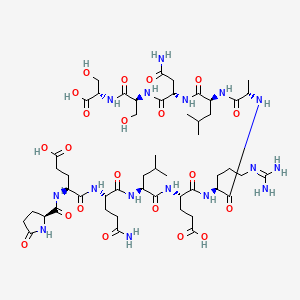
Chemical Structure
2D Structure
3D Structure

Chemical Properties
| CAS Number | 1208243-50-8 |
|---|---|
| Molecular Formula | C51H84N16O21 |
| Molecular Weight | 1257.3 g/mol |
| IUPAC Name |
(4S)-5-[[(2S)-5-amino-1-[[(2S)-1-[[(2S)-1-[[(2S)-1-[[(2S)-1-[[(2S)-1-[[(2S)-4-amino-1-[[(2S)-1-[[(1S)-1-carboxy-2-hydroxyethyl]amino]-3-hydroxy-1-oxopropan-2-yl]amino]-1,4-dioxobutan-2-yl]amino]-4-methyl-1-oxopentan-2-yl]amino]-1-oxopropan-2-yl]amino]-5-(diaminomethylideneamino)-1-oxopentan-2-yl]amino]-4-carboxy-1-oxobutan-2-yl]amino]-4-methyl-1-oxopentan-2-yl]amino]-1,5-dioxopentan-2-yl]amino]-5-oxo-4-[[(2S)-5-oxopyrrolidine-2-carbonyl]amino]pentanoic acid
|
| InChIKey | WZTIQQBMSJTRBR-WYKNNRPVSA-N |
ARA-290 Research
Research Applications
Neuropathic Pain and Nerve Regeneration
ARA-290 demonstrates significant efficacy in treating neuropathic pain and promoting nerve regeneration across multiple conditions. Clinical trials in patients with diabetic neuropathy show that 28 days of daily subcutaneous ARA-290 administration (4 mg) significantly improved hemoglobin A1c levels and lipid profiles while reducing neuropathic symptoms. The peptide produces long-lasting pain relief coupled with suppression of spinal cord inflammation, specifically reducing microglial activation that drives chronic pain states.
Research in spared nerve injury models demonstrates dose-dependent reduction in mechanical and thermal allodynia, with higher doses (30-60 μg/kg) producing significant and sustained pain relief. Studies show ARA-290 treatment reduces allodynia for extended periods following treatment cessation, suggesting disease-modifying rather than purely symptomatic effects. The peptide's mechanism involves suppression of the spinal microglial response, which plays a central role in maintaining neuropathic pain.
In patients with sarcoidosis-associated small nerve fiber loss, clinical studies report that ARA-290 treatment significantly improved symptoms and increased corneal nerve fiber density, providing objective evidence of nerve regeneration. Quantitative sensory testing revealed improvements in small nerve fiber function across multiple tested locations. Research in inflammatory neuritis models shows ARA-290 reverses mechanical allodynia and promotes nerve fiber regeneration by reducing inflammation and protecting neural tissue from cytokine-induced damage.
The peptide's neuroprotective effects extend to preventing nerve fiber loss in diabetic retinopathy, where it protects against neuroglial and vascular degeneration. ARA-290 treatment supports regrowth of intraepidermal nerve fibers in preclinical models of toxin-induced and diabetic neuropathy, demonstrating its capacity to stimulate structural nerve repair alongside functional improvement.
Sources:
- Brines M, et al. "ARA 290, a Nonerythropoietic Peptide Engineered from Erythropoietin, Improves Metabolic Control and Neuropathic Symptoms in Patients with Type 2 Diabetes." Molecular Medicine. 2014;20:658-666. https://pmc.ncbi.nlm.nih.gov/articles/PMC4365069/
- Swartjes M, et al. "ARA 290, a peptide derived from the tertiary structure of erythropoietin, produces long-term relief of neuropathic pain coupled with suppression of the spinal microglia response." Molecular Pain. 2014;10:17. https://pmc.ncbi.nlm.nih.gov/articles/PMC3928087/
- Dahan A, et al. "ARA 290 Improves Symptoms in Patients with Sarcoidosis-Associated Small Nerve Fiber Loss and Increases Corneal Nerve Fiber Density." Molecular Medicine. 2013;19:334-345. https://pmc.ncbi.nlm.nih.gov/articles/PMC3883966/
- McVicar CM, et al. "Intervention with an erythropoietin-derived peptide protects against neuroglial and vascular degeneration during diabetic retinopathy." Diabetes. 2011;60(11):2995-3005. https://pubmed.ncbi.nlm.nih.gov/21911742/
Metabolic Health and Diabetes Management
Research demonstrates ARA-290 significantly improves metabolic control in patients with type 2 diabetes. Clinical trials show that 28 days of ARA-290 treatment produced improvements in hemoglobin A1c levels that persisted throughout the 56-day observation period, even after treatment cessation. The peptide improved lipid profiles with beneficial effects on cholesterol levels, suggesting comprehensive metabolic benefits beyond glucose control alone.
ARA-290 prevents cytokine-induced damage to pancreatic beta cells, the insulin-producing cells that are progressively lost in diabetes. The peptide's anti-inflammatory properties protect beta cells from apoptosis induced by inflammatory cytokines, helping preserve endogenous insulin production capacity. Studies show ARA-290 downregulates expression of inflammatory markers including IL-6, IL-1β, and TNF-α in pancreatic tissue, creating a protective microenvironment that supports beta cell survival and function.
The peptide demonstrates protective effects against diabetic complications including neuropathy, retinopathy, and nephropathy. Research shows ARA-290 restores mitochondrial respiration in type 2 diabetic heart tissue, improving mitochondrial bioenergetic function, increasing ATP production, and lowering oxidative stress levels. These effects translate to improved cardiac function in diabetic models by enhancing glucose metabolism and upregulating antioxidant defenses.
ARA-290's metabolic benefits extend to preventing tissue damage in diabetic conditions. The peptide reduces accumulation of advanced glycation end products, improves microvascular function, and enhances tissue perfusion in diabetic subjects. Studies indicate ARA-290 modulates inflammatory pathways that contribute to insulin resistance, potentially improving insulin sensitivity alongside direct protective effects on metabolic tissues.
Sources:
- Brines M, et al. "ARA 290, a Nonerythropoietic Peptide Engineered from Erythropoietin, Improves Metabolic Control and Neuropathic Symptoms in Patients with Type 2 Diabetes." Molecular Medicine. 2014;20:658-666. https://link.springer.com/article/10.2119/molmed.2014.00215
- Watanabe M, et al. "A Nonhematopoietic Erythropoietin Analogue, ARA 290, Inhibits Macrophage Activation and Prevents Damage to Transplanted Islets." Transplantation. 2016;100(3):554-562. https://pubmed.ncbi.nlm.nih.gov/26683514/
Wound Healing and Tissue Repair
ARA-290 demonstrates remarkable efficacy in accelerating wound healing and tissue repair across multiple injury types. Studies in diabetic wound models show that topical ARA-290 application significantly accelerates wound closure, decreases epithelialization time, and increases collagen and protein content in healing tissue. Research indicates 20% ARA-290 concentration produces optimal effects on wound contraction and tissue regeneration compared to lower concentrations.
The peptide's wound healing mechanisms involve multiple coordinated processes. ARA-290 reduces inflammatory cytokine levels (IL-6, IL-10, TNF-α, NF-κB) while maintaining sufficient inflammation to attract neutrophils and remove debris from wound sites. The peptide promotes expression of growth factors including EGF, FGF, TGF-β, and VEGF that are critical for all stages of wound healing. Studies demonstrate ARA-290 increases antioxidant status while decreasing lipid peroxidation, creating a favorable environment for tissue repair.
Research shows ARA-290 enhances angiogenesis, the formation of new blood vessels essential for delivering oxygen and nutrients to healing tissue. The peptide protects endothelial cells from inflammatory damage and supports their proliferation and migration into injured areas. Studies demonstrate ARA-290 reduces scar formation by modulating extracellular matrix remodeling, promoting organized collagen deposition rather than excessive fibrotic responses.
In diabetic foot ulcer models, ARA-290 treatment improves biochemical parameters including serum insulin levels and HDL cholesterol while reducing blood glucose and lipid levels. The peptide's systemic anti-inflammatory effects complement its local wound healing properties, addressing both the local injury and underlying metabolic dysfunction that impairs healing in diabetic patients. Research indicates ARA-290 treatment reduces the need for skin grafting in burn injuries by accelerating natural healing processes.
Sources:
- Mashreghi M, et al. "An in vivo investigation on the wound-healing activity of Specific ligand for the innate repair receptor, ARA290, using a diabetic animal model." Research Square. 2023. https://www.researchsquare.com/article/rs-2520194/v1
- Erbayraktar Z, et al. "Nonerythropoietic tissue protective compounds are highly effective facilitators of wound healing." Molecular Medicine. 2009;15(7-8):235-241. https://pubmed.ncbi.nlm.nih.gov/19593403/
Kidney Protection and Renal Ischemia
ARA-290 demonstrates potent renoprotective effects in models of kidney ischemia/reperfusion injury, a major cause of acute kidney injury following transplantation and other ischemic events. Research in porcine models shows that ARA-290 administration post-reperfusion significantly increased glomerular filtration rate (GFR) during the seven-day observation period. Treated animals exhibited immediate renal function, while control kidneys required 48 hours to begin functioning.
Studies demonstrate ARA-290 reduces early inflammatory responses following ischemic injury. The peptide tends to reduce IL-6 and MCP-1 mRNA expression at 15 minutes post-reperfusion, limiting the inflammatory cascade that drives tissue damage. Seven days following reperfusion, ARA-290 treatment significantly reduces interstitial fibrosis and α-smooth muscle actin expression, markers of chronic structural damage and scarring.
Research in rat models demonstrates that timing of ARA-290 administration critically affects outcomes. Early administration (one hour post-reperfusion) produces optimal renoprotective effects, improving renal function and reducing inflammation and acute kidney injury at three days post-reperfusion. Late or repetitive treatment shows less dramatic benefits, suggesting the importance of early intervention to prevent initial injury cascades.
The peptide's renoprotective mechanisms involve multiple pathways. ARA-290 reduces structural damage to renal tubules, decreases expression of kidney injury molecule-1 (Kim-1), and prevents myofibroblast accumulation that drives progressive fibrosis. Studies show ARA-290 increases nitric oxide clearance and urinary NOx concentration, indicating improved endothelial function and vascular health. The peptide's unique advantage is its efficacy when administered post-injury, unlike many protective agents that require pre-treatment, making it clinically applicable for transplantation scenarios.
Sources:
- van Rijt WG, et al. "ARA290, a non-erythropoietic EPO derivative, attenuates renal ischemia/reperfusion injury." Journal of Translational Medicine. 2013;11:9. https://translational-medicine.biomedcentral.com/articles/10.1186/1479-5876-11-9
- Nieuwenhuijs-Moeke GJ, et al. "Renoprotective capacities of non-erythropoietic EPO derivative, ARA290, following renal ischemia/reperfusion injury." Journal of Translational Medicine. 2013;11:286. https://translational-medicine.biomedcentral.com/articles/10.1186/1479-5876-11-286
Cardiovascular Protection and Aging
Research demonstrates ARA-290 provides significant cardiovascular protection and ameliorates age-related cardiac decline. Long-term administration studies in aged rats show that ARA-290 treatment prevents age-associated deterioration of systolic cardiac function, preserving ejection fraction, fractional shortening, and stroke volume that progressively decline in untreated aging animals. The peptide maintains cardiac function comparable to younger animals despite advanced chronological age.
ARA-290 treatment reduces cardiac inflammation and fibrosis associated with aging. Studies show the peptide reduces the age-associated increase in the ratio of non-myocytes to myocytes, a marker associated with diastolic dysfunction and pathological cardiac hypertrophy. The peptide blunts age-associated increases in inflammatory leukocytes and monocytes infiltrating cardiac tissue while dynamically remodeling epicardial coronary arteries to increase lumen area and improve blood flow.
Research indicates ARA-290 improves resistance to oxidative stress and preserves protein quality control systems in cardiac myocytes. The peptide enhances mitochondrial function, supporting energy production and reducing oxidative damage that accumulates during aging. Studies demonstrate ARA-290 treatment reduces circulating inflammatory markers and systemic inflammation, contributing to improved healthspan and reduced frailty in aged subjects.
In acute cardiac injury models, ARA-290 protects against myocardial damage during heart attacks by reducing infarct size and preserving cardiac function. The peptide's cardioprotective effects involve suppression of inflammatory cascades, prevention of excessive cardiomyocyte apoptosis, and maintenance of vascular integrity during ischemic events. Research shows these protective effects extend to preventing secondary microvascular thrombosis and inflammation following cardiac injury.
Sources:
- Winicki NM, et al. "A small erythropoietin derived non-hematopoietic peptide reduces cardiac inflammation, attenuates age associated declines in heart function and prolongs healthspan." Frontiers in Cardiovascular Medicine. 2023;9:1096887. https://pmc.ncbi.nlm.nih.gov/articles/PMC9889362/
Pancreatic Islet Cell Transplantation and Immune Modulation
ARA-290 demonstrates remarkable efficacy in improving survival and function of transplanted pancreatic islet cells, offering potential breakthrough applications for type 1 diabetes treatment. Research in diabetic mouse models shows that ARA-290 administration before and up to 24 hours following islet transplantation significantly improves engraftment success. Blood glucose levels were dramatically reduced in ARA-290-treated animals compared to controls throughout the post-transplant period, with normoglycemic rates reaching 71.4% in treated animals versus minimal success in controls.
The peptide protects islets from multiple forms of transplant-related injury. Studies demonstrate ARA-290 protects islet cells from cytokine-induced damage and apoptosis both in vitro and in vivo. The peptide significantly inhibits secretion of pro-inflammatory cytokines (IL-6, IL-12, TNF-α) from activated macrophages that would otherwise attack transplanted cells. Research shows ARA-290 suppresses upregulation of inflammatory markers including MCP-1, MIP-1β, IL-1β, and IL-6 mRNA expression in the liver following portal vein islet infusion.
ARA-290's immunomodulatory properties extend beyond islet transplantation to broader transplant medicine applications. The peptide reduces early renal allograft injury by decreasing macrophage infiltration and inflammatory responses that compromise graft survival. Studies suggest ARA-290 may alter antigen presentation by dendritic cells, potentially reducing adaptive immune responses that lead to chronic rejection. This immune modulation occurs without broadly suppressing immune function, maintaining protective immunity while reducing pathological inflammation.
Research demonstrates ARA-290's potential in treating autoimmune conditions including inflammatory bowel disease and systemic lupus erythematosus. The peptide modulates immune cell function by affecting tissue-protective receptor expression on macrophages, dendritic cells, and lymphocytes. Studies show ARA-290 restricts macrophage chemokine secretion pathways, reducing inflammatory infiltration while promoting recruitment of resident tissue macrophages that support repair rather than destruction.
Sources:
- Watanabe M, et al. "A Nonhematopoietic Erythropoietin Analogue, ARA 290, Inhibits Macrophage Activation and Prevents Damage to Transplanted Islets." Transplantation. 2016;100(3):554-562. https://pubmed.ncbi.nlm.nih.gov/26683514/
- Yan L, et al. "EPO Derivative ARA290 Attenuates Early Renal Allograft Injury in Rats by Targeting NF-κB Pathway." Transplantation Proceedings. 2018;50(5):1575-1582. https://pubmed.ncbi.nlm.nih.gov/29880386/
Neuropsychiatric and Cognitive Applications
Recent research reveals ARA-290's potential in treating depression and neuropsychiatric disorders through anti-inflammatory mechanisms. Studies using chronic unpredictable mild stress and social defeat stress mouse models demonstrate that daily ARA-290 administration during chronic stress induction ameliorates depression-like behaviors, with efficacy similar to fluoxetine (a common antidepressant). The peptide achieves these effects with minimal impact on peripheral blood hemoglobin and red blood cells, avoiding hematopoietic complications.
Research shows ARA-290 reverses chronic stress-induced increases in inflammatory immune cells including CD11b+Ly6Ghi neutrophils and CD11b+Ly6Chi monocytes in bone marrow and meninges. This reduction in inflammatory cell populations correlates with improved behavioral outcomes, suggesting neuroinflammation plays a central role in stress-related depression that ARA-290 effectively modulates. The peptide's anti-inflammatory effects extend to the central nervous system, where it reduces microglial activation and inflammatory signaling that contribute to mood disorders.
Studies demonstrate ARA-290 protects against cognitive decline in preclinical models of Alzheimer's disease by modulating early monocyte responses and decelerating pathology progression. The peptide supports neuronal survival under stress conditions and promotes optimal brain function by reducing chronic neuroinflammation. Research indicates ARA-290 may enhance hippocampal neurogenesis and support synaptic plasticity, mechanisms essential for learning, memory, and emotional regulation.
Sources:
- Fang L, et al. "Nonerythropoietic Erythropoietin Mimetic Peptide ARA290 Ameliorates Chronic Stress-Induced Depression-Like Behavior and Inflammation in Mice." Frontiers in Pharmacology. 2022;13:896601. https://www.frontiersin.org/journals/pharmacology/articles/10.3389/fphar.2022.896601/full
- Al-Onaizi MA, et al. "Early Monocyte Modulation by the Non-erythropoietic Peptide ARA 290 Decelerates AD-like Pathology Progression." Brain, Behavior, and Immunity. 2022;99:363-382. https://pubmed.ncbi.nlm.nih.gov/34416371/