
 COA
COA
What is Semax?
Semax (Met-Glu-His-Phe-Pro-Gly-Pro) is a synthetic heptapeptide developed in Russia in the 1980s as an analog of the adrenocorticotropic hormone (ACTH) fragment 4-10. Unlike native ACTH, Semax exhibits profound neurological benefits without hormonal activity, making it uniquely suitable for cognitive enhancement and neuroprotection applications. The peptide's structure incorporates the ACTH(4-7) fragment at the N-terminus and a stabilizing Pro-Gly-Pro (PGP) tripeptide at the C-terminus, which significantly extends its metabolic half-life and therapeutic duration compared to unmodified ACTH fragments.
Semax functions as a multifaceted neurotropic agent that crosses the blood-brain barrier, particularly when administered intranasally, allowing direct central nervous system access. The peptide has been approved for clinical use in Russia and is listed on the Russian List of Vital & Essential Drugs for treating ischemic stroke, transient ischemic attacks, memory and cognitive disorders, optic nerve diseases, and immune system support.
The peptide's mechanism of action involves multiple pathways that collectively contribute to its therapeutic effects. Semax rapidly elevates brain-derived neurotrophic factor (BDNF) expression in the hippocampus and frontal cortex within 20 minutes to 3 hours after administration, with BDNF protein levels increasing up to 1.4-fold. This upregulation of BDNF, a critical modulator of synaptic plasticity, supports neuronal survival, growth, and the formation of new synaptic connections essential for learning and memory processes.
Additionally, Semax activates dopaminergic and serotonergic neurotransmitter systems, influencing mood regulation, motivation, attention, and cognitive processing. The peptide demonstrates potent inhibition of enkephalin-degrading enzymes with an IC50 of 10 μM, more effective than traditional peptidase inhibitors. By preserving endogenous enkephalins, Semax may enhance natural pain modulation mechanisms and reduce inflammatory responses.
Genome-wide transcriptional analyses reveal that Semax modulates the expression of hundreds of genes involved in immune response, vascular system function, inflammation control, and cellular stress responses. Three hours after cerebral ischemia, Semax influences genes affecting immune cell activity, mobility, and chemokine expression, while at 24 hours post-ischemia, its immunomodulatory effects intensify, suggesting a key role in neuroprotection through neuroimmune crosstalk.
The peptide exhibits excellent safety profiles across numerous clinical trials, with minimal reported adverse effects limited primarily to mild nasal irritation with intranasal administration and occasional glucose elevation in diabetic patients. Semax demonstrates no hormonal activity, no development of tolerance or dependence, and no significant drug interactions, making it suitable for both acute interventions and cognitive optimization protocols.
Chemical Identity
The compound is characterized by its unique molecular structure and specific chemical properties that make it valuable for research applications.Purity & Quality
Our Semax is provided at research-grade purity, suitable for laboratory applications and experimental protocols. Each batch undergoes quality control testing to ensure consistency and reliability for your research needs. Important: This product is intended for research purposes only and is not for human or veterinary use. It is sold for laboratory and scientific investigation only.Semax Structure
Chemical Structure
2D Structure
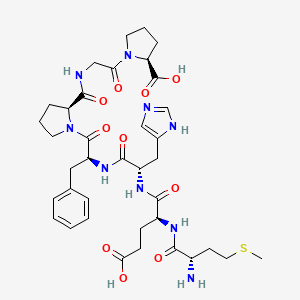
3D Structure

Chemical Properties
| CAS Number | 80714-61-0 |
|---|---|
| Molecular Formula | C37H51N9O10S |
| Molecular Weight | 813.9 g/mol |
| IUPAC Name |
(2S)-1-[2-[[(2S)-1-[(2S)-2-[[(2S)-2-[[(2S)-2-[[(2S)-2-amino-4-methylsulfanylbutanoyl]amino]-4-carboxybutanoyl]amino]-3-(1H-imidazol-5-yl)propanoyl]amino]-3-phenylpropanoyl]pyrrolidine-2-carbonyl]amino]acetyl]pyrrolidine-2-carboxylic acid
|
| InChIKey | AFEHBIGDWIGTEH-AQRCPPRCSA-N |
Semax Research
Cognitive Enhancement and Memory Function
Semax demonstrates significant cognitive-enhancing properties across multiple domains of brain function. Research published in Brain Research found that a single intranasal application of Semax (50 μg/kg) resulted in a 1.4-fold increase in BDNF protein levels in the rat basal forebrain after 3 hours, accompanied by a 1.6-fold increase in trkB receptor phosphorylation and 2-3-fold increases in BDNF and trkB mRNA expression. This enhancement of the hippocampal BDNF/trkB system correlates directly with improved learning and memory performance, as Semax-treated animals demonstrated distinct increases in conditioned avoidance reactions.
Human studies demonstrate practical cognitive benefits under demanding conditions. In a clinical evaluation of healthy but fatigued subjects following 8-hour work shifts, those receiving Semax achieved 71% accuracy on memory tests compared to 41% in control groups, with cognitive improvements persisting for up to 24 hours. The peptide's effects on learning were confirmed in animal models where Semax significantly decreased learning time and improved memory consolidation across multiple behavioral paradigms.
Studies indicate that Semax improves attention span, focus, and sustained concentration by modulating dopaminergic activity in the prefrontal cortex, the brain region responsible for executive function and working memory. The peptide enhances both short-term and long-term memory retention, particularly under conditions of high cognitive demand, making it valuable for academic performance, professional productivity, and age-related cognitive preservation.
Functional MRI studies in healthy humans show that intranasal Semax (total dose 1.2 mg) increases resting signal in the default mode network rostral subcomponent, a brain system critical for attention, awareness, and social cognition. This modulation suggests Semax enhances baseline cognitive processing efficiency even during rest states, potentially improving responsiveness and mental clarity throughout daily activities.
Sources:
- Dolotov OV, et al. "Semax, an analogue of adrenocorticotropin (4–10), binds specifically and increases levels of brain-derived neurotrophic factor protein in rat basal forebrain." Journal of Neurochemistry. 2006;97(4):1005-1015. https://pubmed.ncbi.nlm.nih.gov/16635254/
- Dolotov OV, et al. "Semax, an analog of ACTH(4-10) with cognitive effects, regulates BDNF and trkB expression in the rat hippocampus." Brain Research. 2006;1117(1):54-60. https://pubmed.ncbi.nlm.nih.gov/16996037/
- Agapova TY, et al. "Time course of the expression of genes of brain-derived neurotrophic factor and nerve growth factor in the hippocampus and frontal cortex induced by semax in rats." Molecular Genetics, Microbiology and Virology. 2008;23(3):142-146. https://link.springer.com/article/10.3103/S0891416808030063
- Lebedeva IS, et al. "Effects of Semax on the Default Mode Network of the Brain." Bulletin of Experimental Biology and Medicine. 2018;164(5):653-656. https://www.alzdiscovery.org/uploads/cognitive_vitality_media/Semax-Cognitive-Vitality-For-Researchers.pdf
Neuroprotection and Stroke Recovery
Semax exhibits remarkable neuroprotective properties in cerebral ischemia and stroke recovery. Clinical trials demonstrate that Semax administration during the acute period of hemispheric ischemic stroke significantly enhances neurological recovery compared to conventional therapy alone. In a controlled study of 30 patients with acute ischemic stroke receiving Semax alongside standard treatment versus 80 control patients, researchers observed accelerated restoration of neurological functions, particularly motor disorders, with improvements documented through clinical rating scales, EEG mapping, and somatosensory evoked potential analysis.
A genome-wide study investigating Semax's molecular mechanisms in permanent middle cerebral artery occlusion (pMCAO) revealed that the peptide altered expression of 96 genes 3 hours after ischemia and 68 genes at 24 hours post-occlusion. The most prominent effects involved immune system and vascular system genes, with Semax enhancing expression of genes that modulate immune cell amount and mobility while increasing chemokine and immunoglobulin gene expression. The peptide influenced processes accompanying blood vessel formation during early ischemia stages and vascular stabilization at later stages, suggesting that immunomodulation and vascular support are key mechanisms underlying neuroprotection.
In a clinical study of 110 patients recovering from ischemic stroke, Semax treatment (6000 μg/day for 10 days, two courses with 20-day interval) significantly increased plasma BDNF levels, which remained elevated throughout the study period. Patients with high BDNF levels following Semax administration demonstrated improved timing of rehabilitation, better motor performance on the British Medical Research Council scale, and enhanced Barthel index scores regardless of whether rehabilitation began early or late after stroke onset.
Proteomic analysis of rat brain tissue following transient middle cerebral artery occlusion (tMCAO) showed that Semax modulates key proteins involved in inflammation and cell death (MMP-9, c-Fos, JNK) while enhancing neuroprotective signaling through CREB activation. The peptide suppresses inflammatory gene expression (Il1b, Il6, Tnfa) while promoting neurotransmitter-related gene activation, creating a favorable environment for neural recovery and reducing secondary brain injury.
Sources:
- Medvedeva EV, et al. "The peptide semax affects the expression of genes related to the immune and vascular systems in rat brain focal ischemia: genome-wide transcriptional analysis." BMC Genomics. 2014;15:228. https://pmc.ncbi.nlm.nih.gov/articles/PMC3987924/
- Gusev EI, et al. "Effectiveness of semax in acute period of hemispheric ischemic stroke (a clinical and electrophysiological study)." Zhurnal Nevrologii i Psikhiatrii. 2001;101(6):26-34. https://pubmed.ncbi.nlm.nih.gov/11517472/
- Gusev EI, et al. "The efficacy of semax in the treatment of patients at different stages of ischemic stroke." Zhurnal Nevrologii i Psikhiatrii. 2017;117(3):38-45. https://pubmed.ncbi.nlm.nih.gov/29798983/
- Bobkova NV, et al. "Brain Protein Expression Profile Confirms the Protective Effect of the ACTH(4–7)PGP Peptide (Semax) in a Rat Model of Cerebral Ischemia–Reperfusion." Frontiers in Neuroscience. 2021;15:681950. https://pmc.ncbi.nlm.nih.gov/articles/PMC8226508/
- Myasoedov NF, et al. "Investigation of mechanisms of neuroprotective effect of Semax in acute period of ischemic stroke." Zhurnal Nevrologii i Psikhiatrii. 1999;99(5):15-19. https://pubmed.ncbi.nlm.nih.gov/10358912/
Oxidative Stress Protection and Cellular Defense
Semax demonstrates potent antioxidant properties that protect neural tissue from various forms of oxidative damage. Animal studies show that Semax prevents oxidative damage caused by heavy metal poisoning, including lead exposure in the brain. The peptide protects against oxidative liver damage occurring with chronic stress and prevents oxidative damage to body tissues following stroke or heart attack, with researchers attributing improved recovery in part to these oxidative protection mechanisms.
Research published in Doklady Biological Sciences examined Semax effects on heavy metal poisoning in rats compared with ascorbic acid, a known antioxidant. Heavy metal salts inhibited avoidance responses in rat subjects, and Semax counteracted these effects as effectively as ascorbic acid, confirming the peptide's antioxidant properties. Additional studies demonstrate that Semax moderates copper-induced cytotoxicity in cell lines, forming stable complexes with copper(II) ions and preventing copper-induced cell death in neuroblastoma and endothelial cells.
The peptide's antioxidant activity extends to preventing amyloid-beta aggregation, particularly in the presence of copper ions. Research shows Semax inhibits fiber formation by interfering with the fibrillogenesis of Aβ:Cu2+ complexes in a concentration-dependent manner, both in buffer solutions and in the presence of model cell membranes. This anti-aggregating property, combined with its ability to prevent membrane disruption, suggests potential applications in preventing protein misfolding diseases associated with oxidative stress and metal ion dysregulation.
Mechanistically, Semax enhances antioxidant enzyme activity and cellular protection systems while improving mitochondrial protection and cellular energy metabolism. The peptide reduces oxidative stress markers and prevents cellular damage through activation of stress response pathways and regulation of genes containing antioxidant response elements (ARE). These protective mechanisms make Semax particularly valuable during periods of metabolic stress, ischemia, or exposure to environmental toxins.
Sources:
- Medvedeva EV, et al. "Heavy Metal Salt-Induced Oxidative Stress in Rats Can Be Alleviated by the Peptide Semax." Doklady Biological Sciences. 2016;470(1):205-208. https://particlepeptides.com/en/content/37-semax
- Tabbì G, et al. "Semax, an ACTH4-10 peptide analog with high affinity for copper(II) ion and protective ability against metal induced cell toxicity." Journal of Inorganic Biochemistry. 2015;142:8-16. https://www.sciencedirect.com/science/article/abs/pii/S0162013414002505
- Zimbone S, et al. "Semax, a Synthetic Regulatory Peptide, Affects Copper-Induced Abeta Aggregation and Amyloid Formation in Artificial Membrane Models." ACS Chemical Neuroscience. 2022;13(3):345-360. https://pmc.ncbi.nlm.nih.gov/articles/PMC8855339/
Optic Nerve Protection and Visual Function Recovery
Clinical studies demonstrate Semax's efficacy in treating various optic nerve pathologies. A comprehensive clinical trial evaluated Semax in patients with vascular, toxic-allergic, and inflammatory diseases of the optic nerve, as well as partial optic nerve atrophy. Patients were divided into groups receiving intranasal Semax drops, endonasal electrophoresis of Semax, or standard treatment alone. Addition of Semax to the therapeutic regimen significantly improved the intensity and rate of recovery across multiple visual function parameters.
Semax treatment effectively protected nervous tissue from injury consequences, particularly during acute stages of optic nerve disease. Clinical improvements included enhanced visual acuity, extension of total visual field, increased electrical sensitivity and conductivity of the optic nerve, and improved visual evoked potential parameters. These objective measurements confirmed that Semax provided genuine neuroprotective effects beyond subjective symptom relief.
In glaucomatous optic neuropathy studies where intraocular pressure was normalized, Semax demonstrated advantages over traditional neuroprotective treatments. Electrophysiological and computer examination methods revealed superior outcomes in patients receiving Semax as part of a neuroprotective therapy complex. The efficiency is attributed to Semax's dual pathogenetic activity possessing both neuroprotective and neurotrophic effects, supporting optic nerve survival and function even when mechanical pressure factors are controlled.
Research in diabetic retinopathy patients showed that endonasal electrophoresis of 0.1% Semax produced the most pronounced and long-lasting positive effects on visual, perimetric, and electrophysiological function, with benefits persisting up to 12 months. This sustained improvement suggests Semax promotes genuine structural and functional recovery rather than temporary symptomatic relief, making it valuable for progressive neurological conditions affecting vision.
Sources:
- Polunin GS, et al. "Evaluation of therapeutic effect of new Russian drug semax in optic nerve disease." Vestnik Oftalmologii. 2000;116(1):15-18. https://pubmed.ncbi.nlm.nih.gov/10741256/
- Kurysheva NI, et al. "Semax in the treatment of glaucomatous optic neuropathy in patients with normalized ophthalmic tone." Vestnik Oftalmologii. 2001;117(4):5-8. https://pubmed.ncbi.nlm.nih.gov/11569188/
- Sheremet NL, et al. "An experimental substantiation for using the 'Semax' neuroprotector in the treatment of optic-nerve diseases." Vestnik Oftalmologii. 2004;120(6):25-27. https://pubmed.ncbi.nlm.nih.gov/15678666/
Pain Modulation and Enkephalin Preservation
Semax exhibits dose-dependent inhibition of enkephalin-degrading enzymes in human serum with an IC50 of 10 μM, demonstrating more pronounced effects than traditional peptidase inhibitors including puromycin (IC50 10 mM) and bacitracin. This inhibitory activity extends to both the heptapeptide Semax and its pentapeptide fragments, while shorter tri-, tetra-, and hexapeptide fragments showed no such effect. Since these enzymes degrade not only enkephalins but also other regulatory peptides, this inhibitory activity represents a key mechanism of Semax's biological effects.
Enkephalins are endogenous opioid peptides that play crucial roles in pain modulation, stress response regulation, immune function, and emotional behavior. By inhibiting their degradation, Semax effectively prolongs the half-life and enhances the activity of these natural analgesic compounds. Research demonstrates that preservation of enkephalins contributes to pain relief and reduction of inflammatory responses, as these peptides decrease pain perception, reduce inflammation, and increase immune cell activity.
Animal studies investigating pain sensitivity using the paw-withdrawal test showed that the amino acid at position 1 of Semax analogs plays a key role in mediating analgesic effects. While truncations of N-terminal residues eliminated analgesic activity, strategic modifications preserved pain-modulating properties. The peptide's effects on pain pathways appear to involve both direct enkephalin preservation and modulation of opioid receptor systems, though the analgesic effect was absent with intranasal administration in some studies, suggesting route-dependent efficacy.
Additionally, Semax's anti-inflammatory properties complement its pain-modulating effects. The peptide reduces production of pro-inflammatory cytokines and modulates inflammatory signaling pathways, providing a multi-faceted approach to pain management that addresses both sensory and inflammatory components without the tolerance, dependence, or severe side effects associated with conventional opioid medications.
Sources:
- Kost NV, et al. "Semax and Selank Inhibit the Enkephalin-Degrading Enzymes of Human Serum." Russian Journal of Bioorganic Chemistry. 2001;27(3):180-183. https://link.springer.com/article/10.1023/A:1011373002885
- Kost NV, et al. "Semax and selank inhibit the enkephalin-degrading enzymes from human serum." Bioorganicheskaia Khimiia. 2001;27(3):180-183. https://pubmed.ncbi.nlm.nih.gov/11443939/
Mood Regulation and Stress Resilience
Semax demonstrates significant anxiolytic and antidepressant properties mediated through activation of serotonergic and dopaminergic brain systems. A 2007 study analyzed effects of chronic Semax administration on exploratory activity, anxiety level, and depression-like behavior in rats. While Semax did not significantly influence exploratory activity in non-stressogenic environments, it produced pronounced anxiolytic and antidepressant effects. Researchers concluded these benefits derive from activation of the brain serotonergic system and increased BDNF expression in the hippocampus, both critical for mood regulation.
The peptide rapidly elevates levels and expression of BDNF and its signaling receptor tropomyosin receptor kinase B (TrkB) in the hippocampus, structures centrally involved in stress response and emotional processing. This upregulation of the BDNF system supports neuroplasticity and stress resilience, allowing the brain to adapt more effectively to challenging circumstances. Studies show Semax attenuates behavioral effects of chronic stress exposure and normalizes stress-associated behavioral abnormalities.
Animal models demonstrate that Semax potentiates dopaminergic transmission in the striatum, enhancing motivation, reward processing, and goal-directed behavior. This dopaminergic modulation contributes to improved mood stability and reduced symptoms of depression, as dopamine plays essential roles in pleasure, motivation, and emotional regulation. The peptide's ability to balance both serotonergic and dopaminergic systems provides comprehensive mood support without the emotional blunting or discontinuation syndromes associated with conventional antidepressants.
Clinical observations suggest Semax may be particularly effective for individuals experiencing cognitive fatigue, burnout, or stress-related mood disturbances. The peptide's dual action of enhancing cognitive performance while supporting emotional resilience makes it uniquely suited for high-stress professional environments or recovery from trauma where both mental clarity and emotional stability are essential.
Sources:
- Eremin KO, et al. "Effects of Semax on exploratory activity and anxiety in white rats." Ross Fiziol Zh Im I M Sechenova. 2007;93(9):991-997. https://particlepeptides.com/en/content/37-semax
- Shadrina MI, et al. "Effects of Semax on dopaminergic and serotonergic brain systems." Bulletin of Experimental Biology and Medicine. 2010;150(1):77-80. https://en.wikipedia.org/wiki/Semax
Immunomodulation and Anti-Inflammatory Effects
Genome-wide transcriptional analysis reveals that Semax profoundly affects immune system gene expression in conditions of cerebral ischemia. Three hours after permanent middle cerebral artery occlusion, Semax influenced expression of genes affecting immune cell activity and mobility. Twenty-four hours post-ischemia, the peptide's immunomodulatory effects intensified considerably, with Semax predominantly enhancing expression of genes related to immune response, increasing chemokine and immunoglobulin gene expression, and modulating the amount and mobility of immune cells.
The peptide markedly affects immune response by altering expression of genes that encode chemokines and immunoglobulins, substances critical for coordinating immune cell trafficking and antibody production. Research demonstrates that Semax's neuroprotective effects in stroke likely derive from these immunomodulating properties combined with its impact on the vascular system during ischemia. This neuroimmune crosstalk represents a key mechanism through which Semax protects brain tissue from ischemic damage.
Studies show that Semax reduces production of pro-inflammatory cytokines including IL-1β, IL-6, and TNF-α, which contribute to secondary brain injury following ischemia or trauma. By suppressing these inflammatory mediators at the gene expression level, Semax creates an environment more conducive to neural repair and recovery. The peptide's ability to modulate inflammation without broadly suppressing immune function distinguishes it from traditional anti-inflammatory medications.
Additionally, Semax enhances antigen presentation signaling pathways and intensifies interferon signaling, suggesting it can support appropriate immune responses while reducing harmful neuroinflammation. This balanced immunomodulation makes Semax potentially valuable not only for acute neurological injuries but also for chronic neurodegenerative conditions where controlled inflammation plays a role in disease progression.
Sources:
- Medvedeva EV, et al. "The peptide semax affects the expression of genes related to the immune and vascular systems in rat brain focal ischemia: genome-wide transcriptional analysis." BMC Genomics. 2014;15:228. https://link.springer.com/article/10.1186/1471-2164-15-228
- Dmitrieva VG, et al. "Semax and Pro-Gly-Pro activate the transcription of neurotrophins and their receptor genes after cerebral ischemia." Cellular and Molecular Neurobiology. 2010;30(1):71-79. https://www.researchgate.net/publication/325375504_The_efficacy_of_semax_in_the_tretament_of_patients_at_different_stages_of_ischemic_stroke