⊗This PRODUCT IS INTENDED AS A RESEARCH CHEMICAL ONLY. This designation allows the use of research chemicals strictly for in vitro testing and laboratory experimentation only. All product information available on this website is for educational purposes only. Bodily introduction of any kind into humans or animals is strictly prohibited by law. This product should only be handled by licensed, qualified professionals. This product is not a drug, food, or cosmetic and may not be misbranded, misused or mislabeled as a drug, food, or cosmetic.
⊗This PRODUCT IS INTENDED AS A RESEARCH CHEMICAL ONLY. This designation allows the use of research chemicals strictly for in vitro testing and laboratory experimentation only. All product information available on this website is for educational purposes only. Bodily introduction of any kind into humans or animals is strictly prohibited by law. This product should only be handled by licensed, qualified professionals. This product is not a drug, food, or cosmetic and may not be misbranded, misused or mislabeled as a drug, food, or cosmetic.
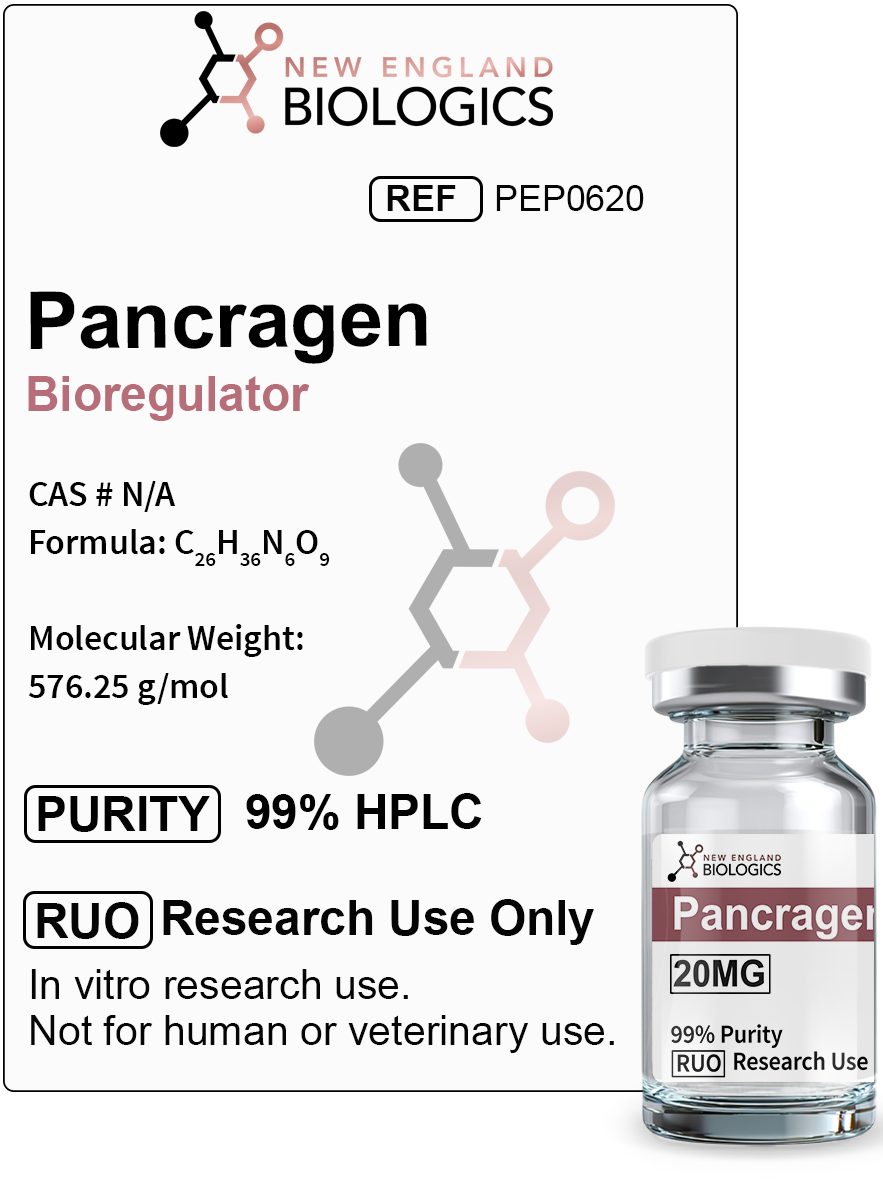
Pancragen 20mg
Peptides
What is Pancragen?
Pancragen is a synthetic tetrapeptide bioregulator consisting of four amino acids in the sequence lysine-glutamic acid-aspartic acid-tryptophan (KEDW), with a molecular weight of 576.25 g/mol. Originally derived from bovine pancreatic cells, this short peptide represents a class of tissue-specific bioregulators that directly interact with cellular DNA to regulate gene expression and protein synthesis.
The peptide's mechanism of action involves penetrating cellular and nuclear membranes to bind directly to specific DNA sequences in gene promoter regions. This binding influences chromatin structure and gene transcription, particularly targeting differentiation factors essential for pancreatic cell maturation and function. Unlike traditional peptides that work through cell surface receptors, Pancragen operates at the epigenetic level, modulating DNA methylation patterns and gene expression profiles to restore more youthful cellular function.
Research has identified Pancragen as a tissue-specific regulator with particular affinity for pancreatic tissues, where it influences both exocrine (digestive enzyme-producing) and endocrine (hormone-producing) cell populations. The peptide specifically upregulates transcription factors including pancreatic and duodenal homeobox 1 (Pdx1), pancreas transcription factor 1a (Ptf1a), paired box genes (Pax4 and Pax6), forkhead box A2 (Foxa2), and NK2 homeobox 2 (Nkx2.2)—all critical regulators of pancreatic cell development, differentiation, and insulin production.
The peptide's bioactivity extends beyond simple gene activation. Studies demonstrate Pancragen modulates cellular aging markers by reducing pro-apoptotic proteins (p53, caspase-3, cathepsin B) while increasing anti-apoptotic factors (Mcl-1) and cellular proliferation markers (PCNA, Ki-67). Additionally, the peptide influences expression of matrix metalloproteinases (MMP2, MMP9) involved in tissue remodeling and repair, and affects metabolic regulators including tumor necrosis factor-alpha (TNF-α) and insulin-like growth factor-I (IGF-I).
Pancragen's effects on epigenetic regulation represent a particularly significant aspect of its mechanism. The peptide alters DNA methylation patterns in promoter regions of key pancreatic genes, potentially preventing or reversing age-related hypermethylation that silences important metabolic genes. This epigenetic action contributes to the peptide's sustained effects, with metabolic improvements persisting for weeks after treatment discontinuation in clinical studies.
Research Applications
Metabolic Health and Insulin Resistance
Research in elderly patients demonstrates Pancragen's significant effects on insulin sensitivity and glucose metabolism. A study published in Bulletin of Experimental Biology and Medicine examined 63 elderly individuals, including 30 healthy subjects and 33 patients with type 2 diabetes mellitus. Results showed that Pancragen treatment significantly decreased fasting glucose levels during standard glucose tolerance testing and reduced both plasma insulin concentrations and insulin resistance index values in diabetic patients. Notably, patients receiving no Pancragen treatment showed no changes in carbohydrate metabolism indices, establishing the peptide's specific therapeutic effects.
The study revealed that nocturnal melatonin production was reduced by 70% in type 2 diabetes patients compared to healthy individuals of corresponding age, suggesting a link between pineal gland function and insulin resistance. Pancragen's corrective effects on glucose metabolism led researchers to conclude that tetrapeptide administration represents "a promising approach to the correction of insulin resistance in elderly individuals."
Studies in primate models further confirmed these metabolic benefits. Research in aged female rhesus monkeys showed that Pancragen administration (50 μg/animal per day for 10 days, intramuscularly) markedly increased glucose "disappearance" rate and normalized plasma insulin and C-peptide dynamics following glucose challenges. In aged animals, baseline observations revealed reduced glucose utilization rates and elevated insulin and C-peptide peaks at 5 and 15 minutes post-glucose administration compared to young animals. Pancragen treatment corrected these age-related dysfunctions, with recovering effects on pancreatic function persisting for at least 3 weeks after treatment discontinuation.
Sources:
- Korkushko OV, et al. "Prospects of Using Pancragen for Correction of Metabolic Disorders in Elderly People." Bulletin of Experimental Biology and Medicine. 2011;151(4):454-456. https://doi.org/10.1007/s10517-011-1354-4
- Goncharova ND, et al. "Impact of tetrapeptide pancragen on endocrine function of the pancreas in old monkeys." Advances in Gerontology. 2014;27(4):662-667. PMID: 25946840
Glucose Regulation and Vascular Protection
Animal studies demonstrate Pancragen's direct effects on blood glucose control and vascular health during diabetes. Research published in Bulletin of Experimental Biology and Medicine investigated the effects of Pancragen on Wistar rats with streptozotocin-induced experimental diabetes mellitus. Oral administration of Pancragen produced pronounced hypoglycemic effects during treatment, significantly reducing elevated blood glucose levels characteristic of the diabetic state.
Beyond glucose-lowering effects, the study revealed important vascular protective properties. Intramuscular Pancragen administration normalized the adhesion properties of mesenteric capillary endothelium without modifying capillary permeability. This restoration of proper endothelial adhesion is critical for maintaining healthy blood flow regulation and preventing vascular complications commonly associated with chronic hyperglycemia, including atherosclerosis and microvascular damage. The results indicate "homeostatic and endothelioprotective effects of pancragen during the early period of diabetes mellitus."
These vascular benefits complement the peptide's metabolic effects, suggesting Pancragen addresses multiple pathological mechanisms underlying diabetic complications. Proper endothelial function is essential for nutrient delivery, waste removal, and inflammatory response regulation—all processes that become compromised during chronic metabolic dysfunction.
Sources:
- Khavinson VK, et al. "Effect of pancragen on blood glucose level, capillary permeability and adhesion in rats with experimental diabetes mellitus." Bulletin of Experimental Biology and Medicine. 2007;144(4):559-562. https://doi.org/10.1007/s10517-007-0377-3
Pancreatic Cell Differentiation and Regeneration
Research demonstrates Pancragen's ability to stimulate expression of critical differentiation factors in pancreatic cells, particularly during cellular aging. A study published in Bulletin of Experimental Biology and Medicine examined both "young" and "aged" pancreatic cell cultures, revealing that differentiation marker expression becomes reduced during cellular aging. Pancragen treatment stimulated expression of differentiation factors in both acinar cells (Pdx1, Ptf1a) and islet of Langerhans cells (Pdx1, Pax6, Pax4, Foxa2, Nkx2.2) across both young and aged culture systems.
The differentiation of acinar and islet pancreatic cells induced by Pancragen represents a fundamental mechanism underlying its anti-diabetic and anti-inflammatory effects. The study concluded that "transcription factors that regulate differentiation of pancreatic cells are a pharmacological target for pancragen, which allows considering it as an effective tool in the treatment of diabetes mellitus and pancreatitis."
Additional research examining tissue-specific peptide effects confirmed that Pancragen increases expression of differentiation markers including CXCL12 and Hoxa3 in human embryonic pancreatic cell cultures. Importantly, the inducing effect of the peptide on differentiation factor expression was more pronounced in aged cultures compared to young ones, suggesting enhanced efficacy in restoring function to aging tissues. This selective action on aged cells represents a key mechanism of Pancragen's geroprotective effects.
Sources:
- Khavinson VK, et al. "Effects of Pancragen on The Differentiation of Pancreatic Cells During Their Ageing." Bulletin of Experimental Biology and Medicine. 2013;154(4):501-504. https://doi.org/10.1007/s10517-013-1987-6
- Khavinson VK, et al. "Peptides tissue-specifically stimulate cell differentiation during their aging." Bulletin of Experimental Biology and Medicine. 2012;153(1):148-151. PMID: 22808515
Pancreatic Tissue Repair and Functional Restoration
Studies examining functional morphology reveal Pancragen's effects on pancreatic tissue structure and cellular composition in diabetes models. Research published in Bulletin of Experimental Biology and Medicine investigated rats with experimental diabetes mellitus, where disease induction caused characteristic pathological changes: decreased numbers of insulin-producing β cells and increased glucagon-producing α cells, indicating disrupted pancreatic endocrine balance.
Following Pancragen treatment, animals exhibited compensatory changes within pancreatic cells and tissues. Specifically, researchers observed increased insulin production support by β cells and reduced glucagon production by α cells, representing a normalization toward healthy pancreatic function. Additionally, proliferative activity of pancreatic cells and their apoptotic rates normalized, aligning more closely with patterns observed in healthy control animals.
The study demonstrated that Pancragen exerted regulatory effects on both morphology and function of pancreatic tissues in diabetic conditions, suggesting "good prospects of this drug" for therapeutic applications. These structural and functional improvements at the tissue level complement the peptide's molecular effects on gene expression and cellular differentiation.
Sources:
- Kvetnoi IM, et al. "Effect of tetrapeptide pancragene on functional morphology of the pancreas in rats with experimental diabetes mellitus." Bulletin of Experimental Biology and Medicine. 2007;143(3):368-371. https://doi.org/10.1007/s10517-007-0114-y
Epigenetic Regulation and Cellular Aging
Research reveals Pancragen's effects on DNA methylation patterns and epigenetic regulation of pancreatic gene expression during cellular aging. A study published in Biochemistry examined DNA methylation patterns in the promoter regions of key pancreatic genes (PDX1, PAX6, NGN3) during aging of pancreatic cell cultures. Results established that methylation patterns of these gene promoter regions change during cellular aging in correlation with variations in gene expression levels.
Pancragen treatment (KEDW peptide) tissue-specifically affected gene expression in pancreatic cell cultures, with effects mediated through alterations in promoter methylation. The research demonstrated that changes in promoter methylation represent a causative mechanism for age- and peptide-induced variations in expression of PDX1, PAX6, and NGN3 genes in pancreatic cells. These findings suggest that stable changes in gene expression during cellular aging result from epigenetic modifications, which Pancragen can modulate to restore more youthful expression patterns.
Broader research on peptide-mediated epigenetic regulation reveals that aging is consistently accompanied by genome-wide hypomethylation. Short peptides like Pancragen bind complementarily to specific DNA sequences, with this binding strengthened in age-related demethylated regions. The peptides can significantly weaken interstrand bonds in DNA double helices, stimulating strand separation necessary for gene transcription and replication. This mechanism positions short peptides as a distinct class of epigenetic regulators with potential to reverse age-related gene silencing.
Studies on biological aging markers show Pancragen reduces activities of caspase-3 and cathepsin B while modulating levels of TNF-α and IGF-I, all biomarkers associated with metabolic regulation and cellular aging processes. The peptide's ability to suppress apoptotic enzymes while promoting cell survival factors contributes to its geroprotective effects on pancreatic tissues.
Sources:
- Ashapkin VV, et al. "Epigenetic mechanisms of peptidergic regulation of gene expression during aging of human cells." Biochemistry (Moscow). 2015;80(3):310-322. https://doi.org/10.1134/S0006297915030062
- Khavinson VK, et al. "Epigenetic aspects of peptide regulation of aging." Advances in Gerontology. 2012;25(1):11-22. PMID: 22708439
- Khavinson VK, et al. "Tetrapeptide stimulates functional activity of the pancreatic cells in aging." Advances in Gerontology. 2012;25(4):680-684.