 COA
COA
What is NAD+?
NAD+ (Nicotinamide Adenine Dinucleotide) is a ubiquitous coenzyme that exists in all living cells and functions as a fundamental component of cellular metabolism and energy production. First discovered in 1906, NAD+ serves dual critical roles: as a coenzyme in redox reactions that transfer electrons during metabolic processes, and as a substrate for enzymes that regulate DNA repair, gene expression, and cellular stress responses.
The molecule exists in two forms—an oxidized form (NAD+) and a reduced form (NADH)—and readily converts between these states during metabolic reactions. NAD+ accepts electrons from fuel molecules like glucose and fatty acids, becoming reduced to NADH. This NADH then delivers electrons to the mitochondrial electron transport chain, where they drive ATP production through oxidative phosphorylation. This process makes NAD+ indispensable for cellular energy metabolism, with particularly high concentrations found in metabolically active tissues like skeletal muscle, heart, and brain.
Beyond its role in energy metabolism, NAD+ functions as an essential substrate for three major enzyme families: sirtuins (SIRT1-7), poly(ADP-ribose) polymerases (PARPs), and cyclic ADP-ribose synthases (CD38/CD157). Sirtuins are NAD+-dependent deacetylases that regulate metabolic pathways, mitochondrial function, DNA repair, and gene expression involved in longevity and stress resistance. PARPs consume NAD+ during DNA repair processes, detecting and mending damaged DNA to maintain genomic stability. CD38 and related enzymes regulate calcium signaling and immune function but also serve as major NAD+ consumers, particularly during aging and chronic inflammation.
NAD+ levels naturally decline with age—studies show approximately 50% reduction in skeletal muscle between young adulthood and old age, with similar declines observed in other tissues. This age-related NAD+ depletion impairs mitochondrial function, reduces DNA repair capacity, decreases sirtuin activity, and contributes to metabolic dysfunction, muscle atrophy, cardiovascular disease, and neurodegenerative conditions. The decline occurs through multiple mechanisms: decreased synthesis via reduced activity of NAMPT (the rate-limiting enzyme in NAD+ biosynthesis), increased consumption by overactive CD38 during chronic inflammation, and excessive PARP activation in response to accumulated DNA damage.
The body synthesizes NAD+ through three primary pathways: the de novo pathway from the amino acid tryptophan, the Preiss-Handler pathway from nicotinic acid (niacin/vitamin B3), and the salvage pathway from nicotinamide (NAM), nicotinamide riboside (NR), or nicotinamide mononucleotide (NMN). The salvage pathway, which recycles nicotinamide generated from NAD+-consuming reactions back into NAD+, accounts for the majority of NAD+ production in most tissues and represents the primary target for therapeutic NAD+ restoration strategies.
Chemical Identity
The compound is characterized by its unique molecular structure and specific chemical properties that make it valuable for research applications.Purity & Quality
Our NAD+ is provided at research-grade purity, suitable for laboratory applications and experimental protocols. Each batch undergoes quality control testing to ensure consistency and reliability for your research needs. Important: This product is intended for research purposes only and is not for human or veterinary use. It is sold for laboratory and scientific investigation only.NAD+ Structure
Chemical Structure
2D Structure
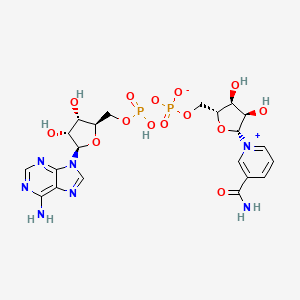
3D Structure

Chemical Properties
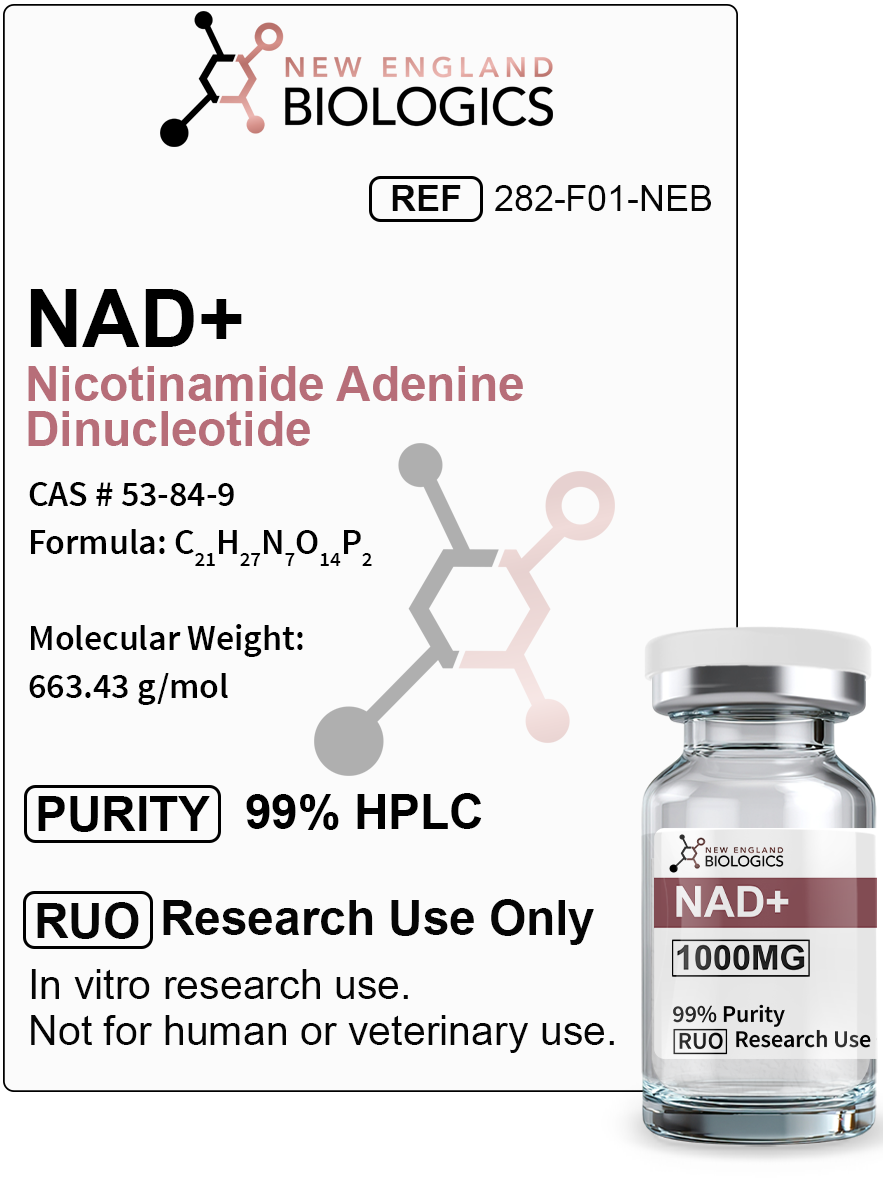
| CAS Number | 53-84-9 |
|---|---|
| Molecular Formula | C21H27N7O14P2 |
| Molecular Weight | 663.4 g/mol |
| IUPAC Name |
[[(2R,3S,4R,5R)-5-(6-aminopurin-9-yl)-3,4-dihydroxyoxolan-2-yl]methoxy-hydroxyphosphoryl] [(2R,3S,4R,5R)-5-(3-carbamoylpyridin-1-ium-1-yl)-3,4-dihydroxyoxolan-2-yl]methyl phosphate
|
| InChIKey | BAWFJGJZGIEFAR-NNYOXOHSSA-N |
NAD+ Research
Research Applications
Skeletal Muscle Function and Performance
NAD+ plays a fundamental role in skeletal muscle metabolism, function, and adaptation to exercise. Research demonstrates that skeletal muscle, as an energetically expensive tissue with high metabolic demands, maintains elevated NAD+ concentrations to support mitochondrial ATP production and contractile function. Studies show that resistance training increases muscle NAD+ and NADH concentrations, along with enhanced NAMPT protein levels and global sirtuin activity in middle-aged, overweight, untrained individuals.
The relationship between NAD+ and muscle health becomes particularly evident during aging. Research published in Nature Communications demonstrates that individuals with sarcopenia exhibit significantly lower muscle NAD+ levels compared to healthy controls, with these reductions correlating directly with decreased muscle mass, reduced grip strength, and slower gait speed—all hallmark indicators of sarcopenia. Muscle NAD+ content declines approximately 50% between young adulthood and old age, contributing to age-related muscle dysfunction.
NAD+ influences muscle function through multiple mechanisms. The coenzyme regulates calcium mobilization in skeletal muscle through NAD+ metabolites like cyclic ADP-ribose (cADPR) and NAADP, which control calcium release from internal stores—critical for muscle contraction. NAD+ also activates AMPK signaling pathways that enhance glucose uptake and fatty acid oxidation in muscle tissue, improving metabolic flexibility and exercise capacity.
Studies investigating NAD+ precursor supplementation show promising results for muscle health. Research demonstrates that NMN supplementation improves muscle insulin sensitivity and enhances blood flow to muscles by improving blood vessel function and reducing arterial stiffness in older mice. Human studies reveal improvements in walking speed and overall muscle function in older adults taking NMN supplements. Animal research shows that NR supplementation increases skeletal muscle NAD+ content and can improve mitochondrial function, though effects on exercise performance in healthy humans remain under investigation.
Importantly, exercise itself serves as a powerful NAD+ boosting strategy. Regular physical activity upregulates NAD+ synthesis pathways in both young and aged muscle tissue through increased NAMPT expression and enhanced salvage pathway activity. This exercise-induced NAD+ elevation contributes to training adaptations including improved mitochondrial biogenesis, enhanced oxidative capacity, and increased muscle endurance.
Sources:
- Migliavacca E, et al. "Mitochondrial oxidative capacity and NAD+ biosynthesis are reduced in human sarcopenia across ethnicities." Nature Communications. 2019;10:5808. https://www.nature.com/articles/s41467-019-13694-1
- Lamb DA, et al. "Resistance training increases muscle NAD+ and NADH concentrations as well as NAMPT protein levels and global sirtuin activity in middle-aged, overweight, untrained individuals." Aging Cell. 2020;19(9):e13195. https://pmc.ncbi.nlm.nih.gov/articles/PMC7431837/
- Frederick DW, et al. "Loss of NAD Homeostasis Leads to Progressive and Reversible Degeneration of Skeletal Muscle." Cell Metabolism. 2016;24(2):269-282. https://pmc.ncbi.nlm.nih.gov/articles/PMC4975122/
- Elhassan YS, et al. "Nicotinamide Riboside Augments the Aged Human Skeletal Muscle NAD+ Metabolome and Induces Transcriptomic and Anti-inflammatory Signatures." Cell Reports. 2019;28(7):1717-1728.e6. https://pmc.ncbi.nlm.nih.gov/articles/PMC6711450/
Metabolic Health and Fat Loss
NAD+ serves as a critical regulator of whole-body metabolic homeostasis, with declining levels strongly associated with obesity, insulin resistance, and metabolic syndrome. Research demonstrates that NAD+ influences metabolic health through multiple pathways including sirtuin activation, AMPK signaling enhancement, and regulation of mitochondrial function in metabolically active tissues.
Studies reveal that obese individuals exhibit significantly lower NAD+/SIRT1 pathway expression and higher PARP activity in adipose tissue compared to lean subjects. Research published in the Journal of Clinical Endocrinology and Metabolism shows that calorie restriction and weight loss increase SIRT1 and NAMPT expression in adipose tissue while decreasing PARP activity. In subjects who lost 11.7% body weight over 5 months, SIRT1 expression increased progressively with continued weight loss, but reverted to baseline levels in subjects who regained weight, demonstrating the dynamic relationship between NAD+ metabolism and energy balance.
NAD+ precursor supplementation demonstrates significant metabolic benefits across multiple studies. A systematic review and meta-analysis examining NAD+ precursor supplementation found that participants taking NAD+ supplements experienced significant reductions in Body Mass Index (BMI) and increased adiponectin levels—a beneficial hormone that enhances insulin sensitivity and regulates glucose metabolism. Research published in the Journal of Nutritional Biochemistry demonstrates that nicotinamide (NAM) supplementation in obese mice significantly reduced fat mass by 15-20% and improved glucose tolerance without reducing food intake, indicating enhanced metabolic efficiency rather than appetite suppression.
Mechanistically, NAM supplementation increases cellular NAD+ levels by approximately 30% and upregulates mitochondrial proteins involved in oxidative phosphorylation, fatty acid oxidation, and the TCA cycle in adipose tissue. Proteomic analysis reveals that NAD+ boosting increases expression of PPARα and PGC-1α—master regulators of mitochondrial biogenesis and fat oxidation. Additionally, NAM enhances glutathione synthesis for cellular redox homeostasis, providing antioxidant protection during metabolic stress.
Clinical research in overweight and obese adults shows promising results. A Harvard Medical School study published in the Journal of Clinical Endocrinology and Metabolism demonstrated that supplementing with 2,000 mg NMN daily for 28 days significantly reduced body weight, total cholesterol, and LDL cholesterol levels in middle-aged and older overweight adults. The treatment also significantly decreased diastolic blood pressure, a key contributor to hypertension—demonstrating cardiovascular benefits beyond weight loss.
Animal studies provide additional mechanistic insights. Research shows that NR supplementation prevents diet-induced weight gain in aging female mice by increasing liver NAD+ levels, reducing body weight and fat mass accumulation, and decreasing activation of inflammatory genes in adipose tissue. Old mice supplemented with NR showed increased metabolic rates, elevated energy expenditure, and enhanced physical activity levels—factors that collectively contribute to obesity prevention.
The anti-inflammatory effects of NAD+ also contribute to metabolic health improvements. Studies demonstrate that NAD+ supplementation reduces circulating inflammatory cytokines including IL-6, TNF-α, and IL-1β—molecules that promote insulin resistance and metabolic dysfunction. By reducing chronic low-grade inflammation characteristic of obesity, NAD+ restoration helps break the cycle of inflammation-induced metabolic deterioration.
Sources:
- Pencina KM, et al. "MIB-626, an Oral Formulation of a Microcrystalline Unique Polymorph of β-Nicotinamide Mononucleotide, Increases Circulating Nicotinamide Adenine Dinucleotide and its Metabolome in Middle-Aged and Older Adults." The Journal of Clinical Endocrinology and Metabolism. 2023;108(3):661-676. https://academic.oup.com/jcem/article/108/3/661/7271153
- Lee YH, et al. "The effects of NAD+ precursor (nicotinic acid and nicotinamide) supplementation on weight loss and related hormones: a systematic review and meta-regression analysis of randomized controlled trials." Frontiers in Nutrition. 2023;10:1238533. https://pmc.ncbi.nlm.nih.gov/articles/PMC10579603/
- Méndez-Lara KA, et al. "Nicotinamide reprograms adipose cellular metabolism and increases mitochondrial biogenesis to ameliorate obesity." Journal of Nutritional Biochemistry. 2022;109:109103. https://www.sciencedirect.com/science/article/pii/S0955286322001279
- Kim MB, et al. "Nicotinamide riboside supplementation exerts an anti-obesity effect and prevents inflammation and fibrosis in white adipose tissue of female diet-induced obesity mice." Journal of Nutritional Biochemistry. 2022;110:109145. https://pubmed.ncbi.nlm.nih.gov/36049611/
- Cantó C, et al. "Weight Loss Is Associated With Increased NAD+/SIRT1 Expression But Reduced PARP Activity in White Adipose Tissue." The Journal of Clinical Endocrinology and Metabolism. 2016;101(4):1439-1447. https://pubmed.ncbi.nlm.nih.gov/26760174/
DNA Repair and Cellular Aging
NAD+ plays an indispensable role in maintaining genomic stability through its function as an essential substrate for DNA repair enzymes. Research from Harvard Medical School published in Science demonstrates that NAD+ directly controls DNA repair capacity by regulating the interaction between critical DNA repair proteins. The study reveals that as NAD+ levels decline with age, the protein DBC1 increasingly binds to and inhibits PARP1—a master regulator of DNA repair—preventing proper repair of DNA breaks. This leads to accumulation of DNA damage, cellular mutations, cell death, and loss of organ function.
The mechanism involves NAD+ binding to a specific pocket-like structure (NHD domain) found in approximately 80,000 proteins across species, thereby preventing harmful protein interactions that interfere with DNA repair. As NAD+ becomes depleted during aging, fewer NAD+ molecules are available to block the DBC1-PARP1 interaction, allowing DNA breaks to accumulate. Animal studies demonstrate that treatment with the NAD+ precursor NMN mitigates age-related DNA damage and protects against radiation-induced DNA damage—suggesting potential therapeutic applications for preventing DNA damage from both aging and medical treatments like chemotherapy.
NAD+ also regulates DNA repair through sirtuin activation. SIRT1 and other sirtuin family members require NAD+ as a cofactor for their deacetylase activity, which modulates chromatin structure and facilitates access to damaged DNA for repair machinery. Research shows that NAD+ depletion reduces XRCC1 recruitment to sites of DNA damage and impairs the capacity to repair DNA damage induced by alkylating agents. Conversely, NAD+ or NMN supplementation reverses these deficits and restores DNA repair capacity.
Studies in premature aging models demonstrate the therapeutic potential of NAD+ restoration. Research published in Cell Metabolism shows that NAD+ replenishment improves lifespan and healthspan in Ataxia Telangiectasia models—a DNA repair deficiency disorder—through enhanced DNA repair via non-homologous end joining (NHEJ) and improved mitochondrial function through mitophagy activation. Both NR and NMN supplementation significantly decreased markers of DNA damage accumulation in these models.
Alzheimer's disease research provides additional evidence for NAD+'s role in DNA repair and neuroprotection. A study published in PNAS demonstrates that NAD+ levels are decreased in an Alzheimer's mouse model with DNA repair deficiency, and NAD+ supplementation with nicotinamide riboside significantly normalized neuroinflammation, synaptic transmission, phosphorylated Tau levels, and DNA damage while improving learning, memory, and motor function. These findings highlight the interconnection between NAD+ metabolism, DNA repair capacity, and age-related neurodegenerative disease.
The cellular mechanisms extend beyond direct DNA repair. NAD+ influences autophagy and mitophagy—processes that remove damaged proteins and dysfunctional mitochondria—which become impaired during aging. Studies show that NAD+ depletion is linked to defective autophagy, leading to accumulation of damaged molecules and mitochondria that contribute to cellular dysfunction. NAD+ supplementation restores these quality control mechanisms, promoting cellular resilience against age-related decline.
Research demonstrates that targeting multiple aspects of NAD+ metabolism produces superior results. Strategies combining NAD+ precursor supplementation with CD38 inhibitors (to reduce NAD+ degradation) and NAMPT activators (to enhance NAD+ synthesis) show greater efficacy in restoring NAD+ levels and improving cellular function compared to precursor supplementation alone.
Sources:
- Li J, et al. "A conserved NAD+ binding pocket that regulates protein-protein interactions during aging." Science. 2017;355(6331):1312-1317. https://www.science.org/doi/10.1126/science.aad8242
- Fang EF, et al. "NAD+ Replenishment Improves Lifespan and Healthspan in Ataxia Telangiectasia Models via Mitophagy and DNA Repair." Cell Metabolism. 2016;24(4):566-581. https://www.cell.com/cell-metabolism/fulltext/S1550-4131(16)30482-X
- Fang EF, et al. "NAD+ in Aging: Molecular Mechanisms and Translational Implications." Trends in Molecular Medicine. 2017;23(10):899-916. https://pmc.ncbi.nlm.nih.gov/articles/PMC7494058/
- Ghosh S, et al. "Extracellular NAD+ enhances PARP-dependent DNA repair capacity independently of CD73 activity." Scientific Reports. 2020;10(1):651. https://www.nature.com/articles/s41598-020-57506-9
- Kerr JS, et al. "NAD+ supplementation normalizes key Alzheimer's features and DNA damage responses in a new AD mouse model with introduced DNA repair deficiency." PNAS. 2018;115(8):E1839-E1848. https://www.pnas.org/doi/10.1073/pnas.1718819115
Cardiovascular Health and Tissue Repair
NAD+ metabolism is critically important for cardiovascular function due to the heart's exceptionally high energy demands. Cardiomyocytes accumulate NAD+ primarily within their mitochondria, where it drives fatty acid β-oxidation and oxidative phosphorylation—the processes that generate ATP to fuel continuous cardiac contraction. Research demonstrates that disrupted NAD+ homeostasis coincides with the pathogenesis of various cardiovascular diseases, and NAD+ restoration shows therapeutic promise across multiple cardiac conditions.
Studies reveal that NAD+ levels decline in heart failure, diabetic cardiomyopathy, and ischemic heart disease. Research published in Circulation demonstrates that cardiac dysfunction from pressure overload, dilated cardiomyopathy, and heart failure with preserved ejection fraction all exhibit reduced myocardial NAD+ content. This NAD+ depletion impairs mitochondrial fatty acid β-oxidation and oxidative phosphorylation, compromising the heart's bioenergetic efficiency and pump function.
NAD+ precursor supplementation demonstrates remarkable cardioprotective effects across multiple disease models. Research shows that NR supplementation improves cardiac efficiency in Friedreich's ataxia cardiomyopathy by activating mitochondrial SIRT3 function and reducing mitochondrial protein hyperacetylation. In dilated cardiomyopathy models, NR administration prevented heart failure development and partially restored cardiac function in pressure overload models by enhancing NAD+ levels and improving cardiac citrate metabolism—a key indicator of metabolic health.
A pivotal study published in Circulation examining therapeutic (rather than preventive) NAD+ supplementation found that NR treatment initiated after cardiac dysfunction was already established still improved mitochondrial function and blunted heart failure progression. The research identified that NAD+ boosting activates short-chain dehydrogenase/reductase (SDR) family proteins, improving mitochondrial DNA transcript processing and electron transport chain function. Importantly, these beneficial effects occurred independently of SIRT3, revealing novel mechanisms beyond previously recognized sirtuin pathways.
Ischemic-reperfusion injury research demonstrates NAD+'s protective role during heart attacks and cardiac surgery. Studies show that ischemia and myocardial infarction cause acute NAD+ depletion in cardiac tissue. NAD+ precursor treatment before or during ischemic events reduces infarct size, preserves cardiac function, and improves survival rates by maintaining mitochondrial integrity and reducing oxidative stress. The mechanism involves NAD+-dependent activation of sirtuins that enhance cellular stress resistance and PARP regulation that prevents excessive NAD+ consumption during DNA repair responses to ischemic damage.
Research on diabetic cardiomyopathy reveals specific benefits of NAD+ restoration. Studies demonstrate that high-fat diet-induced diabetic heart disease exhibits reduced cardiac NAD+ levels, impaired SIRT activity, and mitochondrial dysfunction. NAD+ precursor supplementation or NAMPT overexpression improves mitochondrial function, enhances insulin signaling in cardiomyocytes, and protects against diabetes-induced cardiac dysfunction.
Clinical evidence supports cardiovascular benefits in humans. Trials show that NAD+ precursor supplementation safely elevates blood NAD+ levels and produces improvements in cardiovascular biomarkers including reduced blood pressure, improved arterial stiffness, enhanced mitochondrial respiration in peripheral blood mononuclear cells, and decreased inflammatory cytokine expression. A meta-analysis examining niacin (an NAD+ precursor) found evidence for lipid control benefits and cardiovascular risk reduction, though optimal dosing and long-term effects require further investigation.
The anti-inflammatory effects of NAD+ contribute significantly to cardiovascular protection. Chronic low-grade inflammation drives atherosclerosis, endothelial dysfunction, and adverse cardiac remodeling. Studies demonstrate that NAD+ supplementation reduces pro-inflammatory cytokines (IL-6, TNF-α, IL-1β) and modulates immune cell function, thereby reducing inflammation-driven cardiovascular damage.
Sources:
- Martin AS, et al. "NAD+ Metabolism in Cardiac Health, Aging, and Disease." Circulation. 2022;145(16):1205-1226. https://www.ahajournals.org/doi/10.1161/CIRCULATIONAHA.121.056589
- Diguet N, et al. "Nicotinamide Riboside Preserves Cardiac Function in a Mouse Model of Dilated Cardiomyopathy." Circulation. 2018;137(21):2256-2273. https://pubmed.ncbi.nlm.nih.gov/29217642/
- Walker MA, et al. "Raising NAD+ Level Stimulates Short-Chain Dehydrogenase/Reductase Proteins to Alleviate Heart Failure Independent of Mitochondrial Protein Deacetylation." Circulation. 2024;149(10):762-777. https://www.ahajournals.org/doi/10.1161/CIRCULATIONAHA.123.066039
- Lee CF, et al. "Emerging interactions between mitochondria and NAD+ metabolism in cardiometabolic diseases." Journal of Molecular and Cellular Cardiology. 2024;195:23-35. https://www.sciencedirect.com/science/article/abs/pii/S1043276024001917
- Hershberger KA, et al. "Role of NAD+ and mitochondrial sirtuins in cardiac and renal diseases." Nature Reviews Nephrology. 2017;13(4):213-225. https://pubmed.ncbi.nlm.nih.gov/28163307/
Mitochondrial Function and Cellular Energy
NAD+ serves as the master regulator of mitochondrial function and cellular bioenergetics, orchestrating the complex processes that convert nutrients into usable cellular energy. As mitochondria house 40-70% of total cellular NAD+, the coenzyme's availability directly determines mitochondrial metabolic capacity, oxidative phosphorylation efficiency, and ATP production—the energy currency that powers all cellular processes.
The NAD+/NADH ratio functions as a critical indicator of cellular metabolic state and mitochondrial health. During fuel metabolism, NAD+ accepts electrons from glucose (via glycolysis), fatty acids (via β-oxidation), and amino acids (via glutaminolysis), becoming reduced to NADH. This NADH delivers electrons to Complex I of the mitochondrial electron transport chain, initiating the cascade of electron transfers that generates the proton gradient driving ATP synthesis. A healthy NAD+/NADH ratio ensures efficient electron flow through the respiratory chain, while an imbalanced ratio indicates metabolic dysfunction.
Research demonstrates that age-related NAD+ decline profoundly impacts mitochondrial function. Studies show that NAD+ depletion impairs mitochondrial biogenesis—the generation of new mitochondria—by reducing activation of PGC-1α, a master regulator of mitochondrial proliferation. NAD+ deficiency also disrupts mitochondrial dynamics (the balance of fusion and fission), leading to fragmented, dysfunctional mitochondria that produce excessive reactive oxygen species (ROS) while generating insufficient ATP. This mitochondrial dysfunction drives cellular aging, metabolic disease, and tissue degeneration.
NAD+-dependent sirtuins, particularly SIRT3 in mitochondria, regulate hundreds of mitochondrial proteins through deacetylation. SIRT3 modulates key enzymes in the TCA cycle, electron transport chain complexes, and antioxidant defense systems including superoxide dismutase 2 (SOD2). When NAD+ levels fall, SIRT3 activity decreases, leading to hyperacetylation of mitochondrial proteins that impairs their function. Studies show this results in reduced oxidative phosphorylation capacity, increased oxidative stress from elevated ROS production, and decreased cellular stress resistance.
Research demonstrates that NAD+ restoration reverses age-related mitochondrial dysfunction. Animal studies show that NAD+ precursor supplementation increases mitochondrial biogenesis, enhances electron transport chain function, improves mitochondrial morphology, and reduces mitochondrial ROS production. A study published in Science demonstrates that NMN supplementation improves mitochondrial function and extends healthspan in aged mice by enhancing mitochondrial-nuclear communication and maintaining mitochondrial protein quality.
The relationship between NAD+ and mitochondrial calcium handling also proves critical for cellular function. Mitochondria regulate intracellular calcium signaling, with calcium influx into mitochondria stimulating TCA cycle enzymes and ATP production. NAD+ metabolites, particularly cyclic ADP-ribose (cADPR) and NAADP generated by CD38, control calcium release from internal stores. Dysregulated NAD+ metabolism disrupts calcium homeostasis, impairing both mitochondrial ATP production and calcium-dependent cellular processes including muscle contraction and neurotransmitter release.
Clinical implications extend across multiple organ systems. In skeletal muscle, NAD+ restoration improves mitochondrial respiration and prevents sarcopenia. In the brain, enhanced NAD+ levels protect neurons by maintaining mitochondrial ATP production and reducing oxidative damage implicated in neurodegenerative diseases. In liver, NAD+ supports hepatocyte mitochondrial function crucial for detoxification and metabolic regulation. In pancreatic β-cells, NAD+ maintains the mitochondrial function necessary for glucose-stimulated insulin secretion.
Research reveals that mitochondrial NAD+ transport represents an important regulatory mechanism. The recently discovered mitochondrial NAD+ transporter SLC25A51 controls NAD+ import into mitochondria, and its dysfunction contributes to metabolic disease. Additionally, the malate-aspartate shuttle facilitates NADH transfer across the mitochondrial membrane, linking cytoplasmic and mitochondrial NAD+/NADH pools to coordinate cellular metabolism.
Mitochondrial autophagy (mitophagy)—the selective removal of damaged mitochondria—depends critically on NAD+ availability. Studies demonstrate that NAD+ depletion impairs mitophagy, allowing accumulation of dysfunctional mitochondria that produce excessive ROS and fail to generate adequate ATP. NAD+ restoration reactivates mitophagy through SIRT1-mediated pathways, clearing damaged mitochondria and promoting mitochondrial quality control essential for cellular health and longevity.
Sources:
- Katsyuba E, et al. "NAD+ homeostasis in health and disease." Nature Metabolism. 2020;2(1):9-31. https://www.nature.com/articles/s42255-019-0161-5
- Gariani K, et al. "Eliciting the mitochondrial unfolded protein response via NAD+ repletion reverses fatty liver disease in mice." Hepatology. 2016;63(4):1190-1204. https://pubmed.ncbi.nlm.nih.gov/26404765/
- Mills KF, et al. "Long-Term Administration of Nicotinamide Mononucleotide Mitigates Age-Associated Physiological Decline in Mice." Cell Metabolism. 2016;24(6):795-806. https://pmc.ncbi.nlm.nih.gov/articles/PMC5668137/
- Camacho-Pereira J, et al. "CD38 Dictates Age-Related NAD Decline and Mitochondrial Dysfunction through an SIRT3-Dependent Mechanism." Cell Metabolism. 2016;23(6):1127-1139. https://pubmed.ncbi.nlm.nih.gov/27304511/
- Cantó C, et al. "NAD+ Metabolism and the Control of Energy Homeostasis: A Balancing Act Between Mitochondria and the Nucleus." Cell Metabolism. 2015;22(1):31-53. https://pubmed.ncbi.nlm.nih.gov/26118927/