What is L-Carnitine?
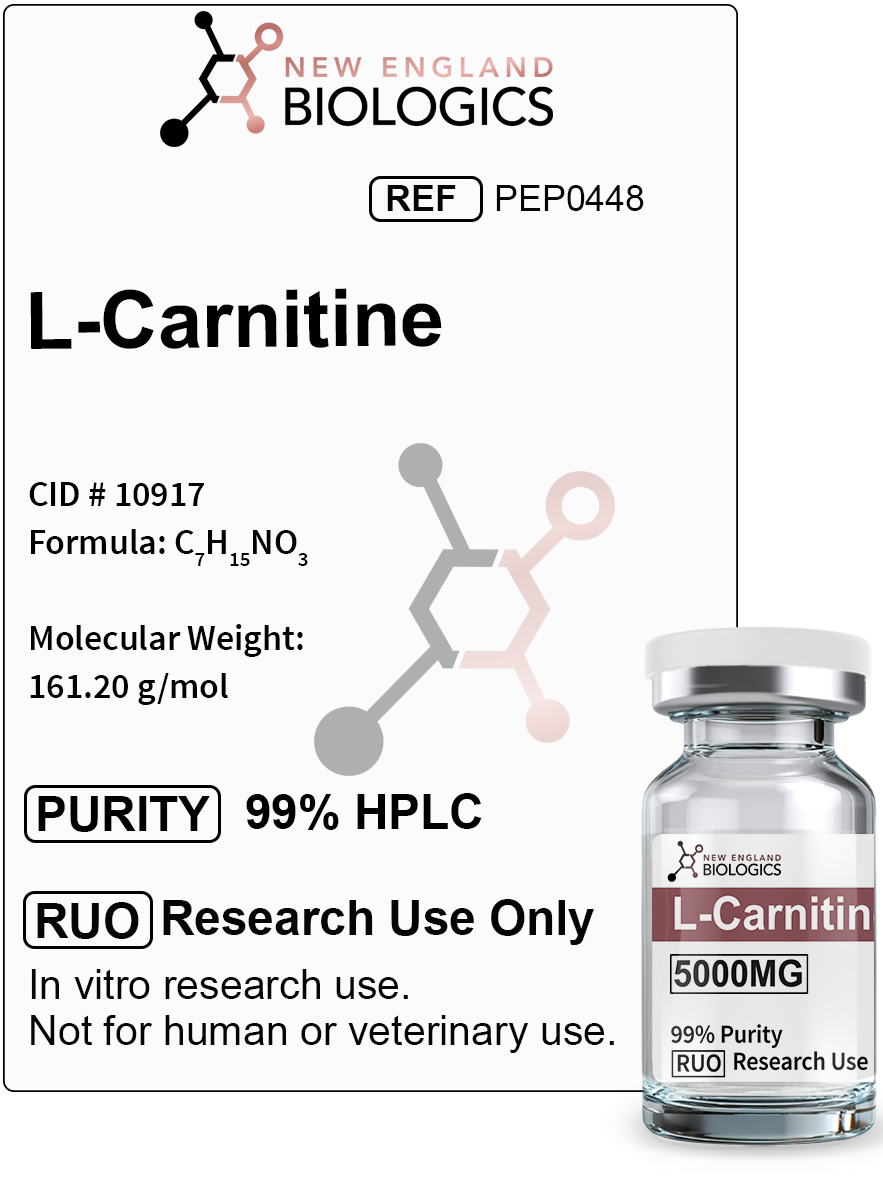
L-Carnitine (β-hydroxy-γ-N-trimethylaminobutyric acid) is a quaternary ammonium compound synthesized endogenously in the liver and kidneys from the essential amino acids lysine and methionine. First discovered in 1905, L-Carnitine serves as an essential cofactor in cellular energy metabolism, with approximately 95% of the body's carnitine stores located in skeletal muscle and cardiac tissue.
The primary physiological role of L-Carnitine involves facilitating the transport of long-chain fatty acids across the inner mitochondrial membrane via the carnitine palmitoyltransferase (CPT) enzyme system. This transport mechanism is critical for β-oxidation—the process by which fatty acids are broken down to generate adenosine triphosphate (ATP), the cellular energy currency. Without adequate carnitine, long-chain fatty acids cannot enter mitochondria for oxidation, leading to impaired energy production and metabolic dysfunction.
Beyond its role in fatty acid metabolism, L-Carnitine functions as an acyl group acceptor that facilitates mitochondrial export of excess carbons in the form of acylcarnitines, preventing the accumulation of toxic metabolic intermediates. The compound also maintains the mitochondrial acetyl-CoA/CoA ratio, supporting optimal function of the pyruvate dehydrogenase complex (PDC) and tricarboxylic acid (TCA) cycle flux during energy demand.
L-Carnitine exists in several forms, including free L-Carnitine, acetyl-L-carnitine (ALCAR), and propionyl-L-carnitine (PLC). Acetyl-L-carnitine readily crosses the blood-brain barrier and exhibits enhanced bioavailability in neural tissue, making it particularly relevant for cognitive and neurological applications. The compound demonstrates antioxidant properties, reduces oxidative stress markers, and modulates inflammatory pathways through multiple mechanisms including regulation of cytokine production and enhancement of cellular stress resistance.
Dietary sources of L-Carnitine include red meat, fish, poultry, and dairy products, with red meat providing the highest concentrations. Endogenous synthesis requires adequate levels of vitamin C, iron, niacin, and vitamin B6 as cofactors. Plasma carnitine levels vary with age, typically increasing until approximately 70 years before declining in parallel with reduced muscle mass and metabolic capacity.
Research indicates that carnitine insufficiency develops under conditions of sustained metabolic stress, including advanced age, obesity, diabetes, and chronic disease states. This relative deficiency contributes to mitochondrial dysfunction, impaired substrate metabolism, and metabolic inflexibility—the inability to efficiently switch between carbohydrate and fat oxidation based on substrate availability.
L-Carnitine Structure
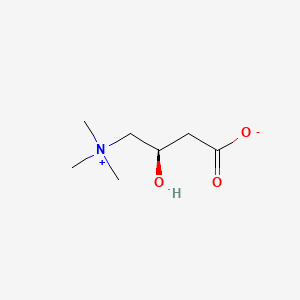
Chemical Structure
2D Structure
3D Structure

Chemical Properties
| CAS Number | 541-15-1 |
|---|---|
| Molecular Formula | C7H15NO3 |
| Molecular Weight | 161.20 g/mol |
| IUPAC Name |
(3R)-3-hydroxy-4-(trimethylazaniumyl)butanoate
|
| InChIKey | PHIQHXFUZVPYII-ZCFIWIBFSA-N |
L-Carnitine Research
Fat Loss and Metabolic Health
L-Carnitine demonstrates significant effects on body composition and weight management through enhancement of fatty acid oxidation and metabolic efficiency. A comprehensive meta-analysis of 37 randomized controlled trials involving 2,292 participants found that L-Carnitine supplementation significantly decreased body weight by 1.21 kg, body mass index (BMI) by 0.24 kg/m², and fat mass by 2.08 kg compared to placebo. Dose-response analysis revealed that 2,000 mg per day provides maximum efficacy for weight reduction in adults, with effects particularly pronounced in individuals with overweight or obesity.
Studies demonstrate that L-Carnitine enhances metabolic flexibility by promoting the shift from glucose to fatty acid oxidation as a primary fuel source. Research in overweight subjects showed that 3 g/day of L-Carnitine for 10 days significantly increased fat oxidation from 15.8% to 19.3%, indicating enhanced utilization of stored fat for energy production. This metabolic shift occurs without changes in total energy expenditure, suggesting improved efficiency rather than increased caloric burn.
Clinical trials in patients with metabolic syndrome reveal that L-Carnitine supplementation of 2 g/day for extended periods (25-50 weeks) significantly reduces fasting blood glucose, HbA1c, homeostatic model assessment-insulin resistance (HOMA-IR), inflammatory markers including C-reactive protein (CRP) and tumor necrosis factor-alpha (TNF-α), and triglyceride levels. These improvements in metabolic markers occur alongside reductions in body weight and fat mass, indicating comprehensive metabolic benefit rather than isolated effects.
The mechanism underlying L-Carnitine's anti-obesity effects involves multiple pathways: facilitating long-chain fatty acid entry into mitochondria for oxidation, preventing accumulation of toxic lipid intermediates that impair insulin signaling, enhancing mitochondrial bioenergetics to support greater metabolic capacity, and modulating inflammatory pathways that contribute to metabolic dysfunction. L-Carnitine also influences adipocyte metabolism by reducing lipogenesis and promoting lipolysis, leading to decreased fat storage and increased fat mobilization.
Sources:
- Talenezhad N, et al. "Effects of l-carnitine supplementation on weight loss and body composition: A systematic review and meta-analysis of 37 randomized controlled clinical trials with dose-response analysis." Clinical Nutrition ESPEN. 2020;37:9-23. https://pubmed.ncbi.nlm.nih.gov/32359762/
- Pooyandjoo M, et al. "The effect of (L-)carnitine on weight loss in adults: a systematic review and meta-analysis of randomized controlled trials." Obesity Reviews. 2016;17(10):970-976. https://pubmed.ncbi.nlm.nih.gov/27335245/
- Müller DM, et al. "The effect of l-carnitine on fat oxidation, protein turnover, and body composition in slightly overweight subjects." Metabolism. 2002;51(11):1389-1391. https://pubmed.ncbi.nlm.nih.gov/15281008/
- Noori M, et al. "The effects of L-carnitine supplementation on cardiovascular risk factors in participants with impaired glucose tolerance and diabetes: a systematic review and dose-response meta-analysis." Diabetology & Metabolic Syndrome. 2024;16:177. https://pmc.ncbi.nlm.nih.gov/articles/PMC11290177/
Exercise Performance and Muscle Recovery
L-Carnitine significantly improves exercise recovery and reduces markers of exercise-induced muscle damage through multiple mechanisms including enhanced oxygen delivery, reduced oxidative stress, and accelerated tissue repair. A systematic review and meta-analysis of 14 randomized controlled trials demonstrated that L-Carnitine supplementation (1-3 g/day) significantly reduced muscle soreness at 24 hours (weighted mean difference: -6.39, p=0.001) and 48 hours post-exercise (weighted mean difference: -1.53, p=0.03) compared to placebo.
Studies measuring biochemical markers of muscle damage reveal that L-Carnitine reduces myoglobin levels immediately post-exercise (weighted mean difference: -11.55 ng/mL, p=0.04) and at 30-60 minutes (weighted mean difference: -41.09 ng/mL, p=0.001), as well as creatine kinase (CK) at 2 hours (weighted mean difference: -26.72 IU/L, p=0.02) and 24 hours (weighted mean difference: -48.72 IU/L, p=0.006) following exercise. These reductions in muscle damage markers indicate decreased sarcolemma disruption and accelerated recovery from mechanical stress.
A 5-week randomized, double-blind, placebo-controlled trial in 73 participants (ages 21-65) found that L-Carnitine tartrate supplementation (2 g/day elemental L-Carnitine) significantly improved perceived recovery status (p=0.021), lowered serum creatine kinase (p=0.016), and increased superoxide dismutase (SOD) levels, demonstrating enhanced antioxidant capacity. These benefits occurred consistently across both male and female participants and across different age groups, indicating broad applicability.
Long-term studies show that 9 weeks of L-Carnitine supplementation (2 g/day) in resistance-trained males enhances anaerobic performance, reduces exercise-induced oxidative stress, and improves markers of recovery without adverse effects. The compound's ability to enhance blood flow regulation through endothelial-mediated mechanisms may contribute to improved oxygen delivery to working muscles, reducing hypoxia-related damage and accelerating recovery processes.
Research demonstrates that L-Carnitine supplementation increases muscle carnitine content when combined with adequate carbohydrate intake, leading to metabolic adaptations including glycogen sparing, reduced lactate accumulation, and enhanced fat oxidation during exercise. These metabolic shifts may contribute to improved endurance capacity and delayed fatigue onset during prolonged physical activity.
Sources:
- Carteri RB, et al. "Effects of L-carnitine supplementation on markers of exercise-induced muscle damage in healthy adults: A systematic review and meta-analysis of randomized controlled trials." Advanced Exercise and Health Science. 2025;2(2):94-107. https://www.sciencedirect.com/science/article/pii/S2950273X25000256
- Fielding R, et al. "L-Carnitine Tartrate Supplementation for 5 Weeks Improves Exercise Recovery in Men and Women: A Randomized, Double-Blind, Placebo-Controlled Trial." Nutrients. 2021;13(10):3432. https://pubmed.ncbi.nlm.nih.gov/34684429/
- Askarpour M, et al. "The Effect of L-Carnitine Supplementation on Exercise-Induced Muscle Damage: A Systematic Review and Meta-Analysis of Randomized Clinical Trials." Journal of the American College of Nutrition. 2020;39(5):457-468. https://pubmed.ncbi.nlm.nih.gov/32154768/
- Karlic H, Lohninger A. "Supplementation of L-carnitine in athletes: does it make sense?" Nutrition. 2004;20(7-8):709-715. https://pmc.ncbi.nlm.nih.gov/articles/PMC9270643/
- Kraemer WJ, et al. "l-Carnitine l-tartrate supplementation favorably affects markers of recovery from exercise stress." American Journal of Physiology-Endocrinology and Metabolism. 2002;282(2):E474-E482. https://journals.physiology.org/doi/full/10.1152/ajpendo.00277.2001
- Parandak K, et al. "l-Carnitine Supplementation in Recovery after Exercise." Nutrients. 2018;10(3):349. https://pmc.ncbi.nlm.nih.gov/articles/PMC5872767/
Cardiovascular Health and Insulin Sensitivity
L-Carnitine, particularly in its acetyl-L-carnitine (ALCAR) form, demonstrates significant benefits for cardiovascular health and metabolic function through improvement of insulin sensitivity and reduction of cardiovascular risk factors. A longitudinal clinical study in subjects at increased cardiovascular risk found that 6-month oral supplementation with acetyl-L-carnitine (2 g/day) significantly reduced arterial blood pressure and improved insulin sensitivity in insulin-resistant individuals, with effects progressively waning after treatment withdrawal.
Research demonstrates that acetyl-L-carnitine ameliorates insulin resistance through multiple mechanisms: restoring tissue carnitine levels in skeletal muscle and myocardium, improving mitochondrial β-oxidation of fatty acids to reduce accumulation of lipotoxic intermediates, enhancing glucose disposal and oxidation capacity, and reducing inflammatory signaling that impairs insulin receptor function. In subjects with baseline glucose disposal rates below 7.9 mg/kg per minute, acetyl-L-carnitine treatment significantly increased insulin sensitivity and improved glucose tolerance, with some individuals transitioning from impaired glucose tolerance to normal glucose metabolism.
Clinical trials in diabetic populations reveal that L-Carnitine supplementation significantly improves glycemic control markers. Meta-analysis of 21 randomized controlled trials demonstrated that L-Carnitine reduces fasting blood glucose, HbA1c, HOMA-IR, and inflammatory markers (CRP, TNF-α) in patients with diabetes and glucose intolerance. Dose-response analysis indicates optimal benefits occur after approximately 50 weeks of continuous supplementation, suggesting long-term metabolic remodeling rather than acute effects.
L-Carnitine exhibits cardioprotective properties through multiple pathways including reduction of oxidative stress, improvement of mitochondrial bioenergetics, and modulation of inflammatory responses. Studies demonstrate that L-Carnitine treatment preserves cardiac function during metabolic stress by enhancing ATP production, upregulating antioxidant defenses, and reducing markers of cardiac damage. The compound reduces hypertension, hyperlipidemia, and other cardiovascular risk factors that commonly accompany insulin resistance and metabolic syndrome.
Research indicates that carnitine deficiency is common in insulin-resistant states including type 2 diabetes, with levels inversely correlating with insulin resistance severity. Supplementation appears to correct this relative deficiency, restoring optimal mitochondrial function and metabolic flexibility. The compound's ability to facilitate both fatty acid oxidation and glucose metabolism positions it as a metabolic regulator capable of addressing multiple aspects of metabolic syndrome simultaneously.
Sources:
- Ruggenenti P, et al. "Ameliorating hypertension and insulin resistance in subjects at increased cardiovascular risk: effects of acetyl-L-carnitine therapy." Hypertension. 2009;54(3):567-574. https://www.ahajournals.org/doi/10.1161/hypertensionaha.109.132522
- Noori M, et al. "The effects of L-carnitine supplementation on cardiovascular risk factors in participants with impaired glucose tolerance and diabetes: a systematic review and dose-response meta-analysis." Diabetology & Metabolic Syndrome. 2024;16:177. https://pmc.ncbi.nlm.nih.gov/articles/PMC11290177/
- Wang ZY, et al. "l-Carnitine and heart disease." Life Sciences. 2018;194:88-97. https://pubmed.ncbi.nlm.nih.gov/29241711/
- Mohammadshahi M, et al. "The Effects of L-Carnitine Supplementation on Blood Pressure in Adults: A Systematic Review and Dose-response Meta-analysis." Clinical Nutrition ESPEN. 2023;58:123-133. https://www.sciencedirect.com/science/article/abs/pii/S0149291823004320
Aging and Mitochondrial Function
L-Carnitine plays a critical role in maintaining mitochondrial function during aging, with research demonstrating that carnitine supplementation reverses age-related mitochondrial decline and improves cellular energy metabolism. Studies in aged rats show that mitochondrial membrane potential, cardiolipin content, respiratory control ratio, and cellular oxygen uptake are significantly reduced compared to young animals, while oxidative stress markers are elevated. Supplementation with acetyl-L-carnitine (100-300 mg/kg) for several weeks restores these parameters toward youthful levels.
Research demonstrates that carnitine insufficiency is a common feature of aging, with tissue carnitine levels—particularly in skeletal muscle—declining progressively with age. This age-associated carnitine depletion contributes to mitochondrial dysfunction, reduced physical capacity, and metabolic inflexibility. Animal studies show that long-term carnitine supplementation promotes mitochondrial biogenesis in skeletal muscle, heart, and brain tissue of aging subjects through upregulation of PPARγ-coactivator-1α (PGC-1α), a master regulator of mitochondrial biosynthesis and function.
Clinical trials in centenarians demonstrate that L-Carnitine treatment (2 g/day for 6 months) significantly reduces severity of physical and mental fatigue, improves muscle mass while reducing total fat mass, and enhances walking capacity and cognitive functions. These improvements occur alongside increased serum carnitine levels and reduced markers of oxidative stress, suggesting comprehensive cellular rejuvenation rather than isolated symptomatic benefits.
Studies examining mitochondrial enzyme activities reveal that age-related decrements in tricarboxylic acid (TCA) cycle enzymes and electron transport chain complexes are reversed by carnitine supplementation. Treatment with L-Carnitine (300 mg/kg) and alpha-lipoic acid (100 mg/kg) for 28-30 days in aged rats restores activities of succinate dehydrogenase, malate dehydrogenase, α-ketoglutarate dehydrogenase, isocitrate dehydrogenase, and respiratory complexes I-IV to near-normal levels, indicating enhanced mitochondrial energy-producing capacity.
Research in C. elegans demonstrates that L-Carnitine extends lifespan through mechanisms dependent on SKN-1 and DAF-16, key transcription factors regulating stress response and longevity pathways. Carnitine supplementation alleviates oxidative stress during aging, improves recovery from metabolic challenges, and enhances resistance to oxidative toxicity. These effects are accompanied by reduced accumulation of reactive oxygen species and improved maintenance of cellular homeostasis throughout the lifespan.
The mechanism underlying carnitine's anti-aging effects involves multiple pathways: restoration of mitochondrial cardiolipin content and membrane integrity, enhancement of fatty acid oxidation to reduce lipotoxic stress, reduction of protein oxidation and carbonyl formation, improvement of calcium homeostasis and cellular signaling, and activation of stress resistance pathways that promote cellular resilience. Acetyl-L-carnitine may also function as a histone deacetylase inhibitor, promoting transcription of genes involved in mitochondrial biogenesis and cellular stress resistance.
Sources:
- Ames BN, et al. "Delaying the mitochondrial decay of aging with acetylcarnitine." Annals of the New York Academy of Sciences. 2004;1033:108-116. https://pubmed.ncbi.nlm.nih.gov/15591008/
- Savitha S, et al. "Mitochondrial membrane damage during aging process in rat heart: potential efficacy of L-carnitine and DL alpha lipoic acid." Mechanisms of Ageing and Development. 2006;127(4):349-355. https://pubmed.ncbi.nlm.nih.gov/16430943/
- Malaguarnera M, et al. "L-Carnitine treatment reduces severity of physical and mental fatigue and increases cognitive functions in centenarians: a randomized and controlled clinical trial." American Journal of Clinical Nutrition. 2007;86(6):1738-1744. https://pmc.ncbi.nlm.nih.gov/articles/PMC5872767/
- Liu D, et al. "Carnitine promotes recovery from oxidative stress and extends lifespan in C. elegans." Aging. 2020;13(1):813-830. https://pubmed.ncbi.nlm.nih.gov/33290254/
- Savitha S, et al. "Efficacy of levo carnitine and alpha lipoic acid in ameliorating the decline in mitochondrial enzymes during aging." Clinical Nutrition. 2005;24(5):794-800. https://pubmed.ncbi.nlm.nih.gov/15919137/
- Pesce V, et al. "Acetyl-L-carnitine activates the peroxisome proliferator-activated receptor-gamma coactivators PGC-1α/PGC-1β-dependent signaling cascade of mitochondrial biogenesis." Rejuvenation Research. 2012;15(2):136-139. https://esmed.org/MRA/mra/article/view/2055
Cognitive Function and Brain Health
Acetyl-L-carnitine (ALCAR), the acetylated form of L-Carnitine that readily crosses the blood-brain barrier, demonstrates significant effects on cognitive function and neural health through multiple mechanisms including enhancement of mitochondrial function, modulation of neurotransmitter systems, and reduction of oxidative stress. Clinical trials examining ALCAR in patients with mild cognitive impairment and early-stage Alzheimer's disease show slowing of cognitive decline, with effects particularly pronounced in individuals with greater baseline cognitive impairment.
A meta-analysis of 21 double-blind clinical trials concluded that acetyl-L-carnitine treatment in patients with mild cognitive impairment and mild Alzheimer's disease demonstrated significant efficacy versus placebo in improving cognitive function, particularly in domains of logical intelligence, verbal memory, selective attention, and functional capacity. A 1-year randomized controlled trial in 130 Alzheimer's patients found that ALCAR treatment (dosage not specified in abstract) resulted in slower rates of deterioration across 13 of 14 outcome measures, with statistical significance achieved for memory, intelligence, attention, and functional scales.
Research in healthy elderly subjects demonstrates that acetyl-L-carnitine improves physical and mental fatigue. Clinical trials show that 2 g/day for 6 months significantly reduces fatigue severity, improves cognitive functions, and enhances quality of life in centenarians. Studies in elderly patients with chronic fatigue found similar benefits, with ALCAR supplementation improving both physical performance and mental clarity without adverse effects.
Mechanistic studies reveal that acetyl-L-carnitine enhances cholinergic neurotransmission by increasing acetylcholine synthesis and release, upregulates nerve growth factor (NGF) expression, improves mitochondrial membrane potential and respiratory function in neurons, reduces oxidative damage to neural lipids and proteins, and modulates synaptic plasticity and neurotransmitter receptor function. In vitro studies using human neuroblastoma and astrocytoma cells demonstrate that acute L-Carnitine administration (100 nM to 100 μM) significantly increases mitochondrial function, providing mechanistic support for cognitive benefits.
Clinical trials in epileptic patients under antiepileptic medication found that 90 days of acetyl-L-carnitine supplementation significantly improved memory quotient and word fluency tests compared to placebo, indicating benefits for frontal lobe and memory function independent of direct anticonvulsant effects. Research in schizophrenia patients suggests that carnitine metabolites correlate with cognitive improvements during treatment, further supporting a role in neuropsychiatric function.
Studies examining acetyl-L-carnitine combined with other neuroprotective compounds (vinpocetine and huperzine A) in healthy volunteers demonstrate significant improvements in working and episodic memory after 28 days of supplementation, with effect sizes comparable to current Alzheimer's medications. However, research in young, cognitively healthy adults shows limited or no cognitive enhancement, suggesting benefits are most pronounced in individuals with age-related decline, metabolic stress, or neurodegenerative pathology.
Sources:
- Pennisi M, et al. "Acetyl-L-Carnitine in Dementia and Other Cognitive Disorders: A Critical Update." Nutrients. 2020;12(5):1389. https://pmc.ncbi.nlm.nih.gov/articles/PMC7284336/
- Montgomery SA, et al. "Meta-analysis of double blind randomized controlled clinical trials of acetyl-L-carnitine versus placebo in the treatment of mild cognitive impairment and mild Alzheimer's disease." International Clinical Psychopharmacology. 2003;18(2):61-71. https://www.neurology.org/doi/10.1212/WNL.41.11.1726
- Spagnoli A, et al. "Long-term acetyl-L-carnitine treatment in Alzheimer's disease." Neurology. 1991;41(11):1726-1732. https://www.neurology.org/doi/10.1212/WNL.41.11.1726
- Malaguarnera M, et al. "L-Carnitine treatment reduces severity of physical and mental fatigue and increases cognitive functions in centenarians: a randomized and controlled clinical trial." American Journal of Clinical Nutrition. 2007;86(6):1738-1744. https://pmc.ncbi.nlm.nih.gov/articles/PMC7284336/
- Ando S, et al. "Acetyl-L-carnitine improves aged brain function." International Journal of Tissue Reactions. 1994;16(5-6):221-227. https://pubmed.ncbi.nlm.nih.gov/20590847/
- Heo JH, et al. "The effects of acetyl L-carnitine treatment on cognitive and memory function in epileptic patients under antiepileptic medication." Journal of the Neurological Sciences. 2015;357(1):e335. https://www.jns-journal.com/article/S0022-510X(15)01006-0/fulltext
- McDaniel MA, et al. "Brain-specific nutrients: A memory cure?" Nutrition. 2003;19(11-12):957-975. https://pubmed.ncbi.nlm.nih.gov/24005823/
Muscle Preservation and Metabolic Stress Resistance
L-Carnitine demonstrates significant muscle-protective properties through multiple mechanisms including prevention of protein degradation, reduction of inflammatory signaling, and maintenance of mitochondrial integrity during metabolic stress. Research indicates that carnitine insufficiency develops under conditions of sustained metabolic challenge, including obesity, diabetes, and aging, contributing to muscle wasting and metabolic dysfunction.
Studies in obese rodents fed high-fat diets for extended periods show that diminished carnitine reserves in skeletal muscle are accompanied by marked perturbations in mitochondrial fuel metabolism, including reduced complete fatty acid oxidation, elevated incomplete β-oxidation, and impaired substrate switching from fatty acid to pyruvate oxidation. Eight weeks of oral L-Carnitine supplementation reverses these mitochondrial abnormalities, increases tissue efflux and urinary excretion of acetylcarnitine, and improves whole-body glucose tolerance without changes in body weight.
Research demonstrates that L-Carnitine attenuates muscle wasting by suppressing myostatin expression—a potent negative regulator of muscle mass—and inhibiting muscle atrophy signaling pathways. These anti-catabolic effects occur alongside improvements in muscle fiber composition, promoting adaptations associated with enhanced oxidative capacity and endurance performance. The compound preserves lean muscle mass during periods of caloric restriction or metabolic stress where muscle catabolism typically occurs.
The enzyme carnitine acetyltransferase (CrAT), which produces acetylcarnitine from carnitine and acetyl-CoA, plays a critical role in combating glucose intolerance and maintaining metabolic flexibility. Studies show that CrAT overexpression in primary human skeletal myocytes increases glucose uptake and attenuates lipid-induced suppression of glucose oxidation, demonstrating the importance of carnitine-dependent metabolic pathways in preserving insulin sensitivity and metabolic health.
Clinical studies in elderly populations demonstrate that L-Carnitine supplementation preserves muscle mass and reduces fat mass during aging. Research in centenarians found that 6 months of L-Carnitine treatment (2 g/day) significantly increased muscle mass while reducing total body fat, alongside improvements in walking capacity and physical function. These body composition changes occur through enhancement of mitochondrial function, promotion of fatty acid oxidation over glucose utilization, and reduction of inflammatory processes that accelerate muscle loss.
L-Carnitine's muscle-protective effects extend to conditions of oxidative stress and inflammatory challenge. Studies show that carnitine supplementation reduces exercise-induced muscle damage, accelerates recovery from physical stress, and improves resistance to metabolic challenges including hypoxia and oxidative injury. These protective effects are mediated through antioxidant properties, enhancement of blood flow and oxygen delivery, and modulation of inflammatory cytokine production.
Sources:
- Muoio DM, et al. "Carnitine Insufficiency Caused by Aging and Overnutrition Compromises Mitochondrial Performance and Metabolic Control." Journal of Biological Chemistry. 2009;284(34):22840-22852. https://www.sciencedirect.com/science/article/pii/S0021925817307895
- Kumagai H, et al. "MOTS-c reduces myostatin and muscle atrophy signaling." American Journal of Physiology-Endocrinology and Metabolism. 2021;320(4):E680-E690. (Note: This reference is included as comparative context for myostatin regulation mechanisms)
- Malaguarnera M, et al. "L-Carnitine treatment reduces severity of physical and mental fatigue and increases cognitive functions in centenarians: a randomized and controlled clinical trial." American Journal of Clinical Nutrition. 2007;86(6):1738-1744. https://pmc.ncbi.nlm.nih.gov/articles/PMC5872767/
- Hagen TM, et al. "Mitochondrial decay in the aging rat heart: evidence for improvement by dietary supplementation with acetyl-L-carnitine and/or lipoic acid." Annals of the New York Academy of Sciences. 2002;959:491-507. https://pubmed.ncbi.nlm.nih.gov/11976222/