What is KPV?
KPV (Lysine-Proline-Valine) is a naturally occurring tripeptide consisting of three amino acids that represents the C-terminal sequence of alpha-melanocyte-stimulating hormone (α-MSH), a larger peptide hormone involved in immune regulation and inflammatory responses. Unlike its parent molecule α-MSH, KPV retains potent anti-inflammatory and immunomodulatory properties while lacking the melanotropic (pigment-inducing) effects, making it suitable for systemic therapeutic applications.
The peptide functions through a unique mechanism involving the peptide transporter PepT1, which is normally expressed in the small intestine and becomes upregulated in inflamed colonic tissue during inflammatory bowel disease. Once transported into cells, KPV accumulates intracellularly and directly inhibits key inflammatory signaling pathways, including nuclear factor-kappa B (NF-κB) and mitogen-activated protein (MAP) kinase cascades. This mechanism differs significantly from traditional anti-inflammatory medications, as KPV acts within cells to modulate inflammatory responses rather than simply blocking extracellular receptors.
Research has identified KPV's high affinity for PepT1, with a Km of approximately 160 μM in intestinal epithelial cells, allowing even nanomolar concentrations to be efficiently transported and achieve therapeutic effects. The peptide demonstrates activity in multiple tissue types including the gastrointestinal tract, skin, immune cells, and various organs involved in inflammatory processes. Studies show KPV inhibits the activation and degradation of IκB-α, a key regulator of NF-κB activity, thereby reducing the production of pro-inflammatory cytokines such as interleukin-8 (IL-8), interleukin-6 (IL-6), tumor necrosis factor-alpha (TNF-α), and interleukin-1 beta (IL-1β).
The peptide's versatility in administration routes—oral, topical, and injectable—combined with its favorable safety profile makes it particularly attractive for therapeutic development. Research indicates KPV is naturally derived and exhibits no notable side effects in preclinical studies, distinguishing it from corticosteroids and other anti-inflammatory medications that commonly produce significant adverse reactions.
Chemical Identity
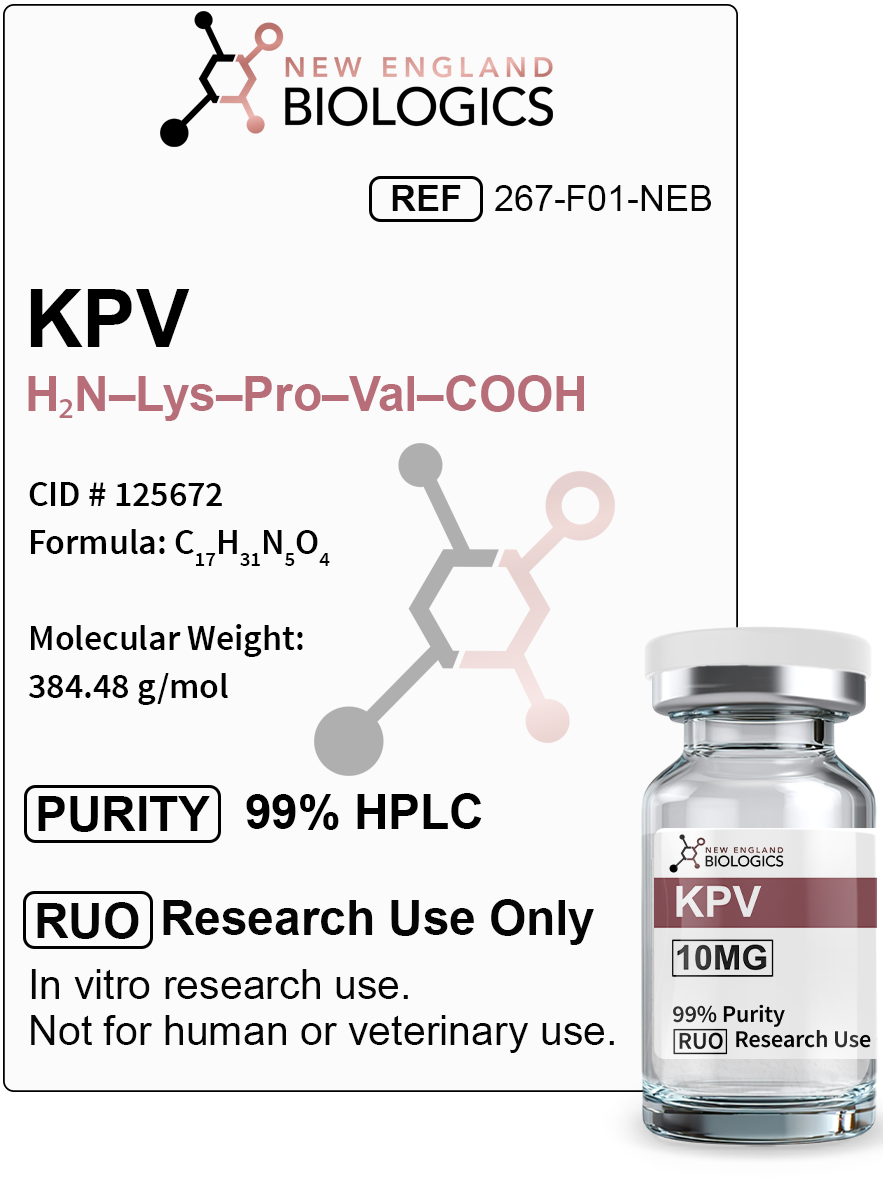
The compound is characterized by its unique molecular structure and specific chemical properties that make it valuable for research applications.Purity & Quality
Our KPV is provided at research-grade purity, suitable for laboratory applications and experimental protocols. Each batch undergoes quality control testing to ensure consistency and reliability for your research needs. Important: This product is intended for research purposes only and is not for human or veterinary use. It is sold for laboratory and scientific investigation only.KPV Structure
Chemical Structure
2D Structure

3D Structure

Chemical Properties
| CAS Number | 88768-11-0 |
|---|---|
| Molecular Formula | C11H12O3 |
| Molecular Weight | 192.21 g/mol |
| IUPAC Name |
2-oxo-5-phenylpentanoic acid
|
| InChIKey | MJXXAPORLGKVLB-UHFFFAOYSA-N |
KPV Research
Research Applications
Intestinal Inflammation and Inflammatory Bowel Disease
KPV demonstrates significant therapeutic potential in treating inflammatory bowel diseases through its ability to reduce intestinal inflammation via PepT1-mediated cellular uptake. Research published in Gastroenterology demonstrated that nanomolar concentrations of KPV inhibit activation of NF-κB and MAP kinase inflammatory signaling pathways in both intestinal epithelial cells and immune cells, resulting in reduced pro-inflammatory cytokine secretion.
In controlled animal studies using dextran sulfate sodium (DSS)-induced and trinitrobenzene sulfonic acid (TNBS)-induced colitis models, oral administration of KPV at 100 μM significantly reduced disease severity. Treated mice showed reduced weight loss, decreased myeloperoxidase (MPO) activity by approximately 50%, and markedly reduced intestinal inflammation at the histological level. KPV treatment prevented characteristic inflammatory changes including colon weight increase and length decrease associated with colitis progression.
Molecular analyses revealed that KPV treatment significantly decreased expression of multiple pro-inflammatory cytokines in colonic tissue, with particularly notable reductions in IL-6 and IL-12 levels. The peptide achieved these effects by directly inhibiting IκB-α degradation and phosphorylation, thereby shortening the duration of NF-κB activation and subsequent inflammatory cytokine production. Research demonstrates KPV's effects are mediated specifically through PepT1 transport rather than melanocortin receptor activation, as studies using cells lacking PepT1 showed no anti-inflammatory response to KPV treatment.
The peptide's mechanism involves accumulation within intestinal epithelial cells and immune cells expressing PepT1, where it directly interacts with inflammatory signaling molecules inside the nucleus. This intracellular mechanism allows KPV to inhibit inflammatory pathways more efficiently than extracellular receptor-based approaches, potentially offering advantages over conventional IBD therapies.
Sources:
- Dalmasso G, et al. "PepT1-Mediated Tripeptide KPV Uptake Reduces Intestinal Inflammation." Gastroenterology. 2008;134(1):166-178. https://pmc.ncbi.nlm.nih.gov/articles/PMC2431115/
- Xiao B, et al. "Orally Targeted Delivery of Tripeptide KPV via Hyaluronic Acid-Functionalized Nanoparticles Efficiently Alleviates Ulcerative Colitis." Molecular Therapy. 2017;25(7):1628-1640. https://pmc.ncbi.nlm.nih.gov/articles/PMC5498804/
Wound Healing and Tissue Repair
KPV exhibits significant wound healing properties through multiple mechanisms including anti-inflammatory activity, antimicrobial effects, and direct stimulation of tissue repair processes. Research published in Experimental Dermatology demonstrates that KPV accelerates corneal epithelial wound healing in animal models, with treated subjects showing significantly smaller wound defects compared to controls. Studies using rabbit corneal wounds revealed that topical KPV application at concentrations of 0.1-10 μmol/L stimulated cell viability in corneal epithelial cells and facilitated wound closure through nitric oxide-dependent mechanisms.
The peptide's wound healing effects appear mediated through binding to melanocortin 1 receptors (MC1R) expressed on cell types involved in cutaneous wound healing, including keratinocytes, fibroblasts, microvascular endothelial cells, neutrophils, and monocytes. Research indicates KPV modulates all phases of wound healing—inflammatory, proliferative, and remodeling—without inducing the pigmentation side effects associated with full-length α-MSH.
Studies demonstrate KPV reduces the type of chronic inflammation that leads to hypertrophic scar (keloid) formation. Administration of KPV in wound healing contexts results in smaller scars and less pronounced inflammatory responses, with benefits appearing to derive from the peptide's ability to modulate collagen metabolism. The peptide maintains these beneficial effects while simultaneously providing antimicrobial protection against common wound pathogens, offering dual therapeutic action that distinguishes it from conventional anti-inflammatory drugs that may suppress immune function.
Research using KPV-loaded hydrogel formulations shows enhanced tissue regeneration and combat against methicillin-resistant Staphylococcus aureus (MRSA) infections in wound beds. These advanced delivery systems demonstrate that KPV accelerates mucosal healing while alleviating inflammation through downregulation of TNF-α, providing targeted therapeutic effects in damaged tissues.
Sources:
- Luger TA, Böhm M. "Are melanocortin peptides future therapeutics for cutaneous wound healing?" Experimental Dermatology. 2019;28(7):814-820. https://onlinelibrary.wiley.com/doi/10.1111/exd.13887
- "Exploring the Role of Tripeptides in Wound Healing and Skin Regeneration: A Comprehensive Review." International Journal of Molecular Sciences. 2025;22:4175-4214. https://www.medsci.org/v22p4175.htm
Antimicrobial and Anti-Pathogen Effects
KPV demonstrates significant antimicrobial properties against major human pathogens, representing a unique dual-action therapeutic approach combining anti-inflammatory and antimicrobial activities. Research published in the Journal of Leukocyte Biology established that KPV and its parent molecule α-MSH exhibit antimicrobial influences against Staphylococcus aureus and Candida albicans, two pathogens responsible for nearly 150,000 infections and tens of thousands of deaths annually in the United States.
Studies demonstrate KPV significantly inhibits S. aureus colony formation over a broad concentration range, including physiological (picomolar) concentrations. The peptide similarly reduces viability and germ tube formation in C. albicans, with antimicrobial effects appearing mediated through the peptide's capacity to increase cellular cyclic AMP (cAMP). Research using the potent adenylyl cyclase inhibitor dideoxyadenosine (ddAdo) showed partial reversal of KPV's killing activity, supporting a cAMP-dependent mechanism of antimicrobial action.
Critically, studies reveal that unlike many anti-inflammatory drugs that reduce pathogen killing by suppressing immune function, KPV does not reduce antimicrobial activity of human neutrophils. Instead, the peptide actually enhanced pathogen killing, likely as a consequence of its direct antimicrobial activity combined with preserved immune cell function. This dual action makes KPV particularly valuable for treating disorders where infection and inflammation coexist, such as burns, chronic wounds, and inflammatory conditions with secondary infection risk.
Research demonstrates KPV's antimicrobial activity extends to preventing biofilm formation and disrupting established bacterial colonies. Studies indicate the peptide maintains antimicrobial efficacy without fostering resistance development, addressing a critical limitation of conventional antibiotics. The peptide's small size and positive charge at physiological pH facilitate interaction with bacterial cell membranes, contributing to its antimicrobial mechanism.
Sources:
- Cutuli M, et al. "Antimicrobial effects of alpha-MSH peptides." Journal of Leukocyte Biology. 2000;67(2):233-239. https://pubmed.ncbi.nlm.nih.gov/10670585/
- Elliott RJ, et al. "alpha-Melanocyte-stimulating hormone, MSH 11-13 KPV and adrenocorticotropic hormone signaling in human keratinocyte cells." Journal of Investigative Dermatology. 2004;122(4):1010-1019.
Skin Health and Dermatological Applications
KPV demonstrates therapeutic potential for various inflammatory skin conditions through its anti-inflammatory, immunomodulatory, and antimicrobial properties. Research indicates the peptide reduces skin inflammation by suppressing pro-inflammatory molecules including intercellular adhesion molecule-1 (ICAM-1) while increasing production of the anti-inflammatory cytokine interleukin-10 (IL-10) in keratinocytes. These mechanisms position KPV as a promising therapeutic agent for conditions including eczema, psoriasis, contact dermatitis, and other inflammatory dermatological disorders.
Studies demonstrate KPV's effectiveness in treating skin conditions derives from its ability to modulate immune responses without causing systemic immunosuppression. The peptide regulates mast cell activity, which plays a crucial role in histamine release and inflammatory symptoms such as itching, flushing, and skin irritation. Research suggests KPV can stabilize mast cells, making it potentially valuable for managing histamine overload, urticaria (hives), mast cell activation syndrome (MCAS), and psoriatic conditions.
The peptide's mechanism involves interaction with melanocortin receptors expressed on various cutaneous cell types while avoiding the pigmentation-inducing effects of full-length α-MSH. This selective activity allows KPV to deliver anti-inflammatory benefits to skin without causing undesirable hyperpigmentation, a significant advantage over α-MSH-based therapies. Research indicates KPV can be effectively delivered topically through various formulations including creams, gels, and advanced delivery systems such as iontophoresis.
Studies using transdermal delivery methods show that iontophoresis combined with microneedle treatment increases KPV permeation rate by 35-fold compared to microneedles alone, demonstrating the feasibility of effective topical delivery for skin conditions. The peptide demonstrates dose-dependent inhibition of inflammatory molecules while maintaining favorable safety profiles, suggesting potential as an alternative to corticosteroids for chronic inflammatory skin conditions.
Sources:
- "Transdermal Iontophoretic Delivery of Lysine-Proline-Valine (KPV) Peptide Across Microporated Human Skin." Journal of Pharmaceutical Sciences. 2017;106(9):2576-2582. https://www.sciencedirect.com/science/article/abs/pii/S0022354917301740
- Elliott RJ, et al. "alpha-Melanocyte-stimulating hormone, MSH 11-13 KPV and adrenocorticotropic hormone signaling in human keratinocyte cells." Journal of Investigative Dermatology. 2004;122(4):1010-1019.
Immune Modulation and Systemic Anti-Inflammatory Effects
KPV demonstrates broad immunomodulatory effects beyond localized tissue responses, functioning as a systemic anti-inflammatory agent through multiple cellular pathways. Research indicates the peptide acts on immune cells including T lymphocytes and macrophages, where it inhibits inflammatory signaling cascades and reduces production of key pro-inflammatory mediators. Studies using human T cell lines (Jurkat cells) demonstrate that KPV suppresses TNF-α-induced IκB-α degradation and significantly reduces IL-8 mRNA expression, confirming anti-inflammatory activity in immune cells.
The peptide's mechanism in immune cells involves PepT1-mediated transport into the cytosol, where it accumulates and inhibits inflammatory pathway activation. Research shows immune cells express functional PepT1 transporters capable of efficiently transporting KPV with a Km of approximately 700 μM, allowing therapeutic concentrations to be achieved systemically through oral or injectable administration. This represents a novel therapeutic approach for targeting immune cell-mediated inflammation.
Studies demonstrate KPV reduces circulating inflammatory markers implicated in chronic inflammatory conditions. The peptide decreases production of TNF-α, IL-1β, and IL-6—cytokines central to systemic inflammatory responses in conditions ranging from inflammatory bowel disease to rheumatoid arthritis. Research indicates these effects occur without increasing anti-inflammatory cytokine IL-10, suggesting KPV primarily functions by dampening pro-inflammatory responses rather than shifting the balance through anti-inflammatory mediator upregulation.
The peptide shows promise for conditions involving excessive mast cell activation and histamine release. Research suggests KPV can stabilize mast cells, potentially benefiting individuals with mast cell activation syndrome, chronic urticaria, and other histamine-mediated inflammatory conditions. The peptide's ability to modulate both innate and adaptive immune responses while maintaining overall immune competence distinguishes it from broad immunosuppressive agents, offering potential for safer long-term anti-inflammatory therapy.
Sources:
- Dalmasso G, et al. "PepT1-Mediated Tripeptide KPV Uptake Reduces Intestinal Inflammation." Gastroenterology. 2008;134(1):166-178. https://pmc.ncbi.nlm.nih.gov/articles/PMC2431115/
- Luger TA, Brzoska T. "alpha-MSH related peptides: a new class of anti-inflammatory and immunomodulating drugs." Annals of the Rheumatic Diseases. 2007;66(Suppl 3):iii52-iii55. https://pubmed.ncbi.nlm.nih.gov/17934098/